Fishing

Featured

There’s an old adage attributed to Lao Tzu, “Give a man a fish, and you feed him for a day. Teach a man to fish, and you feed him for a lifetime.” Men fish either to earn a living or as a hobby.

For the hobbyists it’s a quiet sojourn with nature in secluded spots, holding a fishing rod with the line immersed in the still, hypnotic waters, waiting for a bobbing of the floater indicating a fish biting. The wait induces a Zen like meditative state, described as a condition of effortless awareness—calm, alert, and fully present—without chasing thoughts or suppressing them. 

I have many memories of fishing which I want to share but forgive me as I drift into memories associated with those experiences. 

Ice fishing

My earliest memories of fishing was when I was 4 years old and my family had relocated from India to a small town in rural Michigan, USA called Hillsdale. The state of Michigan can be easily identified on the map of USA because it resembles a mitten and it’s just across the Great Lakes to Canada, with frigid winters.

My father was a visiting Professor of Sociology in the local Hillsdale College and we lived in a rented house just across the college campus, ‘231 Hillsdale Street’.

Our next door neighbours were the Dotys an elderly couple with an adult son Philip and young daughters, Jane and Joanne, they were all adopted. They were the typical American mid western family with a small patch of land behind their house which Mr. Doty cultivated. They also had a stable with horses and they were into outdoor activities like fishing.

Near the town there is the ‘Baw Beese’ Lake, a large freshwater lake named after Baw Beese, a Chieftain of the Potawatomi Native American tribe, who lived in the area in the early 1800s. The tribe camped, hunted, and fished around the lake but in 1840 were forcibly relocated during Native American removal. 

In the summer the lake was popular for swimming and during the winter it froze over with a solid sheet of ice, ideal for winter sports like ice skating and of course ice fishing.

My father was adventurous, and liked to experiment. He also wanted to expose me to new experiences. One fine subzero winter’s day he said “let’s go ice fishing!”, though he himself had no prior experience of ice fishing. My mother being the cautious one and had a pessimistic outlook admonished him about subjecting me to the possible prevailing perils. However that didn’t deter my Dad, he borrowed the necessary fishing gear from our neighbours and purchased live bait from a sports shop. 

My mother got me suitable dressed for prolonged exposure to subzero Artic temperatures. There were the multiple layers, first were the basic undergarments over them were warm thermal undergarments and then regular warm clothes and finally snow pants, coat, mittens, snow boots over warm socks and shoes. After my mother had got all those layers on, I told her I had to pee! So my mother had to remove all those layers so I could do ‘susu’ and then patiently repeat the process.

Me and my mother

My Dad and I drove to the lake on our Rambler station wagon and after parking on the edge of the frozen waters, we proceeded to a suitable spot on the frozen lake. The areas with thin ice were marked with a warning sign ‘Caution! Thin ice!’ and the areas where it was safe to walk were marked as safe. After choosing a suitable spot somewhere in the middle of the lake, my father drilled a hole using an ice auger. It cut a nice, neat circular hole in the ice around 6” in size. Then we placed two foldable stools around the hole, he baited the line, cast it into the waters and then we sat and waited for the floater to bob! 
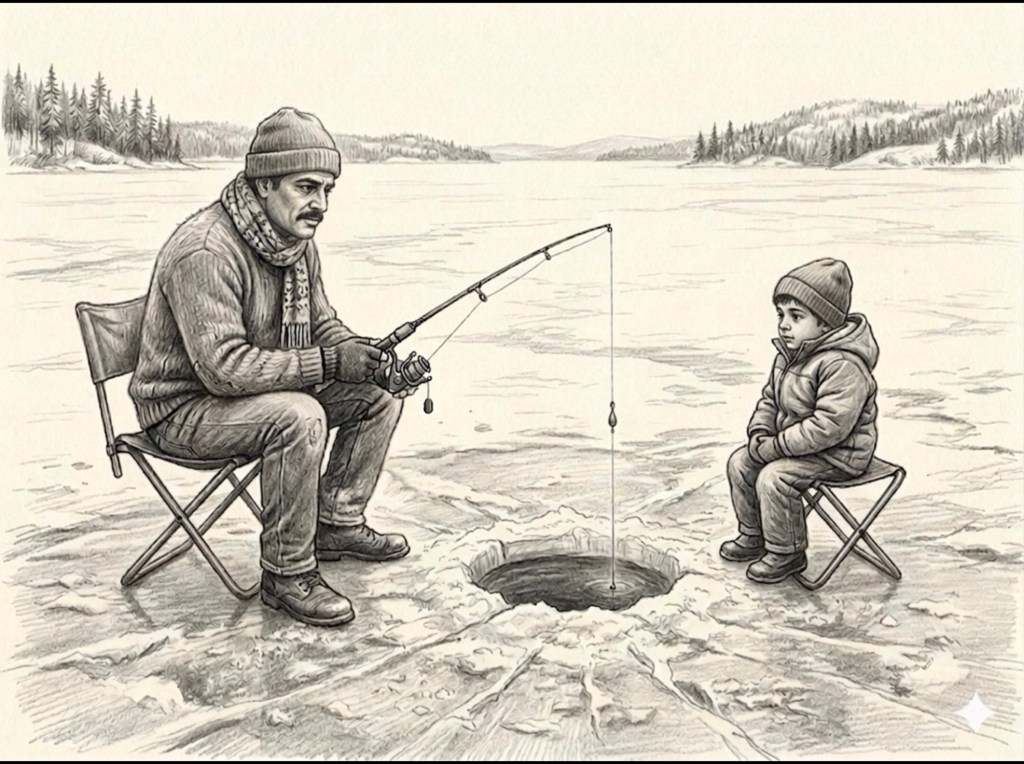
Waiting for a fish to bite!

During the winter perch, bluegill, and pike are the more likely to bite under the ice.  But they decided to give our bait a wide berth, this may be due to the fact that most fish are cold blooded or ectothermic, in cold water their metabolism slows down so food requirement also decreases. After maybe an hour of exposure to the elements we decided to call it quits and return to home and warmth of a hearth.
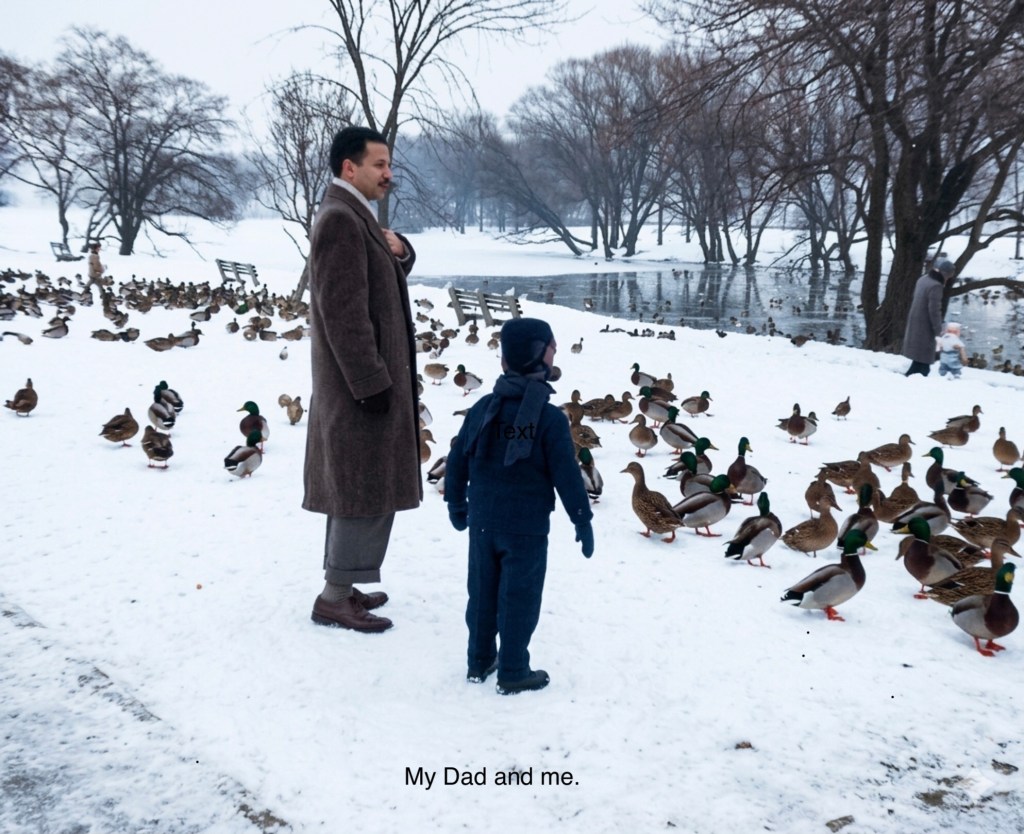
Blast fishing

Back in India summers meant visits to my father’s ancestral home in Tanakpur now in the state of Uttarakhand, then part of the undivided Uttar Pradesh. It’s nestled just before the foothills of the Himalayas, an area called the ‘terrai’, the weather was pleasant as compared to the furnace like heat  of the plains. 

The natural beauty is stunning, a short drive and the mountains would commence, you would see pine trees with interspersed fruit trees of Kaphal (Myrica esculenta), a small, dark purple or black berry and Hisalu (Rubus ellipticus), also known as the Himalayan raspberry in English. These berries are unique to the Himalayan region and the state fruit of Uttarakhand and extremely tasty plucked directly from the tree. 
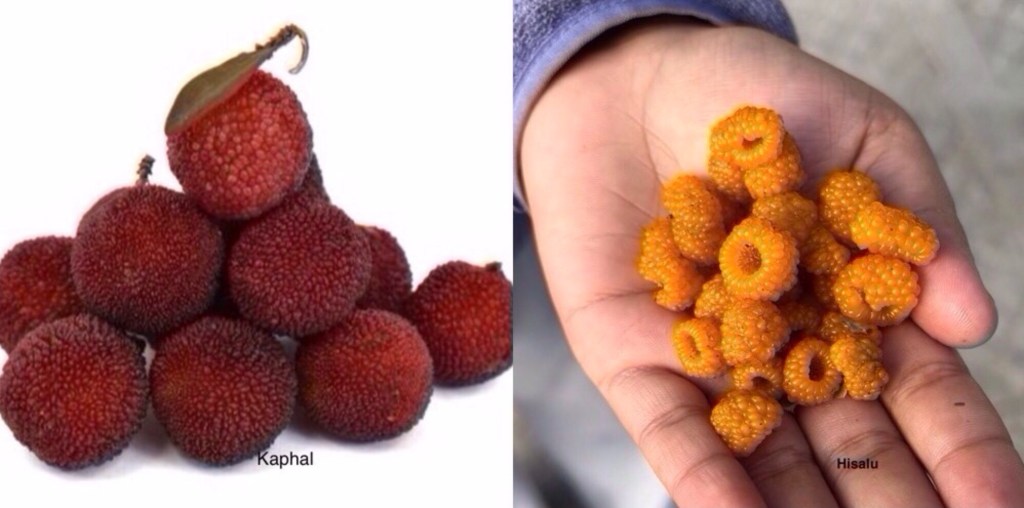
Kaphal and Hisalu

There were mountain streams flowing with icy pristine waters, emptying into small ponds which were teeming with fish.

My father’s younger brother Richard Wilkinson or better known as Dicky Sahab’ was a gentleman farmer on our ancestral Sunny farms, Gyankheda. He was a bachelor and extremely fond of children. When we visited he would lavish us with gifts. He would buy us stacks of comics and books so we would be entertained.

My grandfather, Richard Wilkinson senior, better known as ‘Sunny Sahab’ or ‘Padre Sahab’, also lived on the farm was and was a retired priest of the Methodist Church. My Dicky Uncle used to refer to the church, tongue in cheek as the ‘Mahadusth Church’ (महादुष्ट) or wicked church, most probably because of the quarrelsome nature of the congregation.

My grandfather was in his 70s and hard of hearing so communication with him was limited. I would stand behind him and call him ‘Dada’, in a low voice and progressively raise the pitch of my voice. When my mother asked me what I was doing, I told her I’m experimenting and determining what pitch is audible to Dada. He spent his time repairing a small church organ, a never ending task which would keep him occupied for the remainder of his life. 

He had  donated a piece of land on the main road for a Church in the memory of his wife, my grandmother who had passed away when my father was a young boy.
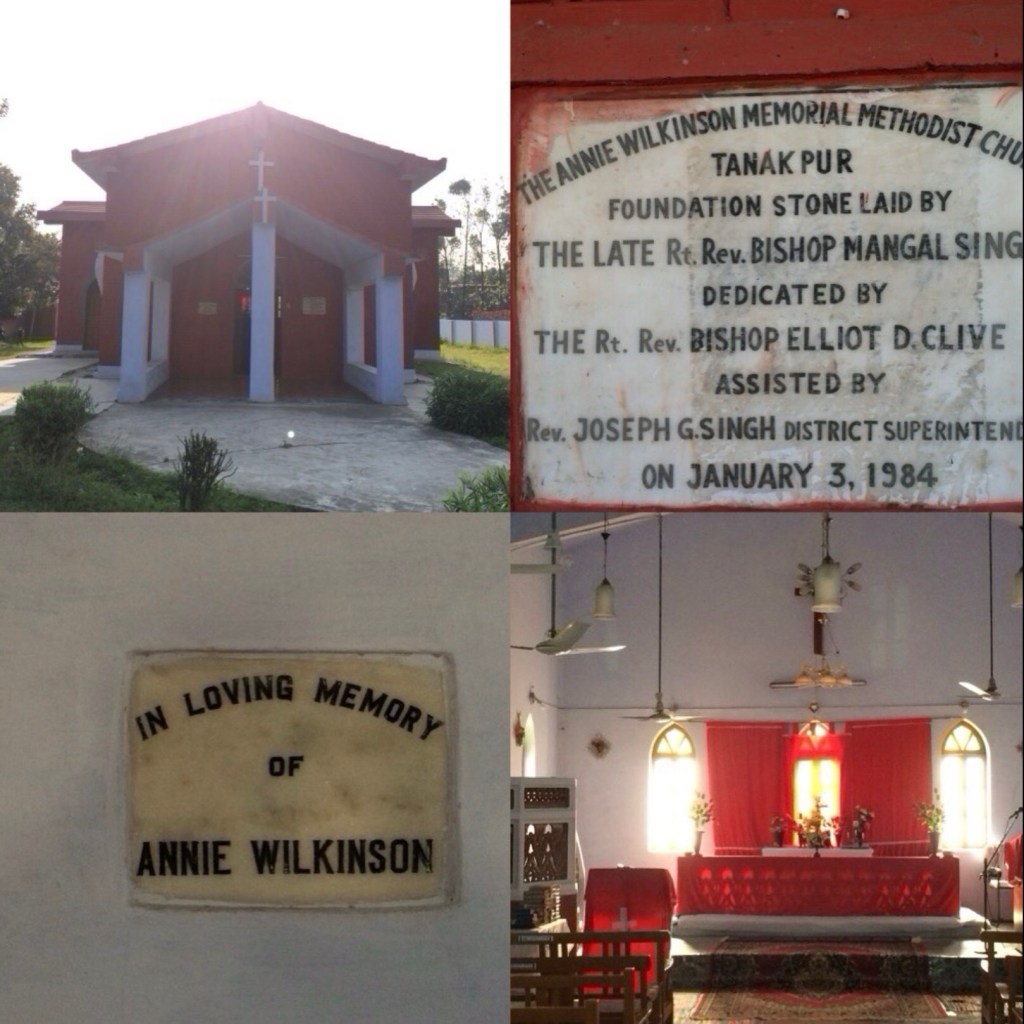
The church dedicated to my grandmother in Tanakpur

There was an old family retainer called Prem Singh who had been with the family since the time my father was a child and he was the only one I have heard referring to my father as ‘Baba’, a term of endearment for a small boy. We learnt phrases in the Pahadi language from him like “Khanan nikki cho” which meant the food is good. He would cook us some Pahadi specialties like  ‘bhutuwa’, ‘kachpoli’ and ‘panchola’. 

In Kumaon these are traditional non-vegetarian preparations, especially made during feasts or after a goat sacrifice. Bhutuwa is a rustic dish made from goat intestines (offal). The intestines were thoroughly cleaned, boiled first to remove odor and impurities, then finely chopped and cooked by ‘bhunna’ (slow sautéing) with mustard oil, onions, garlic, ginger, turmeric, chili, coriander. It’s was cooked till dry and slightly crisp. Kachpoli is a traditional stuffed flatbread, somewhat like a rustic paratha, stuffed with minced or finely chopped, goat meat, liver and fat. This meat is cooked with spices and made into a dry filling which is stuffed into the wheat dough and cooked on a tava or flat pan with ghee or clarified butter. Panchola is usually prepared from finely chopped goat meat, often mixed with fat, liver, spices, chilies, coriander, lemon, and sometimes lightly smoked or barely cooked pieces.

These dishes reflects the resourcefulness of the hill communities in use of the entire animal to make a high-energy food suited for the mountainous life. Goat meat has historically been an important celebratory food in Kumaoni culture.  
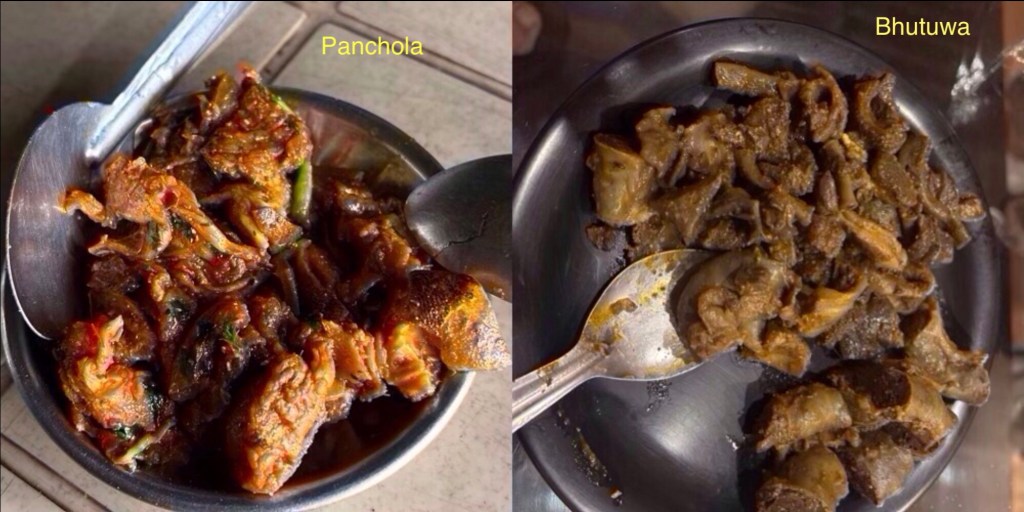
Panchola and Bhutuwa

My uncle had a friend who had retired from the navy, ‘Gabbar Singh’, this was much before the movie Sholay featuring a villain with the same name and giving it sinister connotation. 

Dicky Uncle constantly used to pull his leg, he used to tell us in a mock serious tone, “Children remember his name is Gabbar Singh and not  Gadbad Singh (chaos). Then once when I called him Gabbar Singh, my Uncle in mock anger said ” How many times I have to tell you his name is Gobar Singh (cow dung)!”. Gabbar took it all sportingly unlike the film Gabbar he was very good natured.

My uncle took us for a picnic up in the mountains along with Gabbar Singh and other friends on his jeep. We stopped near a pond formed in a natural depression in a rock, fed by a stream. The pond was teeming with fish and there I was exposed to ‘blast fishing’. Gabbar Singh with his military contacts obtained explosives which were wrapped in a waterproof plastic, a fuse lit and it was thrown into the pond. The blast created a mini tsunami and in its wake came stunned and dead fish, floating on the surface of the water. They were quickly scooped up by Gabbar and other helpers, who had jumped into the water after the explosion. I can still picture Gabbar Singh chest deep in the water with a cigarette in his lips, gathering fish and tossing them to the bank, interspersed between the fish were floating unlit Panama cigarettes, which had escaped from the packet in his shirt pocket. 

This form of fishing is now illegal and banned, it causes ecological damage and is not a sustainable form of fishing, it’s also very dangerous because of the use of explosives.

The fish was cooked on site by the helpers on a bonfire and we had a sumptuous picnic lunch. The catch was so bountiful that we could carry back fish for consumption at a home.

Fly fishing and Jugaad fishing

Sattal Christian Ashram in Sattal, Nainital district, Uttarakhand was founded in 1930 by the missionary E. Stanley Jones as a  place for quiet meditation and reflection. It covers an area of around 400 acres centred around a lake. Lakes in this region were created by the collision of the tectonic plates, creating mountains and deep valleys. Lakes formed at the depth of these valleys are fed by underground springs and not by draining rivers thus were devoid of silting hence deep. The surrounding mountains are densely forested with oak and pine trees which prevented rain erosion and flow of mud into the lake. There is no sewage or industrial discharge into the lake in those days. The depth of the Sattal lake though no official records exists is estimated to be between 65-120 feet.

Sattal literally means 7 lakes and consists 7 interconnected lakes. The other lakes in the region are similarly named due to some characteristic feature, most famous of them is Nainital which literally means ‘lake of the eye’, because it’s an oval deep set lake, resembling an eye. Legend has it that the lake represents the eye of Goddess Sati. 

Thanks to the healthy ecosystem there is an abundant, varied and thriving fish population, like the red finned and yellow finned Mahseer, a prized fish. Rohu, Mrigal, Catla and a snowtrout-like fish. Recently scientists have identified a new mahseer species named Tor sattalensis, named after the Sattal lake region. All evidence of the unique fish biodiversity of these waters. 

Around the lake the Ashram maintains cottages for rent, nestled in the dense forests and near the shores of the lake. One summer in the early 70s my father booked a cottage for the family. We had driven down to Tanakpur from Nagpur in our old Fiat and after spending some time in Tanakpur we drove to Sattal. The car could not be driven upto the cottage and had to be parked near the main Ashram building and we had to walk down to the cottage our luggage being carried by porters. 

The amenities of the cottages were basic, no electricity, we used kerosene lanterns for illumination in the nights. We had brought along a kerosene stove for cooking and a local boy named Bhupchand was recruited for the cooking. All the supplies had to be bought from the nearest town, Bhimtal.

My two elder sisters and I spent most of the day near the lake. A young German couple, their baby and a younger male, who was the brother of the husband, had rented a nearby cottage. There was a rowing boat tied to a small pier on the lake and was for common use, the older German would use it for ‘fly fishing’.  

Fly fishing is a method of fishing where artificial flies (very light lures made of feathers, fur, or synthetic fibers) are used to imitate insects that fish feed on. It suits clear, cold, oxygen-rich water, which is why Himalayan waters are ideal. The older German would row to the deeper waters then using the fishing rod and the line like a whip, skim the weighted fly over the surface of the water, mimicking an insect skimming on the surface of the water. Fish believing it’s an insect would bite only to get hooked, they would splash on the surface and had to gradually be reeled in without breaking the line. The fish would still be alive, flapping around and to hasten its demise he would hold it by its tail, lift it and slam its head to the floor of the boat.

The younger male would spend his time snorkeling near the shore. We would ask asked him the what he saw. He would dived down and exclaimed, “Mama Mia! I saw this big fish!” Indicating the size by holding his palms a foot apart.

In the waters near the shore we could see schools of tiny fish swimming in the clear shallow waters nibbling on our immersed feet. 

We devised a way of catching these small fish. Two of us would stand in the water holding the corners of a fine dupatta cloth, immersed in the water, while the third would dangle a bit of roti from a string into the water luring the fish over the cloth. When a large group was gathered then the cloth was lifted out of the water, netting a large catch of bite sized fish.

My father got enthused about fishing seeing all the activity around him and the reported size of the fish in the lake. The question was how to go about it?

‘Jugaad’ a uniquely Indian term means a clever, improvised, low-cost solution—often created by using limited resources, shortcuts, or unconventional methods to get a job done. 

We did not possess the hi tech fibre glass flexible fishing rods and paraphernalia the Germans had, so we had to improvise.

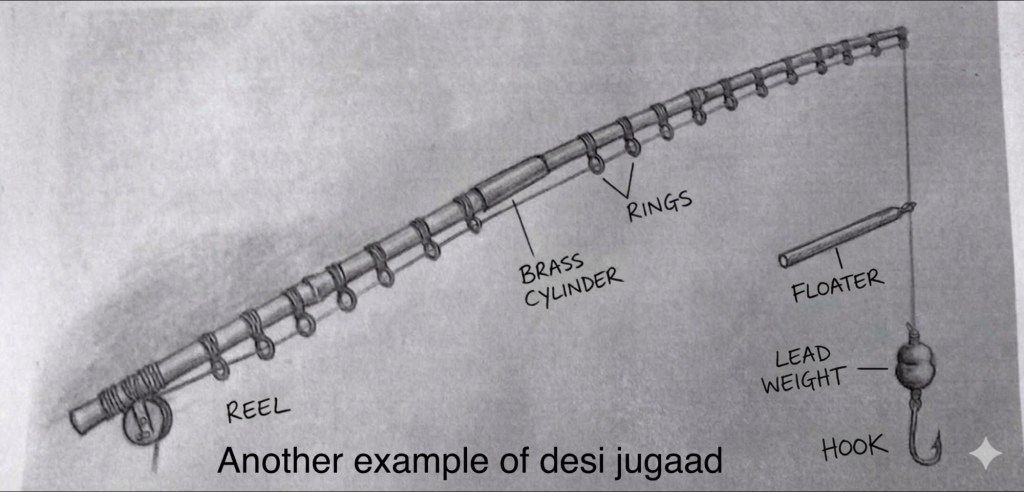
We made a sortie to the nearby town of Bhimtal where we purchased fishing hooks and fishing line. A suitable branch from a tree was cut using a Swiss pen knife, the smaller branches were removed and paper clips were tied at 3” intervals with string. Through these paper clips the fishing line was threaded and for a reel an eaten ‘bhutta’ or a corncob was used, the kernel had been eaten. The excess line was wrapped around it. The stick was still green and hence was flexible, bamboo would have been perfect but it did not grow in these Alpine climes. A hook was tied to the end of the line and was weighted by tying a small pebble just above, the floater was a small twig tied to the line and for bait we used the tiny fish which we had netted in abundance.
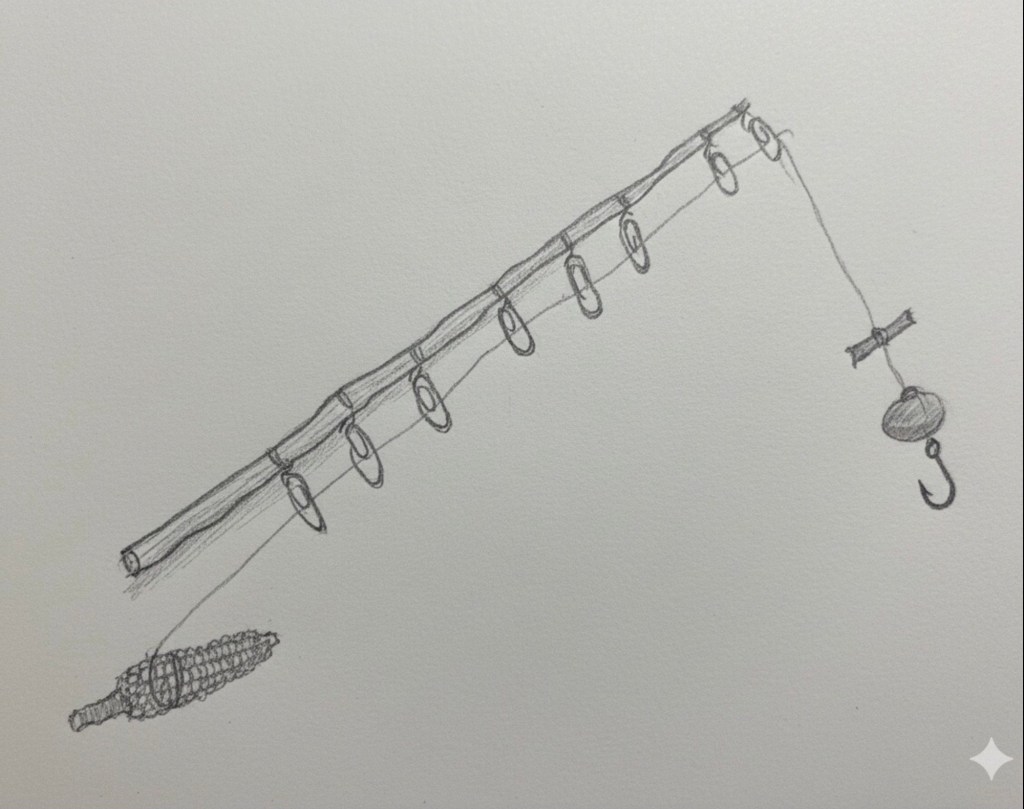
Improvised or Jugaad fishing rod

These were the basic components of an unwieldy fishing rig, the rod with the attached line, the baited hook and a sinker near it giving weight so it will descend to a depth. The floater tied some length away from the hook allowed the line to be suspended from the surface of the water and bobbing of the floater would signal that the fish had taken the bait.

Thus began our daily bouts of fishing, we would find a suitable place on the shore, my father would cast the line some distance into the water by holding the line, swinging it around in a circular fashion like a lasso and casting it into the water, the fishing rod was too unwieldy for casting. And then we waited and waited and waited! Maybe after an hour of waiting there was some bobbing on the floater, my father immediately started to pull in the line and I would wind it on the corncob. The fishing rod was more symbolic rather than functional. There was plenty of splashing on the surface as the fish resisted and then suddenly the water became calm. We reeled in the line  to find an empty hook! Because of the struggle by the fish, the hook had cut through the mouth and the fish was liberated.

Since the Germans seemed to have greater luck and experience in catching fish my father consulted them. After discussing his technique they suggested not to reel in the fish immediately but to allow it to splash around, play with it and tire it out, then gradually reel it in. 

Our next catch we managed to reel in and it was a large fish, I don’t know what variety of fish it was but it was cooked by Bhupchand eaten and relished.

As a footnote we were so impressed with the services of Bhupchand we tried to persuade him to return with us to Nagpur and take permanent employment with us. He said he would consider and it remained at that!

SS, Fishing in Paunar and Vinoba Bhave

I have a school friend let’s call him SS, a good friend albeit being transactional in his approach, for example if he wanted to borrow a pencil he would strike up a barter, in exchange of a pencil he would grant the lender the ‘privilege’ of playing football as part of his team during the recess. He marched to the beat of a different drummer! 

His family were from Balaghat in Madhya Pradesh, near Kanha National Park and his grandfather was an ardent hunter of his times, when hunting was legal. The drawing room of his house had two full tiger skins shot by his grandfather nailed spread eagle on facing walls, with the tails to the roof and the heads supported by small tables so facing each other with a taxidermist created open mouth, bared teeth snarls. As you entered the room it looked like two tigers snarling at each other. He loved showing us his grandfather’s collection of hunting rifles, there was a double barrel 12 bore shotgun and a rifle with which his grandfather had shot the tigers. Imagine the thrill of a 14 year old handling actual firearms.

During the 2 month summer vacation our group of friends looked to SS for ideas on how to spend our  time and he had plenty, “Let’s go hunting!” he said. 

In those days anti poaching laws were lax, a lot of people would go hunting in the forests surrounding Nagpur for the herbivores, some of them were considered pest as they would graze on the crops. But the carnivores or  big cats were taboo. There are stories of an influential person of the city returning from a hunting trip in his open Jeep with the carcass of a deer strapped onto the bonnet. His attire fitted into the lore of the great Shikari of yore, sporting a luxuriant handle bar mustache, solar topee (pith helmet), aviator shades, khaki camouflaged clothes, behind the wheel of a jeep. 

For hunting there were two groups coordinating with each other, the spotters and the shooters. The spotters preferably seated on the roof of the vehicle would scan the jungle surrounding the road with a strong spotlight and the shooters would be sitting below with their gun poking out of the window. Suddenly in the darkness two fluorescent eyes or eyeshine would be visible, glowing in the darkness. In nocturnal animals there is a reflective layer behind the retina called the tapetum lucidum. Light enters the eyes and gets reflected back giving the photoreceptors cells in the retina a second chance to detect light, improving the night vision.

It would be a herbivore deer either a sambar, neelgai, barasingha or a wild boar. The animal would freeze in the light giving the shooters a perfect shot, then there would be the gun shot and the deer would be felled. Then everybody would lend a hand hauling the kill and loading it on the vehicle. It was then taken to someone’s home and help of a local butcher was taken to divide it into shares for the team. In case of a male animal the testis were sought after by the locals in belief that they enhanced potency.

SS had a sealed beam spotlight again handed down from his grandfather, which is used for hunting, it gives a bright beam of light. In a sealed beam spotlight the bulb, reflector and lens are built into one permanently sealed unit. But it requires a car battery to power, we needed a vehicle to transport the searchlight along with a car battery and the rifle. The ideal would have been a jeep but that was way out of our league. SS tried to strike up a bargain with an autorickshaw wala to transport us in exchange for a share of the venison! This was turned down by the autorickshaw wala, because he did not consume venison, so a bargain was struck on pure cash.  

We were barely in our teens but SS looked mature and was already closing to 6 feet in height. I don’t know about SS’s parents but my parents put their combined feet down heavily against this dangerous persuit. We were going to do an illegal activity and carry firearms, an accident could happen or we could get arrested.

So SS came up with the idea of going fishing, he had a group of Anglo Indian friends who were school drop outs and spent most of their time fishing. They were his consultants and they suggested Paunar river which is around 80 kms from Nagpur. Paunar river is a good fishing spot with abundant fish, less crowded and secluded.

Paunar is also famous for the Paramdham Ashram of Vinoba Bhave. 

Vinoba Bhave was a disciple of Mahatma Gandhi, a social reformer and a spiritual leader, he was most famous for the ‘Bhoodan’ movement or voluntary donation of land. He walked across India (padyatra), halting at villages and requesting those with surplus land to donate it to the landless poor.

I would have a future encounter with Vinoba Bhave in 1976 when my uncle from USA, visited us and brought a group of American tourists who he was giving the ‘India Experience’. An audience with Vinoba Bhave was on their itinerary. At that time Vinobaji was 81 years old and hard of hearing, he consented to an audience but with a caveat, “No political questions would be entertained!” 

Those were turbulent political times as the then Prime Minister of India, Indira had declared Emergency in 1975, suspending civil liberties. Vinobaji was called a ‘Sarkari Sant’ by his critics, literally meaning a Government Saint, but a term used to describe a spiritual or moral person who is seen to be too close to the Government. This was because he did not criticise the Emergency but described it as “Anushasan Parva” or a period of discipline. His supporters argued that he was not politically motivated but focused on moral and social reform.

I tagged along with the tourists to the Paunar Ashram for the audience. The entire ambience of the Ashram was spartan and we were led to a hall where there was a raised cement platform at one end. Vinobaji sat cross legged on a mattress in front of him was a writing desk with short legs on which he was busy writing. He looked up and acknowledged our presence with a smile. He was frail and his face and features were completely covered with a luxuriant beard and moustache. He wore an olive green hood-like cap which had a short stitched brim in the front like a small visor and long side flaps covering the ears and neck, perfectly framing his face, he had a white cloth draped like a shawl over his torso and wore a dhoti.
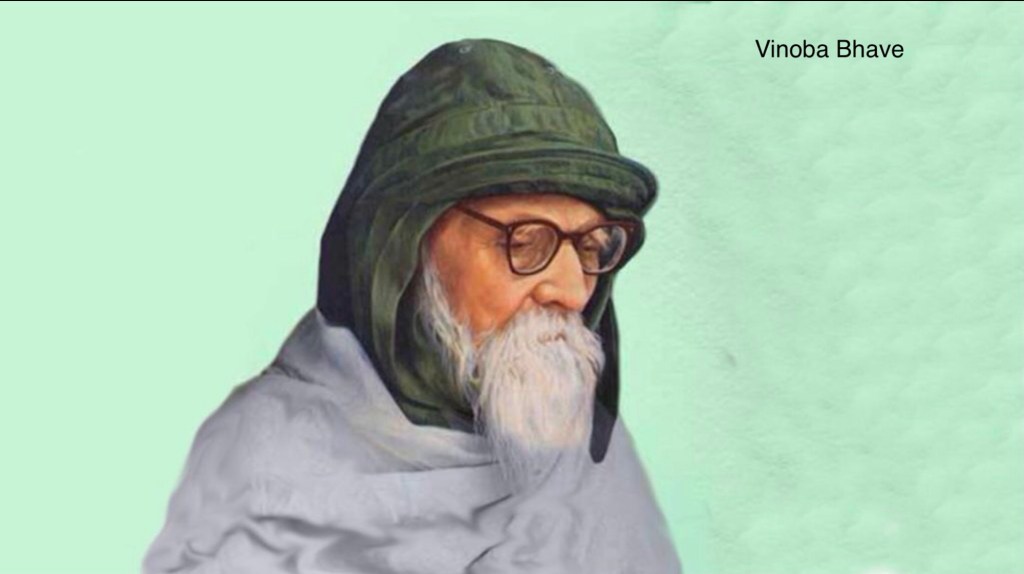
Vinoba Bhave

His frail physique was due his belief that food should sustain life but not stimulate indulgence and he often said “Food should be eaten as medicine to the body, not for pleasure.”

His secretary sat next to him and spoke fluent English. He announced that because Vinobaji was hard of hearing, all questions had to be written on slips of paper which would be read out aloud and then whispered  to Vinobaji in Marathi, the answers would be read out as dictated by Vinobaji.

I recollect one question clearly, “What advice would you like us to convey to our President?” This question transcended Vinobaji hearing and language barriers and without waiting for the intermediary, he answered loudly, “Tell him to become vegetarian!” There was laughter in the room, the President of the USA at that time was Jimmy Carter who in his earlier avatar had been a peanut farmer in Georgia. “He’s already vegetarian” someone retorted, “He only eats peanuts,” which was followed by another round of laughter.

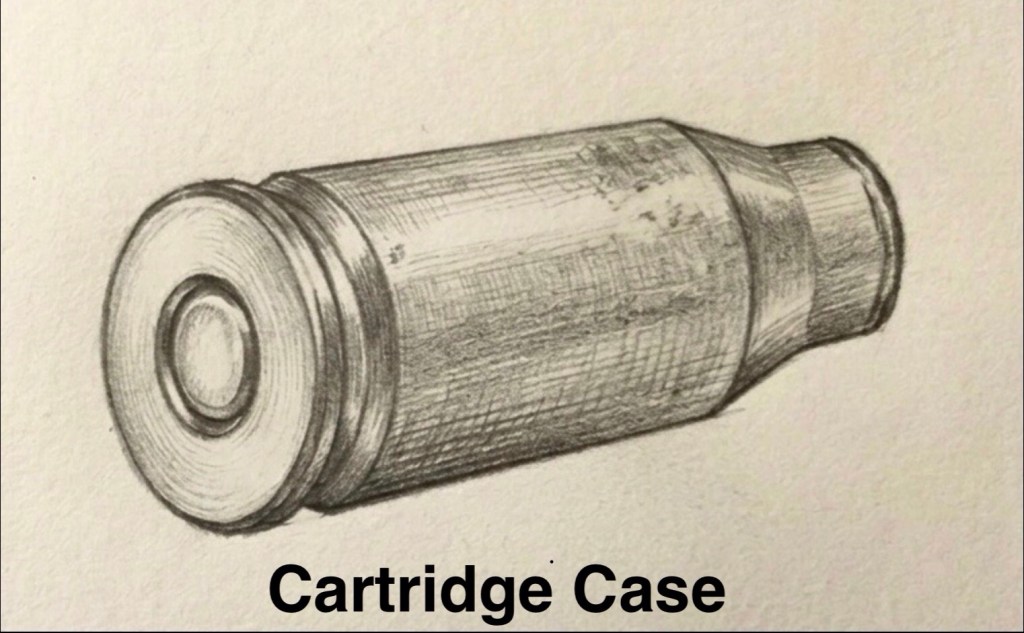
Once Paunar was decided, the logistics were worked out, we would travel to Paunar by a local train, these travel very slowly and stop at almost every station. A family friend after learning about my enthusiasm for fishing gifted me with his old fishing rod which he did not use. It was made out of a bamboo stick which was straighten by heating and cut into two halves for convenience of carrying. The two halves could be joined together by a small brass cylinder fitted at the end of one half allowing the other half to be pushed into it, a male-female joint. The brass cylinder was originally the cartridge casing of a bullet which had been bought as brass scrap from the Ordinance factory in Nagpur, the closed end was sawed off creating a tapered cylinder. Rings to pass the line were lashed to the stick at intervals with twine and a reel was lashed to the end. For the floater the stem of a peacock feather was tied to the line, a small piece of lead which was hammered and flattened, then wrapped around the line as weight and of course the hook at the end of the line.
For bait one of SS’s Anglo Indian friend woke up at the crack of dawn, in keeping with the saying “The early bird catches the worm”, dug up the moist soil at a suitable site, this unearthed earthworms which were collected and placed in a can. 

“Earthworms are a farmer’s friend “ is a classic statement and very accurate in agriculture. They are natural tillers of the soil, they consume organic matter and excrete nutrient rich waste and actively promote healthy soil microbes. Using earthworms as fishing bait is one of the oldest and most effective techniques—simple, reliable, and still widely used. They’re the natural prey for fish, the wiggling attracts the fish and the strong odour makes them detectable to the fish even in muddy waters. They can be either threaded on the hook or hooked at one point allowing them to wiggle and attract the fish. Threading may be better as then the fish have to swallow the entire hook along with the worm, whereas hooked in one place the fish nibbles only at the suspended portion of the worm.

We boarded the train to Paunar from Nagpur station, early one morning, the train crosses the Paunar river. Paunar has no railway station but passenger trains go slowly, halting frequently in the middle of nowhere to give other trains the right of way. We alighted from the train when it made an unscheduled halt just after the bridge and then we backtracked on foot along the railway track to the bridge.  We settled under the scant shade the bridge provided and cast our lines into the water waiting for the fish to bite. Our reverie was intermittently broken by trains  passing overhead providing a view of the underside of a train, not normally seen. Then ducking the fine spray emerging from the train toilets discharging directly on the tracks. I read recently that the new railway bogies’s toilets no longer discharge onto the track, because ironically it caused corrosion of the rails!

Every child has a fascination for trains, especially the majestic steam engine of the days. Just watching the engines with the huge wheels moving. The fireman or stoker shovelling coal into the firebox of the engine, his face lit up by the glow from the flames every time he opened the firebox door. The large driving wheels of the engine connected by the coupling rods or side rods allowing perfect synchronous rotation of the wheels. 

Then there was the ‘wheel slip’ or ‘wheelspin’, when the steam engine starts from a stationary position and the driver releases the regulator rapidly, causing more steam to be released from the boiler and into the piston and an increase in power. The wheel rotates but there’s insufficient adhesion between the steel rail and steel wheel to overcome the inertia,  causing the wheel to rotate without any corresponding forward movement and sparks flying from the wheels.

Well returning to the subject of fishing, I caught nothing! The fish did not even nibble at my bait whereas the Anglo Indian friends of SS caught plenty of fish. Experience does count in fishing though I could not figure out where I erred. Possibly not interpreted the subtle bobs of the floaters indicating the fish were biting and then to immediately jerk the to hook the fish.

By dusk we started tracking back to catch the train and as luck would have it a train came chugging down the tracks. We hailed it like you hail a taxi and surprisingly it stopped couple of metres away. We ran and hopped on the train.

Here ends my rambling of memories, I hope you enjoyed reading it. Leave a comment if you enjoyed it, that will be appreciated.
Sunset of our lives!

The premature passing away of Annie made me ponder.
It is said that only the good die young. They now dwell in paradise at the right hand of the Lord or have achieved moksha depending on ones beliefs. It is the ones who remain who suffer the loss.
In this uncertain life there are but two constants, birth and death, in between these constants there are variables. I am in the sunset of my life and cannot be sure when the Grim Reaper knocks.
My mother lived till the ripe age of 94 but when younger she wanted to see her children married, then to see her grandchildren, next her grandchildren married and finally her great grandchildren. She was blessed to live long enough to see it come to pass.
It is said that our natural life sans diseases is determined by the length of telomeres at the end of the chromosomes. Telomeres are protective DNA caps at the ends of chromosomes. They act like the plastic tips on shoelaces, preventing chromosomes from fraying or sticking to each other. They shorten with each division till they become critically short and the cell stops dividing or dies.
Two weeks ago I was in a Surgical Conference and attending a best paper presentation. My student had just finished presenting and during the next presentation a surgeon sitting two rows in front of me indicated to the judges on the stage that he was not feeling well. The judges rushed down and asked him to lie down on the sofa. He then had a cardiac arrest, immediate CPR was given and he was transferred to the hospital but he did not make it! He was the President of the Rajasthan Surgical Society and had come to canvass for his bid for President of the Association of Surgeons of India. Unfortunately that was not to be. I had met at lunch a day earlier and he looked hale and hearty. Not an inch of excess fat and a wiry build.
Nagpur was shocked by the death of a young Neurosurgeon. He had a very successful career and had no ‘habits’ i.e. he did not smoke nor was he fond of Bacchus. He was seen in the gym 6 am without fail. His only failing if you can call it so was that he was a workaholic. I knew since the time he began his career and he built up an empire, recently he had purchased a plot for ₹23 crores but “man proposes and God disposes”.
One of my colleagues who was just 3 years senior to me suddenly came down with severe myalgia, which progressed over a period of a month to myoglobinuria and renal failure followed by respiratory failure. He had to be put on an ECMO machine but he did not make it. Till the end nobody could figure out what exactly caused these sequence of events. He was again sans habits though overweight and not fond of movement, though no comorbidities.
I have a young postgraduate student under me and a year ago she initially had a URI which rapidly progressed to respiratory failure and she had to be put on a ventilator. Luckily she lived to tell the tale but in her case too they could not pinpoint an organism, despite extensive testing. Because of her youth she came out of it.
Then we all know about the sad passing away of Agroo in a freak accident.
Absence of habits or a vegetarian diet does not necessarily endow one with immunity.Anecdotal
In Hindi there is a saying, “जाको राखे सैया, मार सके ना कोई”, meaning Whom God protects, no one can kill or harm. We can count ourselves blessed to have made it thus far.
“Cowards die a thousand deaths but the valiant taste of death but once”

Dr. Jodaram

One of my Professors made a statement which rings true to this day, “you can teach a ‘monkey’ how to operate and he will do a fairly good job, but what differentiates a monkey from a trained surgeon is, knowing the indications for operating and post operative care!”

Let me illustrate these points by a few examples, before I had joined MS course I worked as a junior doctor in a rural mission hospital. The hospital was well equipped and run by NGOs. One fine day the orthopaedic surgeon asked me out of the blue, “do you want to do an amputation?” Harbouring dreams of becoming a surgeon, I couldn’t wait to get my hands on a scalpel. I replied in the affirmative, to which he said “Gaekwad will teach you how to do an amputation”.

On the face of it Gaekwad did not seem to have the academic qualifications to be a teacher or for that matter, to operate. He had a high school degree and a certificate for rehabilitation of leprosy patients. But years of assisting various orthopaedic surgeons in the operating theatre had taught him the ropes. He was a patient and ‘respectful’ teacher, very unlike normal teachers who show scant respect to their students. It may have been my superior paper qualifications. So this student teacher relationship was on an unequal footing.

Thus began my first foray into a life with a knife. Though I was the one holding the scalpel, it was Gaekwad who was gently directing me, “Cut here, okay there’s a blood vessel here so tie it and a nerve here so cut it high”. Those were sound principles as if you leave the nerve long it could grow to form a neuroma and give rise to neuralgic pain over the stump.

In a limited field he was good. He may not be competent enough to do a complicated surgery but he was good at fractures and nailing bones, perhaps better than some orthopaedic surgeons. He did everything under the guidance and shadow of an orthopaedic surgeon. But the decision regarding the surgery or which patient would benefit with which surgery he would not be able to decide. In case there were complications following the surgery, he would not be able to handle it. What he was good at is to mechanically do the steps of an operation and with practice he had achieved a degree of perfection.

Fast forward 5 years and I returned to the same hospital with a MS general surgery degree against my name. I did all the general surgery operations leaving the orthopaedic work to the specialist. The orthopaedic surgeon was going on leave for 15 days and he asked me to look after orthopaedics during his absence. I confessed that I’m at sea regarding orthopaedics. His reply was “No problem you have Gaekwad and Titus to help you”. Gaekwad was considered the orthopaedic surgeon and Titus the orthopaedic physician. “If any patient comes with a fracture and only requires close reduction and plaster than the duo will do it. If it’s more complex requiring surgery then explain to the patient that we cannot operate immediately, because there is excessive swelling. He will require elevation of the limb and splinting followed by surgery. I should be back by then”. In this fashion I handled an orthopaedic unit, being the mere face of the unit whereas the grunt work was done by the duo. I looked after the general management of the patient. This is not unique as I have seen many orthopaedic surgeons dependent on technicians for placement of implants.

In this hospital there was a single qualified anaesthetist and two male nurse anaesthetists. These male nurses had done nurse anaesthetist course and were extremely efficient. They could give spinal anaesthesia, epidural anaesthesia, intubate the patient and even do single lung intubation. They managed the patients independently but were under the umbrella of the anaesthetist.

I like to give the analogy of an automobile engineer and your friendly neighbourhood car mechanic. The engineer knows all the theory, that the differential produces so much of torque etc. But he would be lost if you brought your car to him to fix. But the mechanic though may not know the physics behind the car engine design or would be unable to design a new car but by experience and trial and error, he fixes the car. He tightens some screws needs and some part needs to be gissoed (grinding) and will fix your car.

This is also true of a fresh MBBS graduate, who is bursting with knowledge but is at sea as far as the practical application of the knowledge goes. He learns the practical once he becomes an intern and is thrown into the management of patients.

When I joined as a surgical resident in Punjab, on my first call day I went to see a patient in the casualty. I met a ward boy (despite being middle aged, he was still known as a boy) in the casualty. He had been working in there since he was 18 years old and had risen from the rank of sweeper to ward boy. He greeted me warmly and told me that if I needed to do any emergency surgical procedures like tracheotomy (making an alternative breathing site in the neck), chest tube insertion (inserting a tube in chest for a collapsed lung) or venesection (inserting a intravenous line), he could assist/teach me.

He claimed to have a diploma in Ayurvedic medicine from Bihar by paying ₹400/-, which I suspect was fake. He always took the night shift which suited him but was unpopular with others, because he could practice ‘daktari’ during the day. I enquired what this ‘daktari’ entailed? To which he replied that he has his regular clients of rich business men or ‘lalas’, who were suffering from the problems of plenty like obesity, heart condition, hypertension and diabetes. He would administer their insulin shots and check their blood pressure. He also worked as a compounder for another doctor in the city, doing dressing, giving injections and dispensing drugs. He had his own clinic in the slum area where he lived and a devoted following of patients. He was Jodaram to us but his patients referred to him reverentially as ‘Dr. Jodaram’!

Once in a while a patient would stray into the casualty and ask for Dr. Jodaram. They would consult with him, show him a prescription given to them by some other doctor, for his opinion. He would then bring the prescription to me or to any other doctor present and say, “Doctor sahab yeh kya likha hai? Aaj meine chashme nahi laya hoon, padhna mushkil ja raha hai” (Doctor can you tell me what’s written, I have not brought my glasses hence having difficulty reading). Then I realized that he was barely literate, he could just about sign his name. He would ask what the drugs were for and whether they were appropriate and then convey the same to his patient. I wonder what he did for prescribing patients!

Another example in the same hospital was our head of plastic surgery’s assistant Rattan or ‘Rattanji’ as we had to reverentially refer to him. On my first days in plastic surgery posting, the Boss told me, “Rattanji and me are your teachers”. Rattanji was again a high school graduate but had the intelligence and aptitude to pick up things. The Boss used to perform specialized microvascular surgeries like reimplanting amputated limbs and fingers. There was one injury which was unique to Punjab. Since a majority had long hair, on Sundays they would wash their hair in the morning and leave it open to dry. Next they would start their agricultural water pumps to irrigate their fields. Very commonly their loose hair would get entangled in the spinning wheel of the pump pulling the hair and along with it avulsing the scalp from the cranium. Literally getting ‘scalped’. Patients would come to the Casualty with a bandaged head and holding a portion of the scalp with the hair still attached to it.

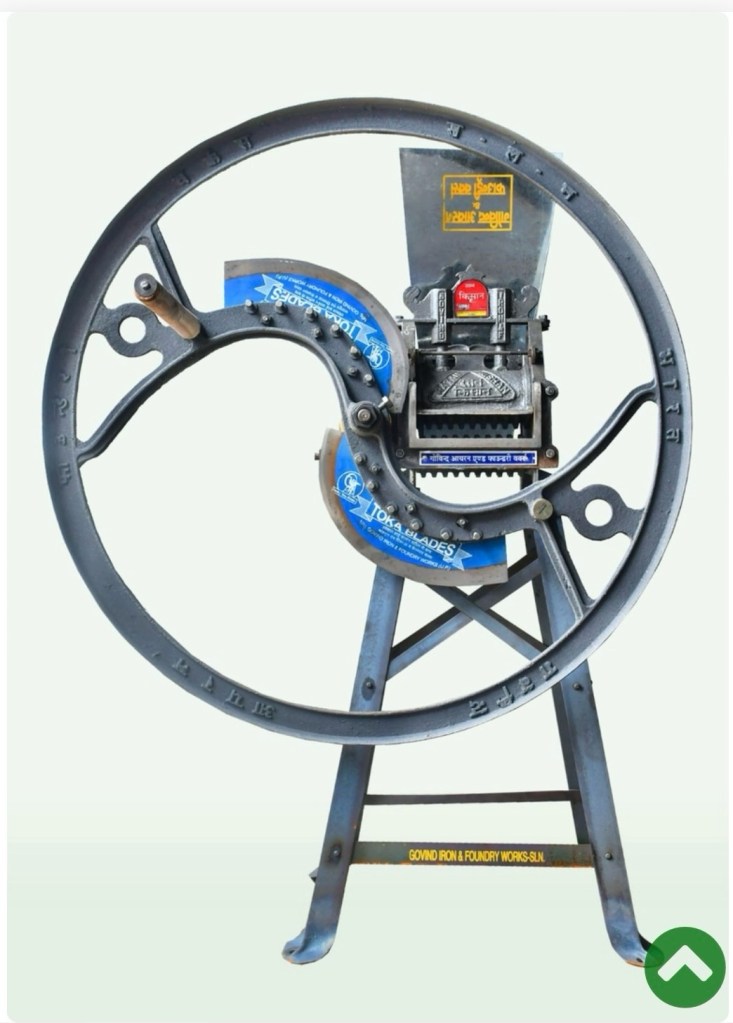
Another agricultural equipment which was a responsible for giving us patients was the ‘toka machine’. This was used for chopping stalks and chaff into small pieces to make fodder for the cattle. It consisted of a wheel whose spokes were sharp blades. The wheel had to be rotated and the bundle of stalk inserted slowly into wheel. The blades would chop the stalk into small pieces. Two scenarios resulting in accidental amputation of finger were, the person holding the stalk and pushing it into the wheel would accidentally push their finger along with the stalk into the wheel. After use if the wheel was not properly locked, to prevent the wheel from rotating, children playing with toka machine would get a finger amputated. The flip side of a toka machine amputation was that it was a clean slice and was amenable to reimplantation.

Toka Machine

Reimplanting scalps is difficult due to the multiple blood vessels, but our boss was very good at it. The only person he trusted to assist him was ‘Rattanji’. He knew the specialised instruments and how to assist. A wise person rightly said “To be a good surgeon you need to be a good assistant”. The assistant should know the steps of the surgery and anticipate what instruments or what retraction the surgeon would require. I sometimes equate it to a waltz where the dancing pair know the steps perfectly, when to sway pirouette and bow. But it should not become a Tango!

Rattanji was the perfect partner in the waltz, anticipating the surgeon’s needs perfectly. When the surgeon extended his hand he would know exactly which instrument he wanted without being told. When we had an exceptionally long list in plastic surgery we used to rope in Rattanji to do some of the minor procedures or suturing. He claimed he could do a cleft lip repair surgery and other plastic surgeries.

I am sure everyone in the medical field may have encountered a version of ‘Dr. Jodarams’ and can recount the case of a paramedical staff who was as good as a doctor in a limited field.

A eulogy to the life of Iris Wilkinson

If I can summarise the life of my mother, it would be, ‘A long and fruitful life, where she touched many lives positively and made a differences for the better’.
Iris Wilkinson was born and raised in Allahabad, UP, where she did her schooling. For higher education she studied in Isabella Thoburn college Lucknow where she met my father and got married. They moved to Nagpur in 1958.
She taughted in St. Joseph’s Convent until she retired in 1990. Scores of her students remember her fondly for being gentle and soft spoken but also firm. She was very approachable. Many students approached her for advice. Her suggestions were always very practical. One of her students whose name is Jumana, herself recounted this story. She complained to my mother that another girl constantly teased her by calling her Jurmana. My mother asked her what was the girl’s name? ‘Chadha’ she replied . My mother suggested “just call her chaddi and she will stop teasing you”.
And it worked like magic!
Along with her regular job she was also managing the orphanage of the Diocese, the Shishu Sangopan Griha. She told me that working with the orphans and abandoned children was the most fulfilling thing in her life.
There was a time when she kept the new born babies who were most vulnerable in our house. So there was a row of cribs and a caretaker who worked under the watchful eyes of my mother.
Many of these children were adopted by families in the Netherlands and Norway. Annelies who is present here adopted two beautiful girls from Shishu Sangopan Gruha, who are now mothers themselves. All of these children when they met my mother, despite the passage of time, felt and instant connect and chemistry. They now consider her as their Indian mother.
My mother and Annelies founded Navjeevan Sanstha and the Dr. T.S. Wilkinson Memorial school. The logo is hands holding a diya and the motto is to lead to the light.
My mother used to see children begging outside the church after services. She discovered that in Government Schools nothing was taught so they lacked even the basic knowledge and no motivation to attend. She felt they require one wholesome meal a day as an incentive. So the school started initially on rented premises. In the Chatterton Hall at first. There were days when the hall was booked by other people, then my mother conducted classes under the trees in this church compound. Because they were dealing with street children no one was willing to rent out premises. With the help from donors in Netherlands they were able to make a residential school in Godhani, which now has 200 students. Many of the ex students are now employed as nurses, accountants and technicians. These are the success stories.
My mother was happiest when she was visiting the school and like a child refuse to return home.
It’s only in the last few months her health deteriorated and she was confined to bed. Ultimately nobody runs forever and her time had come. She is definitely in a better place now.
In conclusion to quote 2 Timothy 4:6, which would be apt for her life.
“I have fought the good fight, I have finished the race, I have kept the faith.”

Dream of attached bathrooms in the Mansion of the Gods

As we stepped into Men’s Hostel on 17th July 1978, we were told to meet the Hostel Secretary for room allotment. The Hostel Secretary had commandeered a vacant room and was seated behind a desk. He handed us a form which we had to tick our preference for room, ‘double/single/single with attached toilet/single with attached toilet and AC’. I wisely decided on single though in the hot and humid Vellore climate, AC was tempting but I somehow knew it’s highly unlikely that there were AC rooms.

Later I was grateful for my decision because during initiation those unlucky ones who opted for a single room with attached toilet and AC, had a pipe strapped on his back with a shower head suspended above his head and a bed pan tied around his waist as an attached toilet. An aerosol can was suspended around his neck as an AC.

The dream of an attached toilet was always in the minds of the residents of Men’s Hostel, the luxury of not having to walk down the corridor to the common toilets. It was like having the keys to the executive washroom.

During bacchanal parties, indulgence caused increased diuresis and delay. The urgency was so great that they barely managed to step out onto the corridor, and relieve themselves over the railing, which was at a convenient height. The car of the hostel warden parked in the driveway in ‘D’ Block was a regular beneficiary of these ‘showers of blessings’.

This idea may have been instilled in our minds during initiation, when following our morning exercise supervised by the ‘Field Marshal’ and ‘Executioner’ we were supposed to in batches of 3, lie face down in front of ‘C’ Block store and chant in unison, ‘God! God! Give us rain!’ Our prayers were answered when a bucket of water was poured on us. Then we rolled in the mud and again appealed for rain. During this ritual I felt a thin stream of water hit me which had a warmer temperature, suspiciously close to body temperature. Some seniors shouted, “Don’t piss on the poor buggers!” I went berserk and tried to look up but my head was promptly pushed back into the mud.

A story which made rounds in Men’s Hostel and was part of folklore that there an occupant of supertop who routinely used to relieve himself over the railing, fouling things up for the occupants downstream. No amount of entreaty would make him mend his ways. So the occupants downstream took matters in their own hands. They got an electric stove, the ones which had the glowing coils, placed it on an old badminton racket and tied a bamboo to the racket. The stove was plugged into an extension cord. Then they waited patiently for the nightly flow of effluent. When they heard the pitter patter of effluent hitting the ground they switched on the stove and extended so it was right under the stream. It was the perfect ‘mid-stream clean catch’, the stove sparked, the stream stopped and cry of pain was heard from above. To make a long story short they were never troubled again by the flow of effluent.

Then they were the improvised chamber pots, after all “need is the mother of invention” and the desi jugaad in keeping with “waste not want not”. There were a vast collection of empty bottles from past revelry in the hostel rooms, which were put to good use. They were refilled capped and placed in a hidden corner under the bed. Once in a while the watchman would come to sweep the room. The watchman in his attempt to reach the dust in all corners reached the cache of refilled bottles. He picked one up, shook it, looked at the it and stopped just short of sniffing it. Then gave the owner an incredulous look and asked, “Idhu enna Saar? Urineaa?”

The Ch_ tiya Community of Assam

The motto of my alma mater, Christian Medical College, Vellore is ‘Not to be ministered unto but to minister’. This was epitomized in the conduct of our teachers, who were simple, humble and dedicated to their work. They were excellent role models.

After finishing my MS, I was motivated in doing my little bit of ministering for the poorest of the poor. I offered my services for charitable surgical camps. I have operated for 19 years in the Lok Biradari Prakalp, Hospital in Hemalkasa. Also in the MAHAN Hospital in Melghat, the Leprosy Mission Hospital in Kothara, Paratwada and in the Vivekananda Mission in Khapri, Nagpur.

The Lok Biradari Prakalp was started by Dr. Prakash Amte in a Naxalite insurgent area, inhabited by poor tribals living in stone age conditions. He has been honoured by the Padma Shri, Ramon Magasaysay and Mother Theresa awards for his selfless work.

Mahan Hospital was started by Dr. Ashish Satav. Mahan is an acronym for Meditation, Aids, Health, Addiction and Nutrition. This is also a tribal area and infamous for 6000 starvation deaths among the tribals in 2016. Incidentally another Alumnus of Vellore, Eric Simoes, a Paediatrician in Denver Colorado, also visits this centre regularly as part of the Bill Gates Foundation.

I don’t claim to be a saint, social service is a symbiotic relationship and both parties benefit. I got an exposure to a wide variety of cases which I don’t normally see in the cities. These were neglected cases either due to ignorance or absence of medical facilities or both. I have operated in primitive conditions, using a surgical drape the size of a napkin, a bare bulb, a torch and even a kerosene lantern for illumination. I learnt to manage with minimum resources. There are critics who would say we are compromising but the reality was, if we don’t operate, they would never get operated. This honed my skills and made me realize we could do a lot with very little. I also got away from the city and far from the maddening crowds. I visited extremely remote areas, untouched by civilization or tourists. These were very pristine places with a lot of natural beauty. I also learnt about the people, diverse culture and language.

In 2018 I was invited by the Vivekananda Kendra to organize and operate in a free surgical camp in Dibrugarh, Assam. The patients are tribals, mainly from the adjacent state of Arunachal Pradesh and they have very little access to modern facilities. Some came from such remote mountainous areas, which were inaccessible by road. They had to trek for 5 days in order to reach a motorable road.

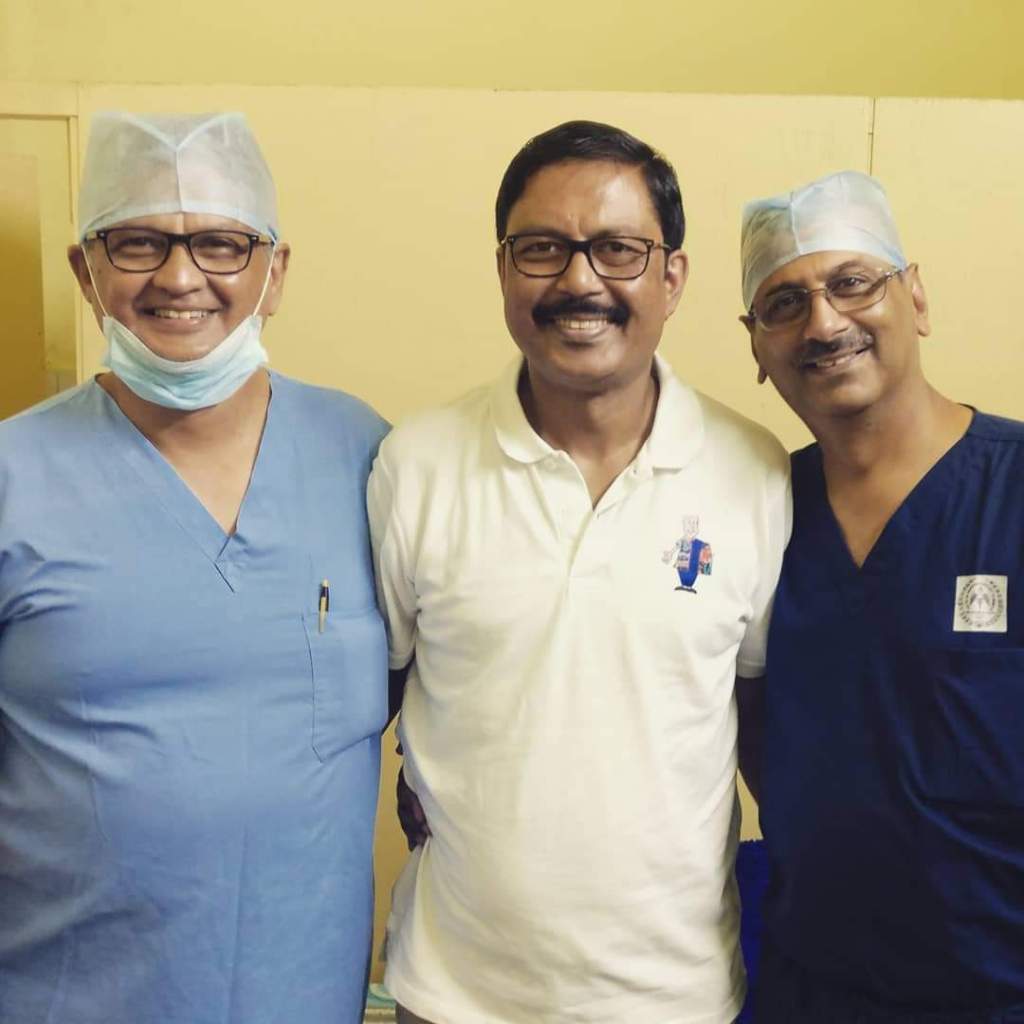
Three of us enjoyed time together And operating together. Unfortunately one is no longer with us.

Dibrugarh or ‘Ti-Phao’ meaning ‘Place of Heaven’, as it’s known in the Ahom language. The Ahoms were the dominant dynasty and ruled Assam for almost 600 years. They came originally from China and conquered most of Assam.

Dibrugarh lies on the banks of the Brahmaputra, the only masculine river in India. The two main source of economy in Dibrugarh is tea and oil. It is surrounded by lush green tea estates. The first tea garden was established in Chabua around 20 kms from Dibrugarh.

Oil which was first discovered in India in nearby Digboi. During the construction of the Assam Railways in 1867, the engineers noticed the feet of the elephants employed were soaked with oil. The story goes that the British Engineer W. L. Lakes exhorted the local natives to dig in the ground for oil by shouting “Dig Boy!” Boy was a term by which the British referred to the local Indians, this practice still persists in the old colonial clubs established by the British, where the waiters are referred to as ‘boy’, despite being long in the tooth. Thus the name of the site became Digboi. The first oil well and refinery was established in Digboi barely 7 years after the first oil well in the world was dug in Pennsylvania, USA.

We stayed in a hotel, smack in the business district of Dibrugarh. Behind the hotel was an embankment on the Brahmaputra river. Every morning my friends and I would take a walk on the embankment enjoying the cool river breeze and have tea and samosa in a small shop. The area had offices of trucking companies and plenty of trucks were loading and unloading. On the side of a truck was painted, ‘Owner: Rajesh Chutiya’. This was quite amusing to us as ‘chutiya’ (चुतिया) is a slang used in Hindi and Urdu and means a dimwit or dumb person, when used as an adjective. However it could also be used as a verb ‘chutiya banana’ (चुतिया बनाना), which would mean trying to fool or con someone. You can get away with calling a friend ‘chutiya’ but if you called a stranger ‘chutiya’, he would be extremely offended.

There various theories to the origin of the word. One theory is misogynistic, it refers to the female genitalia and the person is behaving unpredictable like a female during ‘that time of the month’. It a term used by males to describe other males and is considered rude to use in feminine company. I remember a surgeon who used earthy language, used the word in front of a female gynaecologist. She was scandalized and would afterwards tell me “he actually used the ‘ch’ (च) word!”

Another theory could be chyuta (च्युत) in sanskrit means fallen, failed, declined, degenerated, deviated, uprooted (from a higher state), or unseated (from one’s seat of power). In contrast ‘Achyuta’ (अच्युत) means infallible and it’s another name for Vishnu. In the Bhagvat Gita, Krishna is called Achyuta or ‘the infallible one’.

But why would someone put the suffix of chutiya willingly against his name? Well I remembered reading in the papers some time in 2012, a complaint by Jyotiprasad Chutiya, General Secretary of the All Assam Chutiya Students Union, “Facebook had blocked all accounts of community members with the surname ‘Chutiya’, thinking the names are false and fabricated. They’re ignorant of the fact that Chutiyas are an ethnic tribe of Assam, with has a rich historical background in the state history.” The report goes on to say,” the slang ‘chutiya’ in most of North India, would loosely translate into ‘As_hole’. The move was done by the Indian team monitoring Facebook but it’s obvious that even Indians don’t know enough about India! What with 438 spoken languages and more dialects it’s not child’s play or Zuckenberg’s play to monitor content.” Facebook rectified it’s error and now if you search you will find the accounts of individuals with that surname restored.

I got interested and did some research on the subject. Dibrugarh was part of the Chutiya kingdom until 1523 A.D. when the Ahoms annexed it during the weak rule of the Chutiya King Nitipal. The Chutiyas were the earliest settlers in the plains of Assam. They were supposed to have come from Southern China with their own religion. However with contact with Vaishnavites they adopted Hinduism but still retained some of their original unique practices. Their language is now only retained by the priestly sect and the rest speak Assamese. During the Ahom rule they were inducted into part of the government and their language which at that time was the only written language was used for governance. The Ahom rule ended after the East India Company annexed Assam. Today Chutiyas inhabit upper and central Assam and number 2.5 million.

The origin of their names again has various theories. One theory states that it’s from ‘chu’, which means pure in their language, ‘ti’ which means water and ‘ya’ which means dwellers of the land or Natives dwelling near pure water.

The other theory states that they’re also known as ‘Chutika’, ‘tika’ means origin or people of pure origin.

The final theory is that because they’re original habitation was on the mountain tops or ‘chut’, thus the name Chutiya. However this cannot be true because chut does not belong to their language or any other dialect spoken in the region.

So this was education for me on the diversity of our country, where a slang used as a derogatory adjective or verb in one part of the country is a respected proper noun in another part.

Thoughts after completing the Ladakh Marathon in 2017

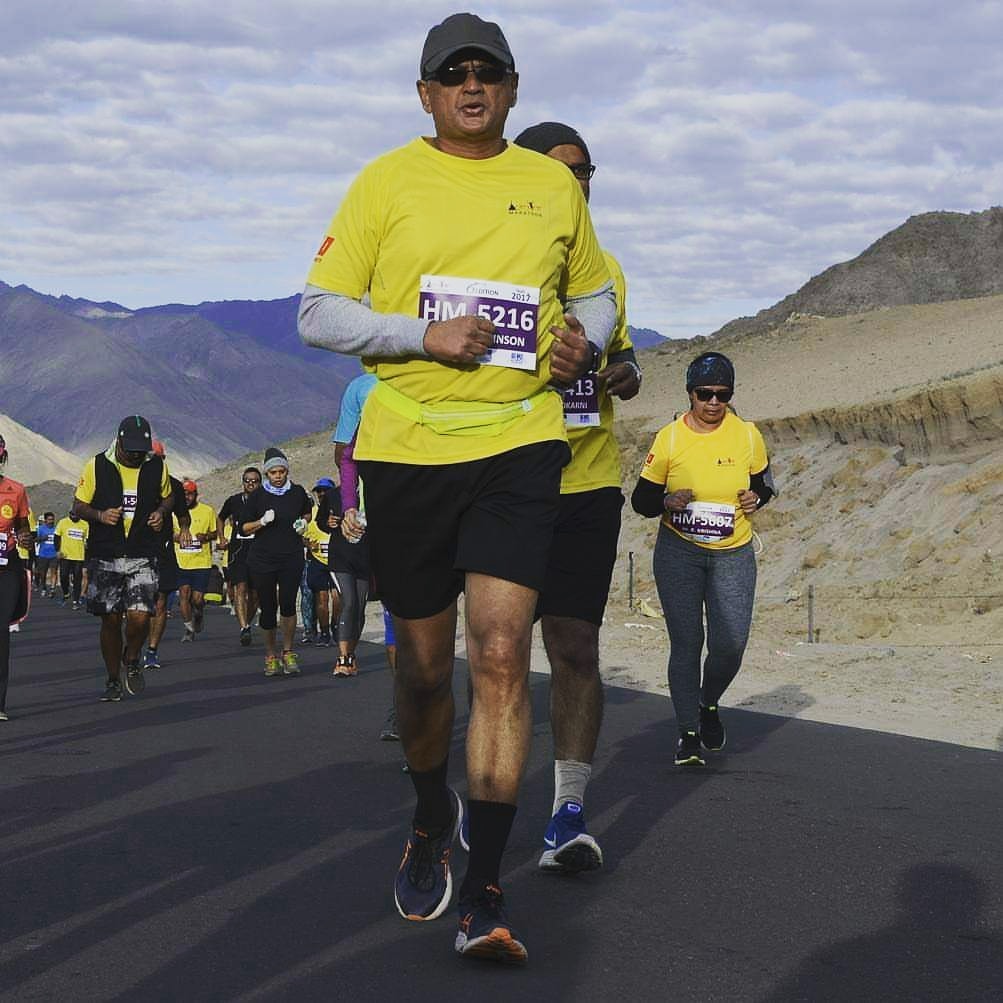
In 2017 on this very day I finished the Ladakh Marathon. I am reminiscing my feelings.

Facing early morning sun and running uphill in the ‘cold dessert’ terrain of Ladakh.

“After finishing 21 kms at an altitude of 11500 ft above sea level, it is but natural that there will be soreness and stiffness. One begins to wonder whether it’s worth propelling a 56 year old body or whether it is doing me any harm. I guess it is not accepting any limitations and believing you are only as old as you feel.

During these marathons you come across amputees, polio afflicted, blind and other differently abled people who are not willing to let their disabilities drag them down. In my case I had bad knees and was told 17 years ago I would require knee replacement in 5 years.

Every orthopedic surgeon worth his salt advised me to choose exercises which would not stress my knees. Initially I tried those exercises like swimming and water aerobics. But didn’t find any improvement in my knees. Then I took the decision 8 years ago that if knee replacement is inevitable then I might as well go out with a bang!

I joined a gym kept a personal trainer and never told him about the pain I was experiencing on doing exercises like squats because I knew then he would not make me do it. I also started running on the treadmill something which I never had done earlier. I discovered because of the pain we experience the movement at the knee joints get limited and along with it movement at other joints like hips. We are no longer able to sit cross legged or use an Indian style toilet. The muscles also undergo disuse atrophy. As the saying goes “if you don’t use it you lose it.”

Physiotherapy involves improving range of movement and strengthening muscles. I was ultimately doing physiotherapy on my knees albeit in an extreme form. I’ll warn anyone who plans to tread my path that things became worse before they improved. My knees would get swollen up, a synovial bursa ruptured, the shin would be extremely tender and the muscles especially the calves would be stiff and painful. Rather than having an athletic gait I had more of a gait of aged person.

Any consultation with an orthopedic surgeon and I would be given advice on how to go easy on the knees, use a lift instead of stairs and plan my work in such a way that I would not have to go up and down the stairs often. What I never told them is actually how much stress I was subjecting my knees to. It was kind of a stubbornness and a belief that I was doing the right thing.

Very slowly things began to fall into place. The range of movement on my knees improved and I could sit cross legged or in a squatting position. Then I decided to add a further stress to my knees, start running on the road and for distances. This must have been 3 years ago when I used to run a 1 km stretch and another discovery I made, along with the stiffness of the knees we also develop stiffness in the small joints of the foot. You tend to run flat footed with the entire foot slapping on the ground.

Gradually after working on my form I managed to achieve the desired forefoot then heel strike. Nothing comes easy and no pain no gain but the most important thing is to be consistent.
Now touch wood! My knees feel like new and recently got them checked up. The orthopedic surgeon was surprised when he reviewed the x-rays that how healthy my knees looked.

I discovered amongst the runners circle that there are many other people with similar stories like mine. Even scientific evidence also shows that running with the correct form improves the knees.”

My journey in running!

I started running 10 years ago and since then the design of running shoes has been constantly evolving. Running shoes then were ‘over built’, with multiple layers on the sole, cushioning, inner arch support for comfort and even springs at various strategic points. All in the belief that it would give an additional propulsion.

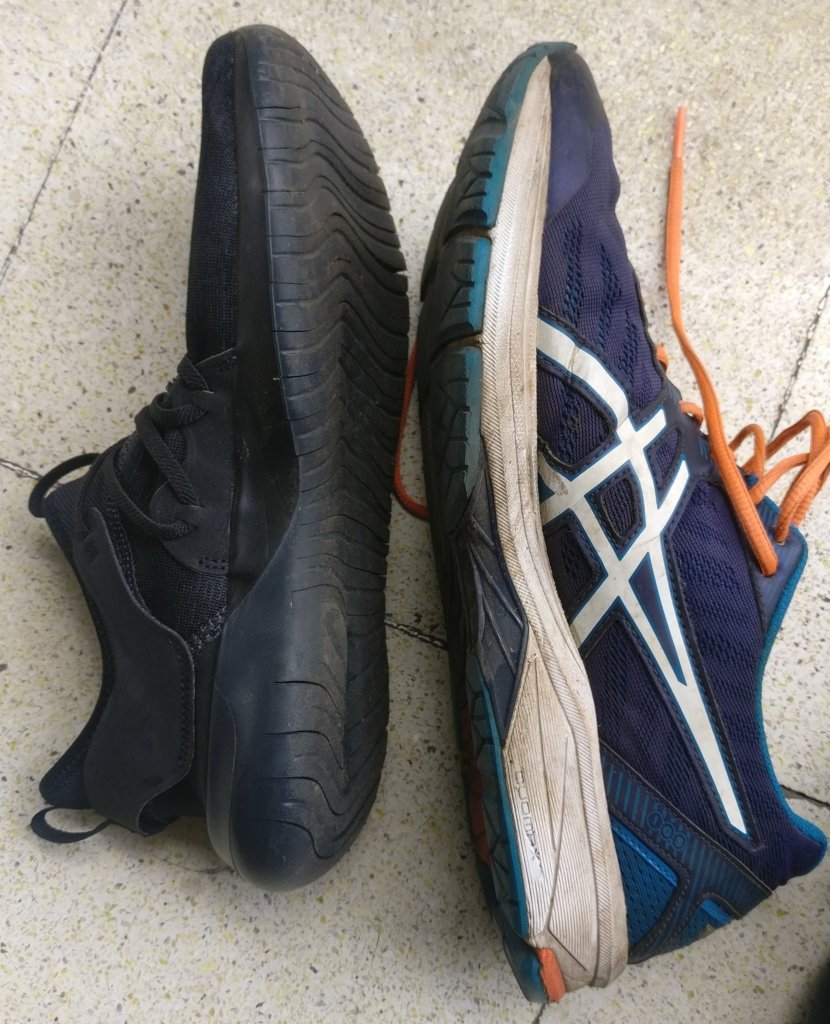
One of the first running shoes I bought had a thick sole with large corrugations, imaginatively named ‘zig tac’. The arches of these corrugations theoretically bent backwards when the foot takes a forward step then spring back giving and extra propulsion forwards. This happened, at least in theory and supposedly tested by the company.

Zigtac shoes

I remember reading long time ago a study on human feet and the conclusion they reached after the study was that people who walked barefooted had the healthiest feet. Even in running long distances, barefoot running is supposed to be 30% more efficient. The reason being that the feet can feel the ground while running and adapt it’s shape according to the terrain. All will remember that the legendary Milkha Singh ran barefooted, more because he could not afford shoes. Celebrity marathon runner Milind Soman also runs barefooted and only wears shoes in races, where it’s compulsory to wear shoes.

These days in marathons, I see a lot of people running barefooted. In the 2018, Tata Mumbai Marathon one young girl I noticed, ran so lightly on her bare feet. She overtook me effortlessly and she reminded me of a deer springing away.

My mother was extremely particular that our feet were shod, all the time. At home we wore chappals and outside of course shoes. So leave alone running I had never walked barefoot.

The human foot consist of 26 bones and 33 joints and is divided into the forefoot, mid foot and hind foot or heel. The bones in the mid foot form the medial, lateral and transverse arches of the foot. These arches are important during running to give a forward propulsion by expanding and retracting. I unfortunately suffer from pes planus or flat feet where the medial and the transverse arches have collapsed. I realized when I started running that the joints in my feet had stiffened, decreasing the flexibility of my foot. As a result when I ran, the entire surface of the foot would strike the ground, rather than the ideal forefoot and heel strike. That resulted in the force being directly transmitted to the knee. As apposed to forefoot heel strike where the force is dissipated over the forefoot and mid foot, lowering the impact on the knees.

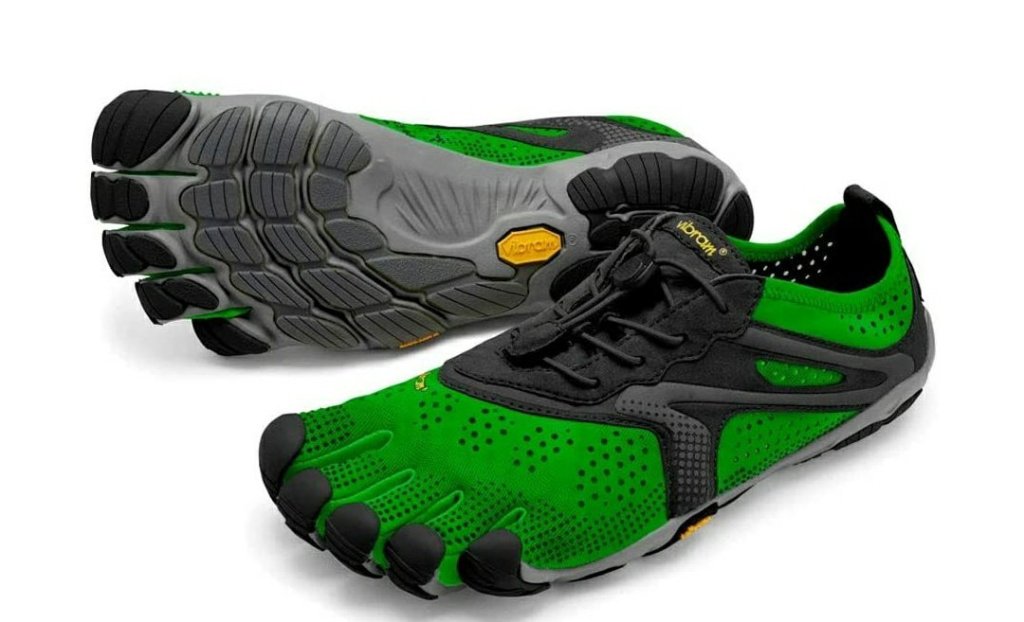
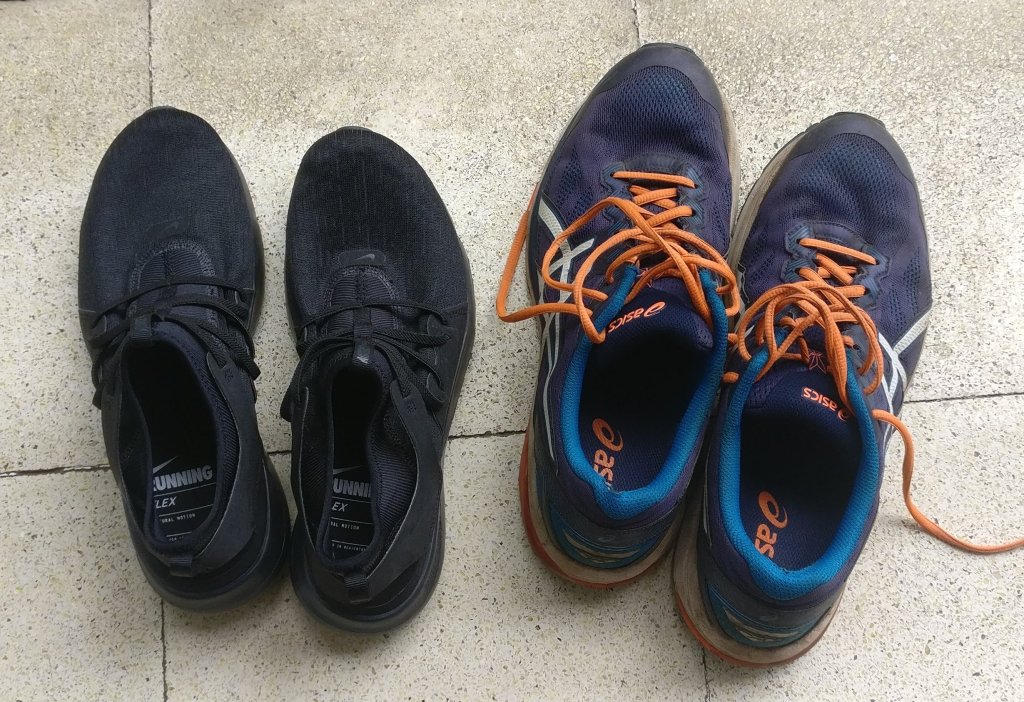
Now the trend in running shoes is towards minimalistic, the extreme example is Vibram shoes which fit the foot like a glove and have spaces for the toes. These would next best to running bare footed. But there are shoes with thinner and more flexible soles. I recently bought a pair online which are lace less and have a stretchable knitted upper. It has to be worn like a sock. I was surprised that my pace improved and I found running easier. Maybe psychological!

Vibram shoes

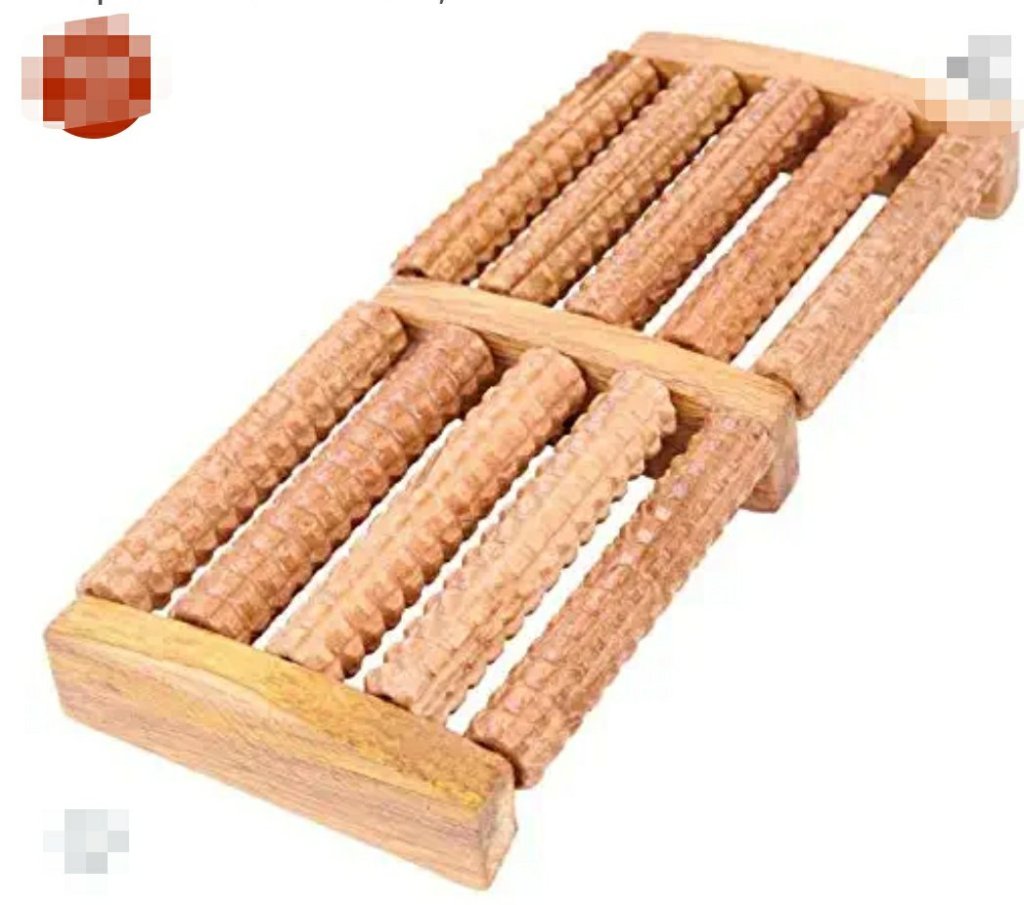
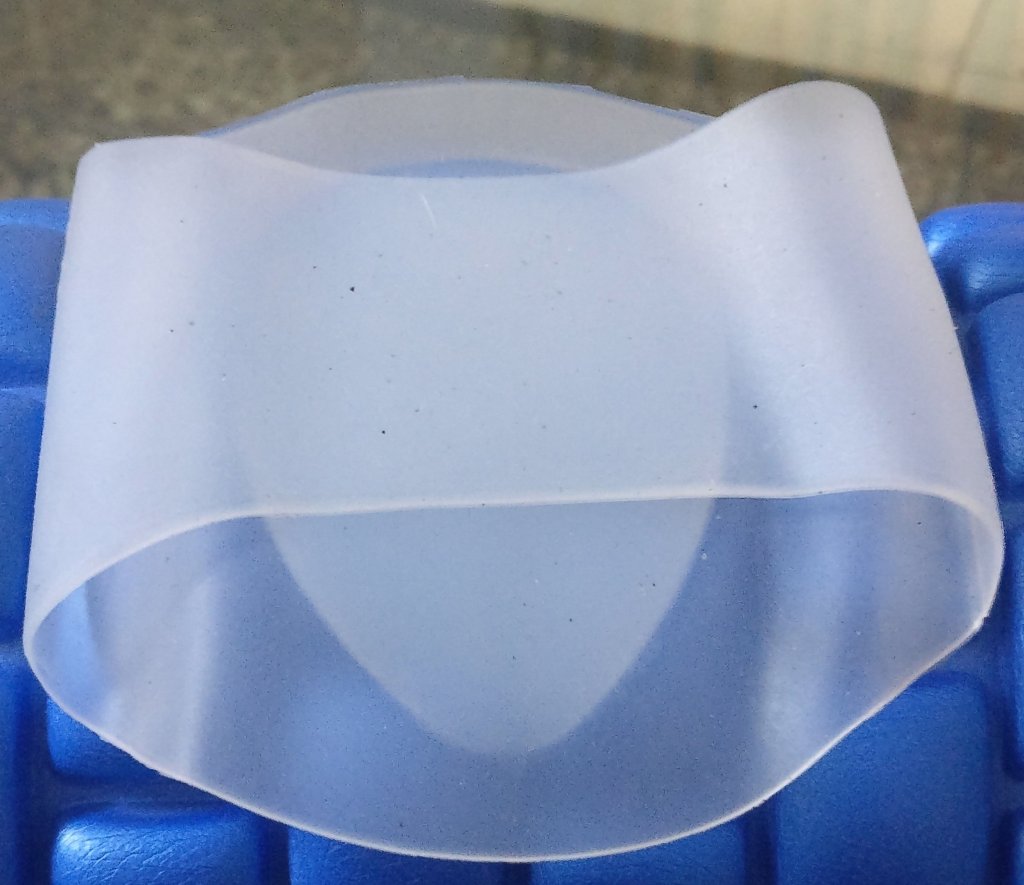
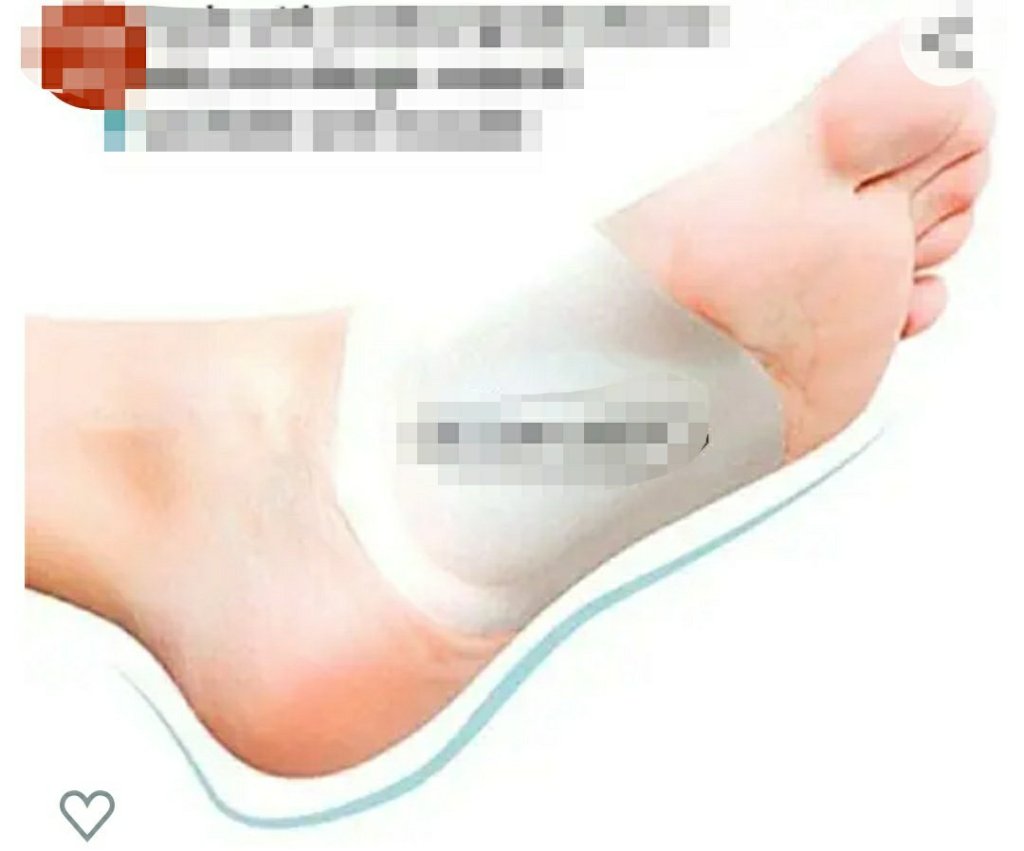
Earlier I invested in shoes which were supposed to prevent over pronation of the foot or the foot turning inwards which people with flat feet tend to do. I also wore a silicone arch support in belief that it would improve my plantar fascitis. I have pain on the sole of my left foot and swelling on the medial side of the left ankle joint since the last 6 years. Neither non pronation nor the arch support seemed to have made a big difference. I’d be limping on getting up in the mornings. The solution came on youtube and my own common sense. Every night I soak my feet in warm water with Epsom’s salt or magnesium sulphate. Followed by icing with an ice bag and stretching of the fascia with a foot roller.

Old and new
Compare the soles

Rolling my foot
Silicone arch support
Arch support

Surprisingly this regime has worked like a miracle and the symptoms are almost 90% less.

Facing our own mortality in the pandemic panic

Are we living or are we dying?
Both are true! Same as a glass of water can be half full or half empty.
In an increasingly uncertain life, two things are certain, first is that we are born and second is that we will die. Events in between are uncertain.

We all have an expiry date written somewhere but luckily we don’t know where and we cannot decipher it!
Suppose we could decipher it and know our date with fate, everything would become pointless. Our attitude would change completely from the enthusiasm of living and planning for the future to a feeling of futility because the future does not exist post expiry date!

In Tamil Nadu and Kerala there is a form of astrology called Nadi. It is based on the belief that the past, present and future lives of all humans were foreseen by Dharma sages in ancient times. The first sage being Agastya. This was written on palm leaves and stored for reference in the Vaitheeswara Temple in Sirkazhi, Tamil Nadu. A person’s leaf could be retrieved by the astrologer based on the date and time of birth and it could accurately tell you the day of your demise. One of my friends recalls that his brother went to a Nadi astrologer, who accurately told him his parent’s name and other details then was just about to reveal his date of demise when he silenced the astrologer mid sentence. He wisely didn’t want to know! If he was told the date, that knowledge would hang over his head like the sword of Damocles. He would count the days, the hours, the minutes and finally the seconds to the day and then it may turn out to be a damp squib! An example is of the Mayan Calendar which experts said predicted the end of the world in December 2012, because the calendar ended on that date. Considering the world is still around in 2020, it was a total wrong presumption! However a lot of people spent anxious moments anticipating the end of the world.

Scientist say “whether the earth will end” is not the question, the question is when the earth will end?”. The end may come as a meteor hitting the earth or a large solar flare destroying the ionosphere and exposing us to cosmic radiation or eruption of a supervolcanoe causing an ash cloud to block sunlight or even the Halydron collider which is trying to recreate the ‘Big Bang’ in miniature exploding.

Quoting the Bard of Avon, William Shakespeare, “A coward dies a thousand times before his death, but the valiant taste of death but once. It seems to me most strange that men should fear, seeing that death, a necessary end, will come when it will come.”

As I gradually creep toward senior citizen status many of my contemporaries have abandoned me. Some due to disease and others due to accidents. The incident which really shook me to the core was the passing away of a MBBS classmate, room mate, friend, philosopher guide and teacher, Sunil Agarwal. He died in an unfortunate car accident, this February 2020 and just before embarking on the fatal last journey, he messaged me good morning and that he was going to a mission hospital for a camp and that he was looking forwards to the cool weather there. Little did I know that by evening I would hear about his demise.


An analogy of life is a train journey. You boarded when you were born and on the way lots of passengers boarded and shared a part of the journey with you, only to disembark at some point for a different destination or sometimes permanently like Sunil.

I try to empathize with the cancer survivors who have been operated, received chemotherapy and radiotherapy. Now they can only wait or better live. The disease may raise it’s ugly head again. All it requires is one single cancer cell remaining, which can multiply rapidly and overwhelm their body. They could be in an pessimistic frame of mind or an optimistic frame of mind. In former they are dying a thousand deaths, whereas in the latter they die only once.

Legend has it that the ancient Gauls who inhabited present day France only feared the sky falling on their heads. The SARS COV-2 pandemic, has brought us to a similar predicament. Shoving our own mortality, right into our face. Suddenly we are faced with the real possibility that we may be infected and our infection may be severe enough that we may die!
One question is on everyones mind, “मेरा number कब आएगा?” or “when will my time come” and this is not with hopeful anticipation but with dread.

The virus is highly infective and a zoonotic infection or one which has jumped from animals into man following a crucial mutation which allowed it to infect humans. There is the conspiracy theory that it was genetically engineered to make that jump, blaming our neighbours to the east. But we won’t go into that!
This is not the only virus which is zoonotic, earlier we had swine flu, chicken flu, MERS and SARS which also belong to the same family of Corona viruses, so called because they have a halo or crown or crown surrounding it. These did cause their share of deaths but are not as infective as the latest avatar of corona, SARS COV-2.

Then there is the famous human immunodeficiency virus, which causes the acquired immunodeficiency syndrome or AIDS. The virus belongs to a family of retroviruses and is also a zoonotic infection. It was supposed to have jumped from the African green monkey into humans.
Arthur Ashe, the African American tennis player who is the only black player to have won Wimbledon, American open and Australian open contacted AIDS from blood transfusion following heart surgery. One of his fans wrote him a letter and asked, “Why does God have to select you for such a bad disease?”
His answer was, “The world over — 50 million children start playing tennis, 5 million learn to play tennis,
500,000 learn professional tennis, 50,000 come to the circuit, 5000 reach the grand slam,
50 reach Wimbledon, 4 to semi final, 2 to the finals,
when I was holding a cup I never asked GOD ‘Why me?’.
And today in pain I should not be asking GOD ‘Why me?’ ”
Happiness keeps you Sweet,
Trials keep you Strong,
Sorrow keeps you Human,
Failure keeps you humble and Success keeps you glowing, but only Faith & Attitude Keeps you going.”

Quoting Oscar Wilde, “To live is the rarest thing in the world. Most people exist, that is all.”
I see lot of my colleagues hiding in their homes and avoiding contact with patients in fear that they will contract the disease. However how long can you hide! The virus is going nowhere and our redemption lies in herd immunity or invention of an effective vaccine. Herd immunity will only kick in when at least 60% of the population is infected and as for the vaccine, attempts to create a vaccine for the other corona viruses also yielded zilch. This was thanks to the virus’s penchant for mutations, making it difficult for the antibodies to recognize the mutated virus.
However recently I read that the virus in it’s current mutation causes a less severe disease. This is also a self preservation strategy of the virus. If it killed all it’s host rapidly, it would no longer be able to spread and infect new hosts. Simply put all the people infected with the severe form of the virus succumbed to the infection ending the life cycle of the virus with them. However it is the ones with less virulent strains, who remained asymptomatic or only had mild symptoms, who spread it to others. Therefore the milder versions of the virus get disseminated while the virulent die with their host.

It has been predicted by an epidemiologist that COVID-19 will kill at least 2 million people in India. Though the number sounds large, so is the population of India at 1.3 billion. If you do the simple mathematics, 2 million merely represents 0.15% of the population of India, reducing the probability of you being part of this statistic to lower than the chances of you winning a lottery ticket. Have any of you won a lottery?

Since our knowledge of this virus is merely 6 months old we are daily learning new facts about it. The chances of contacting it while touching inanimate objects or fomites is low. The highest incidence of transmission is through aerosol or tiny droplets of saliva and mucus which are emitted when we cough or sneeze. These droplets when inhaled can enter the respiratory system via the trachea then bronchi, bronchioles which finally end in a tiny sac like unit called the alveolus. The respiratory system brings air into the alveoli, the lining is rich in blood vessels and exchange of gases occur. Oxygen diffuses into the blood and carbon dioxide comes into the alveoli which is exhaled. But now with the air also comes the virus and causes an inflammation in the alveoli, affecting the gas exchange. It also causes what is famously known as the cytokine storm, an over reaction of the body’s immune system to the virus. This causes irreversible destruction to the alveoli giving rise to a reduced lung function. The destruction could be so extensive that no alveoli is left for gas exchange.

The use of ventilators in these patients is push oxygen with pressure into the lungs, inflating all the alveoli and improving gas exchange. However now with no functional lung tissue left, pushing oxygen serves no purpose. Only an Extracorporeal Membrane Oxygenation ECMO, will work. This is similar to the heart lung machine used during cardiac surgeries. The blood is diverted to the machine and it oxgenates it and pumps it back, giving the heart and lung rest. But for a completely destroyed lung only option is a lung transplant.

The strategies which are being used for treatment are transfusing the plasma of patients who have recovered from the infection. Their plasma is rich in antibodies against the virus and help in fighting the virus. Antiviral like Remdesivir show promise in fighting the virus. A steroid like Dexamethasone which suppresses the immune response of the body is helpful in reducing the damage caused by a cytokine storm.
There is a race to make a vaccine for this virus spurred both by concern and commercial considerations. However the vaccine may not be effective because the frequent mutations the virus makes.

The virus is here to stay and we have to learn to co-exist with it like we learnt with other viruses. We cannot hide away forever and have to resume a new normal life which include the necessary precautions.
Finally we have to live and not exist or die a thousand deaths.

Studying for knowledge!

I know it’s like setting a cat loose amongst pigeons but this has been on my mind for quite some time.

I have taught in a private medical college for close to 25 years and I have noticed this disturbing trend amongst students. It begins in the 10th standard, by then students have either decided or the decision has been taken for them, as to what career they will pursue. It’s a limited choice, either Medicine or Engineering and anything otherwise is considered sacrilegious. Even before the 10th results are declared the students are admitted into coaching classes, which prepare them for the premedical or pre engineering exams. There is a ‘setting’, as known in local parlance or nexus between these coaching classes and some schools and junior colleges. The student admitted in these schools/junior colleges are not expected to attend classes. Instead they spend the whole day in ‘swot’ or coaching classes. The main focus is on the pre-medical or pre-engineering exams. The schools/colleges themselves don’t encourage their pupils to attend classes and their staff moonlight by teaching in these coaching classes. So they are not available to take regular classes. Some students don’t even enroll in coaching classes in their home city, but in famous towns whose names have become synonymous to quality coaching classes, like ‘Kota’. Kota has become a brand name in itself and many wannabe classes in the town have sprung up which have no connection with the original Kota classes but encash on the name. Kota being the name of a town cannot be trademarked. Even for getting admission in the original Kota classes the students have to undergo a pre-pre-entrance exam and only the best are taken. If you are take the best you are guaranteed a good result. The challenge would be to take the average and make them the best.

The students return to write their boards in their home town and as they were enrolled in local schools/colleges that’s no problem. They can now avail of the domicile of the state while applying for admission. Regarding domicile only Delhi is truly all inclusive and anyone can apply in the state medical and engineering colleges. Most other states have quotas for domicile, even for domicile in regions within the state then rural and urban. For clearing the board exams the student has sufficient knowledge to get passing marks and is guaranteed 100% marks for the practicals and of course class attendance. Thanks to the coaching-class-school/college setting.

The students through various permutations of caste, quota and capitation secure admission in a medical college. The students of today are farsighted. They know where their priorities lie. They glimpse the future through their own crystal ball. They realize that a mere MBBS doesn’t amount to much. This is true because the days of a family doctor is over, जिनके पास हर मर्ज की दवा थी, or who had the panacea to all illnesses. The general practitioner field has been taken over by graduates of the alternate-pathies or Ayush. No self respecting MBBS would allow himself to be a general practitioner. So now begins the quest for a post graduation degree. Once again admission is sought into specialised coaching classes for post graduate admission tests. Many of the students miss the morning lectures in college because they are attending the coaching classes. Students posted in surgery sometimes request me that they may be excused on Saturdays. Usually on Saturdays an expert on a topic flies down and delivers a lecture. I ask them what can he teach you which is different from what is taught in regular classes. They have no answer. Possibly ‘घर की मुर्गी, दाल बराबर’, or you don’t value what you have. Since the expert has flown down from a metro and has the aura of a sawant, it is believed that his teaching would be like the revelations of an Oracle.

“To study the phenomenon of disease without books is to sail an uncharted sea, while to study books without patients is not to go to sea at all” (Sir William Osler) and “The ward is your library, the patients are your teachers”. I must have quoted these adages from the Surgical textbook, Bailey and Love, to students, ad nauseum but with no avail. Unfortunately it is possible to pass MBBS without ever having seen a patient and passing is all that is required. Because admission into post graduation depends on how you fare in the entrance exam and not on your MBBS marks. What is taught in the coaching classes? How to approach the entrance exam and how to score in multiple choice questions. Question banks with questions from previous years is distributed and studied as the questions repeat, sometimes almost upto 20%. The theory taught is related to these multiple choice questions. Internship in hospitals where presence in spirit and not in flesh is required is sought. The flesh can attend the coaching classes while the spirit does the internship. This has resulted in MBBS graduates with zero practical knowledge and selective theoretical knowledge.

So the student cracks the post graduate entrance exam and gets admission in a post graduate seat. The most sought after seats are the ones where ‘practice’ or patient footfall is good. For example orthopedic surgery, trauma is increasing and not decreasing thanks to the fast pace of life, there is always trauma and people are breaking bones. A broken bone is obvious even to the untrained eye of a patient on an x-ray. Not much persuasion is required regarding the need for surgery. In contrast in general surgery a patient with appendicitis, intestinal obstruction or perforation peritonitis would not show much in his x-ray which would be discernable by the untrained eye.

Gynaecology is another all time favourite because every married lady will become pregnant sooner or later, preferably sooner. She will have to deliver and a Nursing Home close to home is preferred. It is convenient for delivering tiffin and accommodating visiting relatives. So there is a ‘friendly neighborhood obstetrician’ in every locality. In our days suction cups, forceps and manipulations were used to ensure a vaginal delivery. These days the Obstetricians take no chances, if there’s even a slightest doubt then it’s safest to do a Cesearian section. What surprises me that these same ladies who have undergone multiple Cesearian sections when told they will require an appendectomy, baulk and say they are scared of operations, can’t it be fixed with medications? When asked how they endured the multiple Cesearian sections, they retort, “that was many years ago”.

Dermatology is another sought after speciality where there are plenty of patients and no emergencies. These days dermatologist are packaging themselves as cosmetologist. Their plethora of services along with consultation includes beauty treatment.

Radiology used to go abegging when I finished my MBBS, because in those days x-rays were the only diagnostic tool in the hands of the radiologist. Now there is a plethora of diagnostic tools like sonography, CT scan, MRI and PET scan. Interventional radiology has also taken in a big way. Now radiology is in the great demand for the same reasons, plenty of patient footfalls, no emergencies. However being a dependent branch it involves schmoozing specialists but once the chain is established it is all hunky dory.

Medicine is another sought after speciality because physicians are the gate keepers. Almost all patients initially land up first to a physician who in turns decides where to send the patient. Somebody describes them as Kings because “जिसके पास प्रजा, वो ही राजा” or the one who has a following is the King. The physician can manage the patient initially till relevant specialist sees the patient. The physicians also always have a gaggle of chronic patients suffering from diabetes, hypertension and heart disorders. These ailments cannot be cured and can be merely controlled, hence the physicians have patients for life. Physicians fitness is mandatory for patients posted for routine surgery. It’s their job to optimize the patients for surgery.

Ophthalmology is another speciality where footfalls are guaranteed. All of us require glasses after 40 and cataract surgery after 60 is all part of the aging process. This speciality has few emergencies and plenty of patients.

Coming to my speciality, surgery, it lies somewhere in between. The surgical field has also been encroached by the superspecialist depleting the field. Now a general surgeon handles purely general surgical problems, leaving the cancers for the surgical oncologist, vascular to the vascular surgeons, endocrine to the surgical endocrinologists, urinary problems to the urologists, head injuries to the neurosurgeons, gastrointestinal problems to the surgical gastroenterologists and lower gastrointestinal problems to the Colo-rectal surgeons. He is left with hernias, hydroceles, abscesses, wounds, lumps and bumps.

Finally the real value of a seat is determined by the market forces, which is most sought after and which attracts the highest capitation. Capitation fee or sometimes euphemistically called donation is uniquely an Indian term, refers to an illegal transaction in which an organisation that provides educational services collects a fee higher than that approved by regulatory norms.

Now once a student gets his speciality of choice or had no choice, just had to take what he gets. If he gets surgery than his goal now is to get a super speciality seat. No one except fools like me would be happy being a plain general surgeon. But I can say because I have worked in all specialities of surgery, I can teach the superspecialists some practical things.

The students we get from premiere institutions are solely lacking in practical knowledge. Some don’t know how to take the blood pressure others don’t know how to start an i.v. line. One student introduced an i.v. cannula into the vein in the wrong direction, pointing distally. After starting the i.v. the patient’s hand got swollen up. But now the focus is studying for the superspeciality pre admission test and the cycle begins again. After that they will be studying for a foreign degree.

Someone said “When I finished my studies I began my education”. The question is when will the studies end and education begin?