Unknown's avatar

About rajuwilk

I am a writer by passion but a surgeon by profession.

The pig party!

There were many pets in Men’s Hostel, when we joined one of the seniors had kept a monkey in appendix. Favourite ragging question was “what does he feed his monkey?” The answer was bananananaa.” Which had to match Beethovan’s Symphony which began with a ‘Tanananaa’.
There was a cat christened Thomas, named after it’s owner but it came to along with anyone who fed it. We used to use Thomas’s services to rid of the lizards in our rooms. Just bring him to your room and tap the wall with a stick, above where the lizard is perched. It would race down in the opposite direction and Thomas would pounce and grab it with his paws and swallow it whole. One of our Super Seniors decided to test the 9 lives of Thomas by throwing it down from the Supertop. Thomas landed on his feet and limped away. He had now 8 lives remaining!
Our juniors bought two Yorkshire Piglets from RUHSA. They were very cute with pink skin. They were Christened ‘Coccus’ after a Professor of Microbiology, Grace Koshy and Pulli after the Principal the great Benjamin Pulimood. These names were written on there bellies in bold writing. They were let free in the enclosure behind the kitchen in Men’s Hostel and the Thambis fed them all the left overs and vegetable peels. Within 6 months time they grew to 200 pounds, which speaks miles about the Hostel leftovers.
Now we come to the sad part, as the pigs had been bought by contribution amongst the juniors with profit on their minds. One of them had to be sacrificed to realise the profits. A professional butcher was brought from town and I think Coccus was the first one to go. The meat the enterprising juniors sold to lot of staff and with the proceeds bought what else but booze and organised a pig party on Appendix terrace. The menu was pig, fried, boiled, grilled and curried. I had the privilege of being invited to this party and throughly enjoyed. Luckily no one ended with ‘Pig Bel’. I was not there to know about the fate of Pulli, however I learnt that RUHSA got smart after that and refused to part with their Piglets.

Unabashedly the BOSE

Our entry into CMC

We are the Batch of 1978 or also known by the acronym ‘BOSE’. Every batch in CMC is unique and we are no less as I will elaborate further in this article.

Our entry into the haloed halls of the Christian Medical College, Vellore was on the 17th of July 1978.
In the centre the Janata government was in power. The first non Congress government to rule India since independence. The Prime Minister was Mr. Morarji Desai an ardent advocate of temperance, vegetarianism and auto urine therapy. His famous treatise to this form of treatment describes his early morning walk in his lawn barefooted, allowing the dew to percolate into his system through the soles of his feet. Then going to the squat toilet and cupping his palms for a perfect ‘mid stream clean catch’ of the first urine of the day and drinking it directly from his palms. This of course spawned many jokes like “No whisky for Morarji, only Pissky!“ and When asked by the American President at a state dinner, what he would like to drink? He replied “No thank you! I carry my own drinks.“
There must be something in this therapy because he lived to the ripe age of 99.
The Health Minister, Mr. Raj Narayan was a former wrestler turned politician who was dubbed as a ‘giant slayer’ because he defeated Mrs. Indira Gandhi in her pocket burrough of Raebareilly. He left his mark on Vellore by donating the famous ‘white elephants’, one which was parked outside CHAD and the other outside RUHSA. Some of you may remember them as large white mobile clinics with the basic facilities installed in them. However they were mostly unsuitable for the rough and narrow rural roads, hence were mostly parked. Because of their size and colour and of course utility or rather lack of it, they got the apt moniker of ‘White Elephant.
The state was ruled by the AIDMK party and the Chief Minister was a former film star, who had many monikers one of them ‘Makkal Thilagam’ or people’s King, Maradurur Gopalan Ramachandran Menon or MGR. He had instituted the mid day meal scheme for school children which was very successful. He again was an advocate of temperance and hence Tamil Nadu was a dry state when we joined. If you wanted to drink you had to go to Chitoor or buy army canteen booze from ‘Devil’.
The Devil incarnate was the friendly neighborhood illegal booze seller who would come knocking on your door with a Hercules XXX army rum bottle inside an army stocking, “Saar Rumm wanum Saar?” (Do you want rum sir? ) and he would pull down the stocking just enough to display the label on the bottle.
There was also an Amma near Otteri who distilled some real vile, vomit green stuff. Stored in a matka and dispensed in old bottles. We had a New Year’s party in first year with that vile brew and needless to say some vomited, some passed out, some became emotional and confessed their undying love for a class girl.
One continued to vomit the next day and was admitted in the hospital with Hepatitis A. Luckily no one was condemned to a life with a white cane!
MGR also declared the year we joined that medical education should be in the Tamil language. When a team of medical teachers approached him and tried to explain the logistic difficulties, especially translating all the text books into Tamil. He retorted by producing an ancient Sidda treatise and said “If in ancient times it could be written in Tamil, why should it be a problem now?”
There was a lot of apprehension especially amongst the non Tamil speakers but luckily enough it remained a politician’s election promise and like all election promises it was never seriously followed through.

Let me elaborate some points of our unique points.

1. We were the first batch to have the fee hike to ₹3000/-. The Batch of ’76 paid ₹800/- and the Batch of ’77 paid ₹1500/- but it was doubled for us. I believe it still remains frozen at that princely sum. Though inflation has eroded its royal sheen and made it a more plebeian figure. Our seniors used to refer to us as the 3000 batch and they protested on our behalf even before we had joined. Nice of them because they were not affected.

2. We were the last Batch at least the men to face the 3 days initiation ritual. After our Batch the administration put their foot down and banned the 3 days initiation. It started with the ‘Last Supper’ and ended with the Ducking in the pond. During those 3 days there were no classes and mornings started with group exercise, roll in the mud and getting ducked after appealing to God for rain. The rest of the day was spent in amusing our fagmasters and in the evening amusing the Hostel.

3. We had the least number of intra class fixtures or fixtures per say. Whatever fixtures intra or inter class took, happened at the very end. Of course with some exceptions.
You knew when someone was fixed when the Watchman came shouting down Edward Gault drive, “So and So Saar! “ and So and So would peek out of his room, “Enna Watchman?” (What is it Watchman?) “Phone call Saar!” And the Hostel will reverberate with shouts of “De! De! Steady So and So.” Then he would begin to spend a large amount of time on the other side of the road. In SA Hall, in the library and of course in the bushes.
We had a Principal who would go for a nightly constitutional along with a 6 battery torch and shine it into the bushes. Took pleasure in being a killjoy.

4. We were the last Batch to write the first year exam. The Batches after us never faced the fear of getting failed on a whim of a teacher and the prevailing ‘3 strikes and you are out’, rule.
All of you may not know that in those days the rule was if you failed 3 times in the first year then you had to leave the course. But after the first year you had the freedom of failing as many times as you wished. There were some who took their time leaving.
Until that time only one person had managed to fail thrice in first year and coincidentally he was from my home town of Nagpur.

5. We were the first Batch to have the women bused back to the safe confines of Women’s Hostel during our COP (Community Orientation Programme) in Mottupalayam rather than stay in the village. Because in the previous Batch 90% got fixed during the COP. The administration thought there’s too much Kaadal (love) in the village air so segregation of the sexes was safer.
The boys spent the nights sleeping on the floor in a thatched hut and had Kullu and Kalli (preparation of horse gram and ragi) for dinner while the girls had the luxury of their Hostel rooms and saapdu (food).
We had a Bridge playing set in our class and JP of Community Medicine was an ardent Bridge player. He used to land up after dinner to play bridge. One of the boys got disturbed by the lights and talking in our hut. He got up to agitate and reached for his spectacles but when he put them on and he saw JP and immediately went back to sleep, with his back turned to the players.
We were supposed to go around the villages sing health education and awareness songs in Tamil composed by Mardmuthu the Tamil communicator in Chad. They were mainly about measles vaccination. We were supposed to bathe the children and apply anti scabies ointment on them in that way educate the villagers on prevention. Then we had to go from house to house interviewing people and collecting data as per a proforma.
The questions included their opinion on the medicinal herbs, ‘Sotkataray and Nochuthorai’.
I recently discovered one of them is Aloe vera. We also made a soakage pit by digging a hole in the ground and filling it with broken pieces of bricks. This overflowed on the first day of use.
We used a cement outline of a squat toilet placed over a pit, surrounded by burlap as toilets. Once our sojourn was over the cement slab removed and the pit was filled up with mud and later it could be used for manure. We tested the purity of well water by a Horrocks apparatus. And when the girls had left swam in the same well in our birthday suits in the dark of the night. In the day time we saw were snakes swimming in the well and that was the end of our swims. All this was to lead by example. Hopefully we were good examples!

6. We were the first Batch to stage a march past during our first term Biostatistics exam.
Biostatistics was not a University subject but since it was considered useful for us in the future, especially if we planned to do research. It was taught as an additional subject.
We were all provided a pink coloured book textbook with ghostly white illustrations on the cover as a course book. My book was disfigured by a class mate by writing the moniker of a class girl on every page and the cover. He presumed I was in love with her. I won’t reveal the name suffice to say we were in that precarious age when we were in love with the idea of being in love.
The lectures were pretty boring and as I remember they were held in the biostatistics department near the library. Dr. P.S.S. Sunderao and his minions would teach us the ‘measures of central tendency’. These were really beyond me and only B. Venkatesh appeared to be comprehending. No wonder he did research on ‘The gateway theory of pain’, during MBBS and now of course has many papers to his name.
The motto of CMC was corrupted by our seniors from “Not to be ministered unto, but to minister”, to “Not to be conned but to con”. And our seniors were very serious about this ministry. Before the terminal exams we were told by our seniors that it is a tradition not to complete the biostatistics exam and to wear fancy dresses, submit your papers early and have a march past in the SA Hall.
Each ace con senior would give his spin to the story of what earlier batches had done. One said “we all chanted biostatistics F.O. as a marching beat!” And of course the term tradition was mentioned a number of times. We by then were used to the fact that tradition played an important part in CMC.
Before the Biochemistry exam during one of the terminal examinations I think it was Chemistry the Second Seniors came marching up the steps of the SA Hall in a single file, they marched along the balcony facing Women’s Hostel, chanting loudly “left-right” and then turned right, again right, then left and out via the staircase to the library.
Everyone was initially in stunned silence but then all burst into laughter.
The biostatistics exam was the last exam after which we were going home for the first time since joining CMC. We prepared ourselves for the exam by wearing lab coats. Many carried alarm clock in their pockets which was set to ring within 15 minutes of the start of the exam and further 15 minutes intervals.
There was a litter of kittens in Men’s Hostel, probably Thomas the mascot of Men’s Hostel had fathered them.
He was called Thomas because he was supposed to belong to a senior of the same name. He proved that cats have 9 lives by surviving a fall from the Supertop with only a mild limp. A Super Senior had thrown him in a fit of frustration.
Another classmate put one of the kittens in his lab coat pocket and also wore his lab coat along with the hanger, so you could see the hook protruding out behind his neck. Another classmate had a pair of stripped knee length stockings which he wore displaying the stripes prominently.
Now the exam started and the silence was punctuated by the shrill sound of an alarm clock. The invigilator, a relatively junior person did not know what to do. He would go up to the person and note down his name. Then the final alarm clock went off and then most of the boys submitted their answer papers and assembled near the staircase. After we had assembled in adequate numbers we marched down the same route as our seniors did, circumambulated the hall, chanting, “Biostatistics F.O.”. The invigilator noted down as many names as possible and chose the tallest and most prominent, as the ‘leader’ and ‘Leader’ was written against his name.
Then we all went back to the Hostel and had a good laugh.
Meanwhile Andrew from the Principal’s office, more popularly known as Vice Chancellor came beaming down the Gault drive. “Dr. Job wants to see all of you Saar.”, he said with a smile. Immediately we all ran helter-skelter, I remembering exiting Men’s Hostel via a gap due to a missing bar in the bogs.
In first year I was thin enough to squeeze through the gap, final year I was too big.
We decided to go to the Katpadi station and wait for our respective trains.
During the holidays a letter arrived addressed to my father from the Principal’s office, stating broadly, “Do you know your ward was involved in an incident of gross indiscipline and the authorities take a very serious view of this.” My father being a principal himself knew boys will be boys and laughed it away. He however penned an appropriate reply stating that I had received the necessary dressing down from him.
On returning to college after holidays we were all summoned to the Principal’s office.
I remember my inquisition with Dr. C.K. Job. He minced no words and came straight to the point, “why did you do it?” I mumbled something vaguely about being told it’s a tradition. “Tradition!” he said almost having an apoplectic fit, “do you know this is the first time such an incident has happened!”

7. We were the last Batch where the administration permitted a large number of us including yours truly to be provisionally admitted despite our mark lists not being available. They gave us 15 days time and I suspect it was more due to sympathy for ‘Terry’ Tee Seng Kiong because he had secured admission in 1977 but had to leave because his Malaysian school certificate was not recognized by Madras University. He went to Trivandrum and appeared for 12th from there but like me his results were not declared when we appeared for interview.
The next year anyone not having their mark list was shown the exit and the next on the waiting list was called.
So you guys narrowly missed not having the BOSE in it’s present composition.

8. We joined at a time when there was a change of Principals. Dr. A.S. Fenn the outgoing principal was easy-going but the incoming principal Dr. C.K. Job was strait laced.
He believed in a strict curfew time of 12 midnight for the girls, because “after 12 passions would rise.”
I wonder whether the word passions was used euphemistically.
He was not in favour of ‘Discos’ which had become a tradition post any party.
The parties also previously were more frequent. After each batch gave the Freshers a welcome party, the Freshers were supposed to give a return party.
He stopped the return parties cutting down on the number of parties.
The parties consisted of activities to get to know each other and also party games like ‘shrinking islands’ designed bring people real close…… in proximity at least. During the last
half an hour of the party, the lights were dimmed and the music played loud and the dancing began, which was frequently interrupted by an emissary from the Principal’s office or the Principal himself.

9. We had 3 Sunils in our class, Sunil Agarwal, Sunil Datta and Sunil Thomas Chandy.
Sunil Agarwal was called Dariwallah Sunil by Dr. Theodore due to his hirsute appearance. Dr. Theodore or Teddy as he was popularly known taught us Zoology. Whenever chick embryo was mentioned he would say “This reminds me of Chickmagalur and the impending bye elections from there. Hopefully Mrs. Gandhi will win.” Mrs. Indira Gandhi was standing from the safe constituency of Chickmagalur. Anthonysamy or popularly known as Botanysamy taught us, what else! Botany. Dr. James Verghese who taught us Chemistry was Jimmy but Dr. Rose who taught us Physics remained Dr. Rose. Mrs. Rose or Ma Rose taught us English. Her favorite words were “as such” because she frequently used it.

10. We had 6 Johns in our Batch, John Mathew, John Christo, John Alexander, Sajiv John and Jones (Johns) Kurian and Philipose John. They inhabited the block John of Men’s Hostel along with the other John’s of Men’s Hostel and the john was just nearby.

11. We must be only Batch who had a Sri Lankan Tamil, who neither sang nor played a musical instrument and what is really sacrilegious, did not play cricket.

12. Maybe this is the reason we never won an interclass music competition.
So in our final year we decided to give the bathroom singers and wannabe singers a chance. Lacking in talent, ‘kaaykoo’ (raucous) songs were chosen like Dr. Freud, the words of the song went like this,

“Oh it happened in Vienna, not so very long ago,
When not too many folks were getting sick
That a starving young physician tried to better his position
By discovering what made his patients tick

Oh, Dr. Freud, oh, Dr. Freud
How I wish that you’d been differently employed
For the set of circumstances sure enhances the finances
Of the followers of Dr. Sigmund Freud

He forgot about sclerosis, but invented the psychosis
And a hundred ways that sex could be enjoyed
He adopted as his credo, “Down repression, up libido”
And that was the start of Dr. Sigmund Freud “

Then for the Gumbal there was Changiz Khan. I am sure you don’t want to know the lyrics because it went like” Ohhhf! Aaah!…. Chang! Chang! Changiz Khan” and in the rest in gibberish.

Government of India Candidate

During the interviews I met some seniors who took me to the College Canteen. They were being friendly or a mite over friendly.
On the way we met another group of seniors returning from the canteen with another candidate.
The candidate was wearing a very loud full sleeves shirt with vivid floral prints, a tie, contrasting pants with the cuffs flaring to a full 32″. Bell bottoms as they were called in those days, a fading fashion of the 70s. His hair was heavily greased, moustache and aviator shades.
“Myself Madhuraj Singh, Government of India Candidate from Damoh, Madhya Pradesh. Unlike you who are still to be selected I am already selected and don’t need to be bothered by the interview.”
The seniors accompanying him began pulling his leg, asking him for a treat to celebrate his effortless entry.
I was encouraged by the seniors to join in the leg pulling but I desisted.
During the interviews Madhuraj Singh could be spotted boarding the bus meant for the candidates and even landing up for the physical check ups.
There were two other persons who stood out when we assembled in the Carmen Block. Mainly due to their incongruous dress. One was a small diminutive appearing girl wearing a pleated skirt, tee shirt and two tight plaits, school girl madari (akin). The other was tall thin with a single plait and wearing a top and skirt. These girls I was told were the female Government of India Candidate. The small one was appropriately named ‘Chunmun Jhunjhunwala and the tall one was ‘Evangeline Benedict’.
We didn’t have any interaction with these female candidates but Madhuraj Singh made it a point to be seen heard and be an irritant.
The final selection list was put up in Carmen Block on the 17th of July, 1978 and after completing the admission formalities and saying, good bye to my father. I walked down the path to Men’s Hostel. I met my future roommates down this path.
That evening was a Grand Dinner in Men’s Hostel or as we didn’t know then, the Last Supper. All the tables were joined together in the Mess and our entire class was seated around the table. We had to introduce ourselves to the hostel followed by cheering.
The seniors were very friendly and paid for any extras we wanted like eggs etc.
Then at the appointed hour the trumpet sounded like a bugle, ‘Taatara, Tattara!’
“Down on your knees” screamed all the seniors in unison. We were supposed to crawl up the steps to the common room. Our gazes had to be lowered at all times. During this climb I felt a stick placed under my chin forcing me to look up. “Do you remember me?” I looked carefully at the person dressed in white shorts, white tee shirt and slippers. When I hesitated with a reply he said “I am Madhuraj Singh or actually a final year student. Now you have to pay for all the insults you showered on me!”
Later after ragging was over I discovered another CMC tradition, fake Government of India Candidate. They were supposed be as irritating as possible so that you would either tease them or insult them. Then during ragging they would extract their revenge.
The Females must have also faced a similar fate. I believe one of the female faux Government of India Candidate feigned a panic attack. To which a well meaning class girl told her to take deep breathes and demonstrated how. Then during initiation she had to demonstrate the ‘orgasmic’ deep breathing to the hostel.

The Impact

During the impact in first year we spoofed on the fact that superheroes wear their underwears over their tights. This looks cool in comics but in real life it looks, to put it politely comic!
The men’s hostel had a co-operative store where you could buy the essentials and one of them were, underwears/jocks/jattis/chaddis! The ones popular in our times were manufactured by the TTK conglomerate under the brand name of Tantex. Keeping in mind the taste of the people who liked to add colour, even to their inner wear which were not normally displayed. It came in a rainbow choice of colours, a veritable VIBGYOR!
Since these unmentionables could not be washed by the dhobi. The risk of contacting the ‘Dhobi’s itch’ and having an irresistible desire to scratch down there was high. Hence they were washed in the sink of the bogs and strung out to dry in front of the room.
Seven different colours for seven days of the week. Some however extracted extra mileage from the them by wearing them inside out.
Getting back to the Impact, one of our classmates noticed an indigo jock strung outside a class mate’s room in the slums. By frequent washing the indigo had faded to a purple. Architang (Eureka)! The idea of the Ghost who walks in purple Tantex jocks was born. He borrowed the jocks from the owner who lent it without even giving a thought as to why would anyone want to borrow jocks!
The Impact began with a darkened stage and a prop on stage, then suddenly out jumped a figure from behind the prop. He was a masked man, wearing purple tights and over the tights he wore ‘purple Tantex Jocks’ and he was none other than the ‘Ghost who Walks’ Phantom. He danced a jig singing “Devil O’ my Devil, where the Hell are you my Devil” (Devil is Phantom’s Dog sorry wolf, by the way, not to be mistaken for the other Devil). He really made an impact.

The Treva Marshal Award

The prestigious Treva Marshal Award, for the best incoming student was purportedly to be awarded on Graduation Day. This award was named after a former warden of Women’s Hostel.
The awardees names, a boy and a girl where put up in the Carmen Block. This created some discontent amongst some of our classmates who felt they were deserving. One was even going to meet the principal to ask him on what criteria the awardees were selected.
The seniors swarmed around the awardees like flies for treats. Celebrating such a prestigious award.
But when one of the awardees was going to call her parents to be present during the ceremony, a senior took pity on her and told her it’s a big con.
This was another traditional con of CMC. Normally alleged smart alecks are chosen by the seniors for this honour.
In previous years the con was played to the hilt, seats were reserved for the awardees in the Scudder Auditorium and they were also included in the rehearsals. And on the day of the awards they waited and waited but their names were never called. They went and enquired only to discover they were conned!

Practical use of knowledge

During our second year when we were exposed to anatomy.
We tried to find some practical relevance of this otherwise dry subject. Cunningham’s dissection manual interspersed some vignettes in it’s otherwise dry directions. During dissection of the lower limb, more specifically the gluteal region it mentioned, “weakness in the gluteus medius muscle results in a waddling gait.” This knowledge made one of my classmates awake from his slumber and open his eyes. He scanned the dissection hall till he zeroed on an attractive petite girl with a not so petite derriere.
Her gait was poetry in motion like a ship rolling on the ocean and I was reminded of the Mitch Miller song, “She’s got a pair of hips just like two battleships……….”. A bulb light up in his mind and immediately he went up to her and stuttered “you got a waddling gait, you must be having weakness in the gluteus medius”. As you can imagine the girl was totally flabbergasted and didn’t know how to react. She turned to his companion who was looking sheepish and said “Scold him!”

Sexy Podimas

Men’s Hostel had a very dull menu in those days (I don’t know what the situation is now). You go to the table you could be assured that there would be three vessels full of Sambar, Rasam and Saadam. We had to stand in line and were dished out a plate with vegetables and beef or just vegetables. The only variations in the week were some days when we got Chola Bhaturas or some days the Kerala Barotas and other days Chappatis.
The Barotas (I suspect this is a corruption of Parothas) were unique in the sense they seem to have been made by pulling the Maida into a rope then laying it in a spiral fashion and rolling it into a circle and then roasting it on a Tawa with oil. When you tore the Barota it would unravel in a corkscrew pattern.
The Chappatis were as someone rightly described ‘bullet-proof’ because the cooks did not know how to place them on the fire and inflate them (phulkas). So in order to make them chewable a generous dose of oil was added to it.
However Sundays were a treat for the carnivores, chicken with the mandatory ‘chips’, substituting for the appalams (pappad).
The residents used to line up in advance to get the best pieces, the most popular where the leg and the breast. Some of the residents were more graphic when they requested for breast piece, “Thambi nalla breast piece” (Thambi good breast piece) and they would squeeze their own breast to emphasize the point.
In our routine dull cuisine there was a single silver lining of a ‘muttai’ or egg which we could order as an extra by paying with coupons.
The muttais available were:-
1. Kanadi muttai=Plain old fried egg because of it glass like quality was called Kanadi.
2. Omlette
3. Podimas=Scrambled egg
The variety in Podimas was legendary and had names:-
Some were named after famous personalities like ‘Ninan Chacko Podima’.
Others were patriotic like ‘All India Podima’ (This sometimes was corrupted by our classmates to sound like ‘Olinda Podima’, after a classmate of ours.)
Then there was the name which call a spade a spade, ‘The All Shit Podima’ (apt description of the cooking in Men’s Hostel).
The there was the graphic name of ‘Sexy Podimas.”
These Podimas had one thing in common all of them contained thakkali, kothamalli, vengaayam and pachai milagaai (tomatoes, cilantro, onions, green chillies) in varying proportions. Which one contained how much of what was known to no one!
Sometimes if an aggressive resident was served a Ninan Chacko Podima rather then the Sexy Podima that he had ordered it could land on the face of the Thambi.
Some residents tried to win immortality by attempting to devise and popularize a podima named after themselves. However after Ninan Chacko no other personality managed to garner that amount of fame and no two podimas were ever the same.

Nomenclature of the Thambis

Thambi as you all must be knowing means ‘younger brother’ in Tamil however it is used euphemistically for the servers in the mess. The Thambis of course had names but sobriquets were given to most. So for example if there was a Selvaraj then he would be known as Silverass.
During the time of the Los Angeles Olympics there was a Thambi who some felt resembled the famous American Sprinter so he was christened as Carl Lewis.
The senior of the Thambis who now had a cushy desk job in the mess of collecting money and handing out coupons was Pichamuthu who was affectionately know as ‘Pichu’ (perhaps influenced by the P.T.C.H.W. s of CHAD).
The most famous and perhaps the oldest Moniker was of a certain T.G.S Kuppusamy Reddy a very senior Thambi. He was rumoured to have suffered from congenital syphyllis and had the stigma of saddle nose, opthalmic signs and syhilitic arteritis. He was sometimes kept as a case in Opthal exams.
Our seniors thought he looked like a ‘Creep’, so he was popularly known as ‘Creep’.
I don’t know about the other Thambis but Creep quite like his new name whether he understood the meaning or reason behind it. Maybe the name Creep gave him a unique identity just like the filmstar, Sivaji Ganesan, Gemini Ganesan and Malayasia Ganesan. Everybody remembers Creep but nobody would remember Kuppusamy.
I had the good fortune of meeting Creep whenever I visit Vellore. He looks exactly the same (Creep-like).
He underwent corrective heart surgery perhaps for an Aortic Regurgitation some years ago . He needed monetary support and a lot of ex Men’s Hostelites contributed.
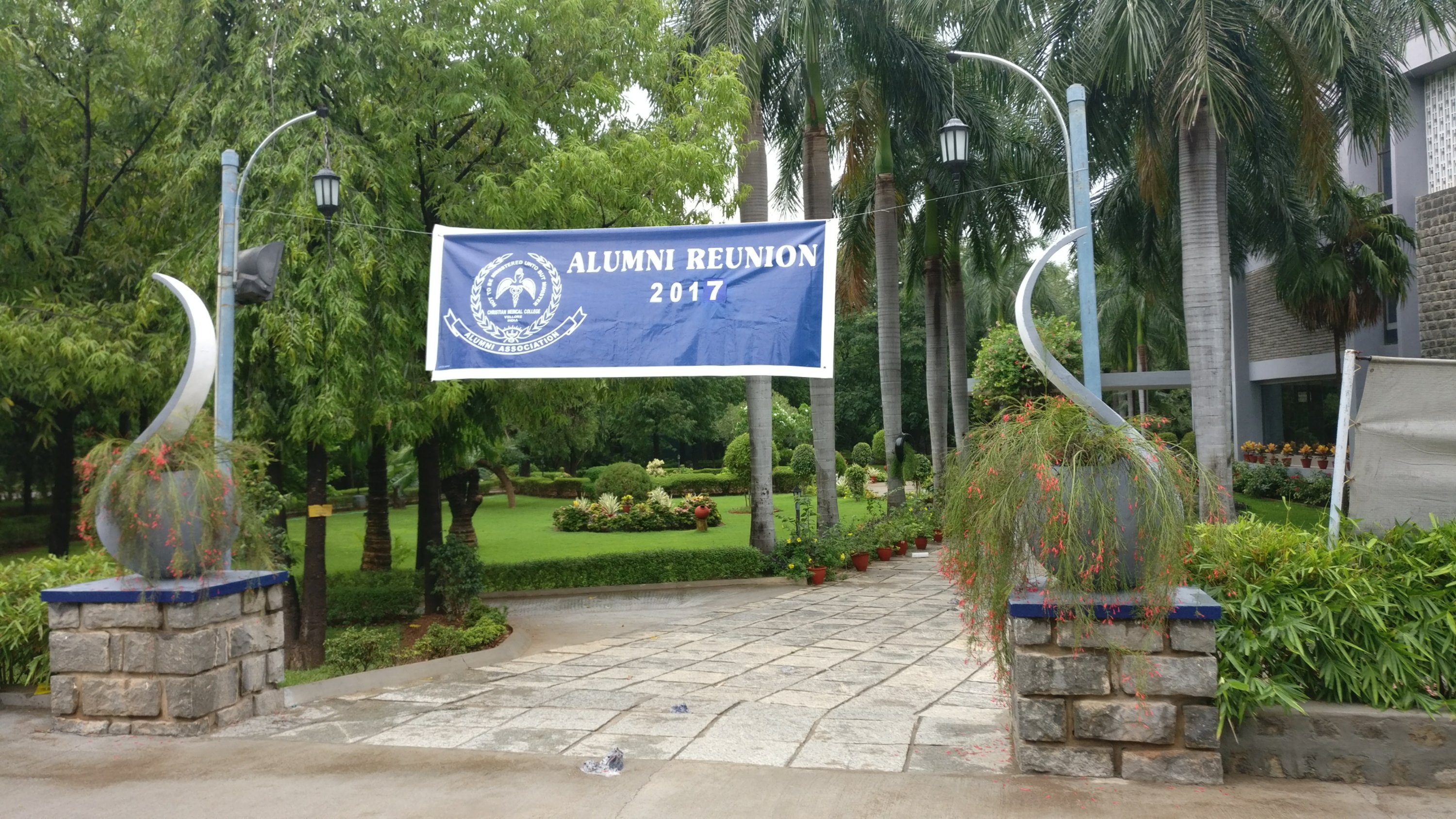
Creep now works as a Watchman in a Government Guest House, but during reunions he is spotted in the campus and Alumni tip him generously because he evokes nostalgia of a bye gone era.

Shopping for Sex

Two ladies of our class went shopping for dress material. They went to a clothes store and asked the shopkeeper to show them ‘checks’. They were horrified when the shopkeeper shouted to his assistant, “thambi sex kunduva” (Thambi get sex). They were further aghast when the shopkeeper asked them, “Enna madari sex vanom, chinna? Persaa?” (What type of sex do you want, small? Big?). Well our classmates did not know whether to be indignant or to laugh out loud.
Checks and sex could be confused by a native Tamil speaker for the same reason Charles would be pronounced ‘Sarless’.
Our native tongues influences the way we speak English to a large extent and I have made some observations in Tamil speakers.
They normally have difficulty in differentiating from ‘ka’ (क) (as in crow), ‘kh’ (ख) (as in Khan), ‘ga’ (ग) (as in grow). I remember trying to teach a Tamil classmate the difference between ‘Khana’ (खाना) (food) and ‘Kana’ (काना). Similarly the name Padma is also pronounced by some people as Badma or even Fadma, because again ‘pa’ (प) (as in party), ‘ba’ (ब) (as in bakery), ‘fa’ (फ) (as in food) are all represented by one alphabet. I remember a classmate telling me that the letter for ‘ha’ (ह) (as in Hare Ram) was adopted from Sanskrit so you find a lot of people don’t use it and Mahalakshmi will be pronounced as ‘Maggalakshmi’ and Bahadur Singh will be ‘Baggadur Singh’. Then we have the example of ‘t’ (त) (as in total), ‘th’ (थ) (as in thought), ‘d’ (द) (as in dumb). We all know that a Sangeeta will becomes a Sangeetha in the South and Anita will become an Anitha and so on. But the ‘th’ (थ) at the end will be pronounced more like ‘d’ (द) so it will sound like Sangeeda. Similarly is it Murlitharan as the cricketer likes to spell it or Murlidharan or Sendhilkumar or Senthilkumar and is it Kaadal or Kaathal?
As a result of this incident ‘checks’ is used commonly in our batch lingo. For example as an adjective to describe how someone is looking, if he or she is looking good then it’s ‘checks’. If someone posts a picture on social media, comments like checks are common.

Challenge a senior

Annually as Batches passed out better rooms became available for the residents in Men’s Hostel. Priorities for choosing these rooms are picked by lots.
The trend was to pick rooms near your friends and as you became senior you chose rooms higher in the Hostel.
One of our classmate was allotted a coveted room and was eagerly awaiting to occupying it. However the senior who was the former resident, despite having moved his stuff had not removed his lock from the room. Perhaps because of his busy schedule and studying late in Dodd Library.
Our classmate was unable to meet him, so finally frustrated he put up a notice on the Hostel Notice Board which read “Could the person occupying Room No.— kindly remove his lock otherwise I will be forced to break the lock”.
Now you can imagine the fury of the senior, a ‘pisser’ albeit now a 2nd Junior daring to even consider breaking his lock and forcibly occupy his room!
He threw down the symbolic gauntlet by writing below the notice, “If you break my lock then watch out for your cock!”

Climb every mountain

We followed tradition to the hilt by climbing every mountain surrounding CMC.
First was the pimple called college hill, then Toad Hill and finally Kailash. Mind you these hills were given these names by the CMC residents, their actual names are different. A climb up Kailash was planned by our Batch and since it involved a long walk to the base we had to set out early.
One of our classmate though most enthusiastic about the trip, did not wake up in time to join the gang. When he got up late, he hired a bicycle from Bagayam and cycled to the base of Kailash hoping to catch up with the gang. Then he began his solo ascent up Kailash and got completely lost. He had not carried any supplies with him not even water, confident of catching up with the gang.
After climbing for some time in the hot sun he became dehydrated and hungry. He spotted a grazing cow and was so desperate that he attempted unsuccessfully to drink milk directly from the udders. He also drank from any puddles he could find.
He was really in a desperate shape when a good Samaritan in the form of a Cattle Herder picked him up and carried him on his shoulders to his hut and lay him down on a cot. Our friend had limited knowledge of Tamil and could only mumble to the herder, “Passi! Passi!” (hungry), miming the act of eating with his left palm and right hand. The good Samaritan shared with him their humble repast and helped him get back on the road to the base of Kailash.

Picnic in Pondy

Legend has it that a Frenchman was in love with a local girl called Ponda. He lovingly called her ‘Ponda ma cherie’ or Ponda my dear and from that came the name of the French colony, Pondicherry.
Though now the name has been changed to Puducherry or New Town.
It was a former French colony but came under Indian rule in 1954. Being a union territory and under indirect control of the centre it has very low taxes on commodities like liquor. Hence liquor is very cheap in Pondy making it an attractive destination for trippers.
The men had superior numbers and hence voting powers and since there were no fixtures we were not influenced by the residents of the other side of the road. This voting power came in handy when the venue of class picnics had to be decided. Pondy was a very popular choice with the men for obvious reasons and unpopular with the women for the same reasons. The men prevailed due to superior numbers.
It was during a picnic in Pondy the choice of which the girls opposed vehemently but lost in the hand count. The day was spent on the beach wetting our toes and we split in the evening going to various restaurants for dinner. Two of our classmates went to a Vietnamese restaurant for dinner and consumed 250 ml of Old Monk Rum between the them. They returned to the parked Silver and Blue bus early and waited for the rest of the crowd to return.
One felt nauseous and suffocated inside the Silver and Blue and the other had dozed off. Waking up his sleeping friend he told him that he was going to the roof of the bus to get some fresh air. The drowsy friend mumbled incoherently his consent. So he climbed onto the roof and lay down taking in the fresh sea air and fell asleep. Next thing he remembers is being woken up by a classmate and being “We have to go, everyone was searching for you.” On climbing down he discovered what had transpired, when everyone had returned they found him missing and no one knew where he was. There was a desperate manhunt until his friend woke just long enough to tell them that he was sleeping on the roof.

Obituary to our departed classmates

I could go on and on about our days in CMC but I have to end it at some point. My account would not be complete without remembering the classmates who are no longer with us. We lost Praneeth Peter to an unfortunate swimming accident in our first year. In our second year Shantilata Devi also succumbed to head injuries following a motorcycle accident. Zita Shobharani left us after she finished her PG. Srideo Jha was next, died due to massive cerebral haemorrhage. B. Samson left us last year due to a massive heart attack. I’m sure they are in a happier place and to quote Billy Joel “Only the good die young.” May the souls of the departed Rest in Peace.
This has been a sample of our sojourn in CMC. Hope you enjoyed reading it as much as I enjoyed writing it.

Batch of 1978, for Alumni Magazine

We are the Batch of 1978 or also known by the acronym ‘BOSE’. Every batch in CMC is unique and we are no less as I will elaborate further in this article.
Our entry into the haloed halls of the Christian Medical College, Vellore was on the 17th of July 1978. In the centre the Janata government was in power. The first non Congress government to rule India since independence. The Prime Minister was Mr. Morarji Desai an ardent advocate of temperance, vegetarianism and auto urine therapy. His famous treatise to this form of treatment describes his early morning walk in his lawn barefooted, allowing the dew to percolate into his system through the soles of his feet. Then going to the squat toilet and cupping his palms for a perfect ‘mid stream clean catch’ of the first urine of the day and drinking it directly from his palms. There must be something in this therapy because he lived to the ripe age of 99.
The Health Minister, Mr. Raj Narayan was a former wrestler turned politician who was dubbed as a ‘giant slayer’ because he defeated Mrs. Indira Gandhi in her pocket burrough of Raebareilly. He left his mark on Vellore by donating the famous ‘white elephants’, one which was parked outside CHAD and the other outside RUHSA. Some of you may remember them as large white mobile clinics with the basic facilities installed in them. However they were mostly unsuitable for the rough and narrow rural roads, hence were mostly parked. Because of their size and colour and of course utility or rather lack of it, they got the apt moniker of ‘White Elephant.
The state was ruled by the AIDMK party and the Chief Minister was a former film star, who had many monikers one of them ‘Makkal Thilagam’ or people’s King, Maradurur Gopalan Ramachandran Menon or MGR. He had instituted the mid day meal scheme for school children which was very successful. He again was an advocate of temperance and hence Tamil Nadu was a dry state when we joined. If you wanted to drink you had to go to Chitoor or buy army canteen booze from ‘Devil’. The Devil incarnate was the friendly neighborhood illegal booze seller who would come knocking on your door with a Hercules XXX army rum bottle inside an army stocking, “Saar Rumm wanum Saar!” and he would pull down the stocking just enough to display the label on the bottle.
There was also an Amma near Otteri who distilled some real vile, vomit green stuff. Stored in a matka and dispensed in old bottles. We had a New Year’s party with that vile brew and needless to say some vomited, some passed out, some became emotional and confessed their undying love for a class girl. One continued to vomit the next day and was admitted in the hospital with Hepatitis A. Luckily no one was condemned to a life with a white cane!
MGR also declared the year we joined that medical education should be in the Tamil language. When a team of medical teachers approached him and tried to explain the logistic difficulties, especially translating all the text books into Tamil. He retorted by producing an ancient Sidda treatise and said “If in ancient times it could be written in Tamil, why should it be a problem now?”
There was a lot of apprehension especially amongst the non Tamil speakers but luckily enough it remained a politician’s election promise and like all election promises it was never seriously followed through.

Let me elaborate some points of our unique points.

1. We were the first batch to have the fee hike to ₹3000/-. The Batch of ’76 paid ₹800/- and the Batch of ’77 paid ₹1500/- but it was doubled for us. I believe it still remains frozen at that princely sum. Though inflation has eroded its royal sheen and made it a more plebeian figure. Our seniors used to refer to us as the 3000 batch and they protested on our behalf even before we had joined. Nice of them because they were not affected.
2. We were the last Batch at least the men to face the 3 days initiation ritual. After our Batch the administration put their foot down and banned the 3 days initiation. It started with the ‘Last Supper’ and ended with the Ducking in the pond. During those 3 days there were no classes and mornings started with group exercise, roll in the mud and getting ducked after appealing to God for rain. The rest of the day was spent in amusing our fagmasters and in the evening amusing the Hostel.
3. We had the least number of intra class fixtures or fixtures per say. Whatever fixtures intra or inter class took place, happened at the very end. Of course with some exceptions. You knew when someone was fixed when the Watchman came shouting down Edward Gault drive, “So and So Saar! “ and So and So would peek out of his room, “Enna Watchman?” “Phone call Saar!” And the Hostel will reverberate with shouts of “De! De! Steady So and So.” Then he would begin to spend a large amount of time on the other side of the road. In SA Hall, in the library and of course in the bushes. We had a Principal who would go for a nightly constitutional along with a 6 battery torch and shine it into the bushes. Took pleasure in being a killjoy.
4. We were the last Batch to write the first year exam. The Batches after us never faced the fear of getting failed on a whim of a teacher and the prevailing 3 strikes and you are out rule. All of you may not know that in those days the rule was if you failed 3 times in the first year then you had to leave the course. After the first year you had the freedom of failing as many times as you wished. There were some who took their time leaving. Uptil that time only one person had managed to fail thrice and coincidentally he was from my home town of Nagpur.
5. The first Batch to have the women bused back to the safe confines of Women’s Hostel during our COP (Community Orientation Programme) in Mottupalayam rather than stay in the village. Because in the previous Batch 90% got fixed during the COP. The administration thought there’s too much Kaadil in the village air so segregation of the sexes was safer. The boys spent the nights sleeping on the floor in a thatched hut and had Kullu and Kalli for dinner while the girls had the luxury of their Hostel rooms and saapdu. We had a Bridge playing set in our class and JP was an ardent Bridge player. He used to land up after dinner to play bridge with them. One of the boys got disturbed by the lights and talking in our hut. He got up to agitate and reached for his spectacles but when he put them on, he saw JP and immediately went back to sleep, with his back turned to the players.
We were supposed to go around the villages sing health education and awareness songs in Tamil composed by Mardmuthu the Tamil communicator in Chad. They were mainly about measles vaccination. We were supposed to bathe the children and apply anti scabies ointment on them in that way educate the villagers on prevention. Then we had to go from house to house interviewing people and collecting data as per a proforma. The questions included their opinion on the medicinal herbs, ‘Sotkataray and Nochuthorai’. I recently discovered one of them is Aloe vera. We also made a soakage pit by digging a hole in the ground and filling it with broken pieces of bricks. This overflowed on the first day of use. We used a cement outline of a squat toilet placed over a pit, surrounded by burlap as toilets. Once our sojourn was over the cement slab removed and the pit was filled up with mud. We tested the purity of well water by a Horrocks apparatus. And when the girls had left swam in the same well in our birthday suits until we discovered that there were snakes in the well. All this was to lead by example. Hopefully we were good examples!
6. We were the first Batch to stage a march past during our first term Biostatistics exam.
Biostatistics was not a University subject but since it was considered useful for us in the future, especially if we planned to do research. It was taught as an additional subject. We were all provided a pink coloured book with ghostly white illustrations on the cover as a course book. My book was disfigured by a class mate by writing the moniker of a class girl on every page and the cover. He presumed I was in love with. I won’t reveal the name suffice to say we were in that precarious age when we were in love with the idea of being in love.
The lectures were pretty boring and as I remember they were held in the biostatistics department near the library. Dr. P.S.S. Sunderao and his minions would teach us the ‘measures of central tendency’. These were really beyond me and only B. Venkatesh appeared to be comprehending. No wonder he did research on ‘The gateway theory of pain’, during MBBS and now of course has many papers to his name.
The motto of CMC was corrupted by our seniors from “Not to be ministered unto, but to minister”, to “Not to be conned but to con”. And our seniors were very serious about this ministry. Before the terminal exams we were told by our seniors that it is a tradition not to complete the biostatistics exam and to wear fancy dresses, submit your papers early and have a march past in the SA Hall. Each ace con senior would give his spin to what earlier batches had done. One said “we all chanted biostatistics F.O. as a marching beat!” And of course the term tradition was mentioned a number of times. We by then were used to the fact that tradition had an important role in the CMC.
During one of the terminal examinations I think it was Chemistry the Second Seniors came marching up the steps of the SA Hall in a single file, they marched along the balcony facing Women’s Hostel, chanting loudly “left-right” and then turned right, again right, then left and out via the staircase to the library.
The biostatistics exam was the last exam after which we were going home for the first time since joining CMC. We prepared ourselves for the exam by wearing lab coats. Many carried alarm clock in their pockets which was set to ring within 15 minutes of the start of the exam and further 15 minutes intervals. There was a litter of kittens in Men’s Hostel, probably Thomas the mascot of Men’s Hostel had fathered them. He was called Thomas because he was supposed to belong to a senior of the same name and he proved that cats have 9 lives by surviving a fall from the Supertop with only a mild limp. A Super Senior had thrown him in a fit of frustration.
Another classmate put one of the kittens in his lab coat pocket and also wore the lab coat along with the hanger, so you could see the hook protruding out behind his neck. Another classmate had a pair of stripped knee length stockings which he wore displaying the stripes prominently.
Now the exam started and the silence was punctuated by the shrill sound of an alarm clock. The invigilator, a relatively junior person did not know what to do. He would go up to the person and note down his name. Then the final alarm clock went off and then most of the boys submitted their answer papers and assembled near the staircase. After we had assembled in adequate numbers we marched down the same route as our seniors did, circumambulated the hall, chanting, “Biostatistics F.O.”. The invigilator noted down as many names as possible and chose the tallest and most prominent, as the ‘leader’. ‘Leader’ was written against his name.
Then we all went back to the Hostel and had a good laugh. Meanwhile Andrew from the Principal’s office, more popularly known as Vice Chancellor came beaming down the Gault drive. “Dr. Job wants to see all of you Saar.”, he said with a smile. Immediately we all ran helter-skelter, I remembering exiting Men’s Hostel via a gap due to a missing bar in the bogs. In first year I was thin enough to squeeze through the gap, final year I was too big. We decided to go to the Katpadi station and wait for our respective trains.
During the holidays a letter arrived addressed to my father from the Principal’s office, stating broadly, “Do you know your ward was involved in an incident of indiscipline and the authorities take a very serious view of this.” My father being a principal himself knew boys will be boys and laughed it away. He however penned an appropriate reply stating that I had received the necessary dressing down from him.
On returning to college after holidays we were all summoned to the Principal’s office. I remember my inquisition with Dr. C.K. Job. He minced no words and came straight to the point, “why did you do it?” I mumbled something vaguely about being told it’s a tradition. “Tradition!” he said almost having an apoplectic fit, “do you know this is the first time such an incident has happened!”
7. We were the last Batch where the administration permitted a large number of us including yours truly to be provisionally admitted despite our mark lists not being available. They gave us 15 days time and I suspect it was more due to sympathy for ‘Terry’ Tee Seng Kiong because he had secured admission in 1977 but had to leave because his Malaysian school certificate was not recognized by Madras University. He went to Trivandrum and appeared from 12th from there but like me his results were not declared when we appeared for interview. The next year anyone not having their marklist was shown the exit and the next on the waiting list was called. So you guys narrowly missed not having the BOSE in it’s present composition.
8. We joined at a time when there was a change of Principals. DR. A.S. Fenn the outgoing principal was easy-going but the incoming principal Dr. C.K. Job was strait laced. He also believed in a strict curfew time of 12 midnight for the girls, because “after 12 passions would rise.” I wonder whether the word passions was used euphemistically. He was not in favour of ‘Discos’ which had become another tradition post any party. The parties were also more frequent. After each batch giving the Freshers a welcome party, the Freshers were supposed to give a return party. He stopped the return parties cutting down on the number of parties. The parties consisted of activities to get to know each other and also party games like ‘shrinking islands’ designed bring people real close…… in proximity at least. During the last half an hour of the party, the lights were dimmed and the music played loud and the dancing began, which was frequently interrupted by an emissary from the Principal’s office.
9. We had 3 Sunils in our class, Sunil Agarwal, Sunil Datta and Sunil Thomas Chandy. Sunil Agarwal was called Dariwallah Sunil by Dr. Theodore due to his hirsute appearance. Dr. Theodore or Teddy as he was popularly known taught us Zoology. Whenever chick embryo was mentioned he would say “This reminds me of Chickmagalur and the impending bye elections from there. Hopefully Mrs. Gandhi will win.” Mrs. Indira was standing from the safe constituency of Chickmagalur. Anthonysamy or popularly known as Botanysamy taught us, what else! Botany. Dr. James Verghese who taught us Chemistry was Jimmy but Dr. Rose who taught us Physics remained Dr. Rose. Mrs. Rose or Ma Rose taught us English.
10. We had 6 Johns in our Batch, John Mathew, John Christo, John Alexander, Sajiv John, Philipose John and Jones (Johns) Kurian. They inhabited the block John of Men’s Hostel along with the other John’s of Men’s Hostel and the John was just nearby.
11. We must be only Batch who had a Sri Lankan Tamil, who neither sang nor played a musical instrument and what is really sacrilegious, did not play cricket.
12. Needless to say we never won an interclass music competition. So in our final year we decided to give the bathroom and wannabe singers a chance. Lacking in talent, ‘kaaykoo’ songs were chosen like Dr. Freud, the words of the song went like this,

“ Oh it happened in Vienna, not so very long ago,
When not too many folks were getting sick
That a starving young physician tried to better his position
By discovering what made his patients tick

Oh, Dr. Freud, oh, Dr. Freud
How I wish that you’d been differently employed
For the set of circumstances sure enhances the finances
Of the followers of Dr. Sigmund Freud

He forgot about sclerosis, but invented the psychosis
And a hundred ways that sex could be enjoyed
He adopted as his credo, “Down repression, up libido”
And that was the start of Dr. Sigmund Freud “

Then for the Gumbal there was Changiz Khan. I am sure you don’t want to know the lyrics because it went like” Ohhhf! Aaah!…. Chang! Chang! Changiz Khan” and in the rest in gibberish.

During the impact in first year we spoofed on the fact that superheroes wear their underwears over their tights. This looks cool in comics but in real life it looks, to put it politely comic!
The men’s hostel had a co-operative store where you could buy the essentials and one of them were, underwear/jocks/jattis/chaddis! The ones popular in our times were manufactured by the TTK conglomerate under the brand name of Tantex. Keeping in mind the taste of the people who liked to add colour even in to their inner wear which was not normally displayed. It came in a rainbow choice of colours, a veritable VIBGYOR!
Since these unmentionables could not be washed by the dhobi. The risk of contacting the ‘Dhobi’s itch’ and having and irresistible desire to scratch there. Hence they were washed in the sink of the bogs and strung out to dry in front of the room. Seven different colours for seven days of the week. Some however extracted extra mileage from the them by wearing them inside out.
Getting back to the Impact, one of our classmates noticed an Indigo jock strung outside a class mate’s room in the slums. By frequent washing the indigo had faded to a purple. Architang! The idea of the Ghost who walks in purple Tantex jocks was born. He borrowed the jocks from the owner who lent it without even giving a thought as to why would anyone want to borrow jocks!
The Impact began with a darkened stage and a prop on stage, then suddenly out jumped a figure from behind the prop. He was a masked man, wearing purple tights and over the tights he wore ‘purple Tantex Jocks’ and he was none other than the ‘Ghost who Walks’ Phantom. He danced a jig singing “Devil O’ my Devil, where the Hell are you my Devil” (Devil is Phantom’s Dog sorry wolf, by the way, not to be mistaken for the other Devil). He really made and impact.

We followed tradition to the hilt by climbing every mountain surrounding CMC. First was the pimple called college hill, then Toad Hill and finally Kailash. The Kailash marked an unique adventure in the life of one of our classmates. He did not wake up in time to join the gang. When he got up he hired a bicycle from Bagayam and cycled to the base of Kailash hoping to catch up with the rest of the gang. Then he began his solo ascent up Kailash and got completely lost. He had not carried anything with him hoping to catch up with the gang, so he was dehydrated and hungry. He spotted a grazing cow and was so desperate that he attempted unsuccessfully to drink milk directly from the udders. He was really in a desperate shape when a good Samaritan in the form of a Cattle Herder picked him up and carried him on his shoulders to his hut and lay him down on a cot. Our friend had limited knowledge of Tamil and could only mumble to the herder, “Passi! Passi!”, miming the act of eating with his left palm and right hand. The good Samaritan shared with him their humble repast and helped him get back on the road to the base of Kailash.

The men had superior numbers and hence voting powers and since there were no fixtures we were not influenced by the residents of the other side of the road. This voting power came in handy when the venue of class picnics had to be decided. Pondy was a very popular choice with the men for obvious reasons and unpopular with the women for the same reasons. The men prevailed due to superior numbers.
It was during a picnic in Pondy the choice of which the girls opposed vehemently but lost in the hand count. The day was spent on the beach wetting our toes and we split in the evening going to various restaurants for dinner. Two of our classmates went to a Vietnamese restaurant for dinner and consumed 250 ml of Old Monk Rum between the them. They returned to the parked Silver and Blue bus early and waited for the rest of the crowd to return. One felt nauseous and suffocated inside the Silver and Blue and the other had dozed off. Waking up his sleeping friend he told him that he was going to the roof of the bus to get some fresh air. The drowsy friend mumbled incoherently his consent. So he climbed onto the roof and lay down taking in the fresh sea air and fell asleep. Next thing he remembers is being woken up by a classmate and being “We have to go, everyone was searching for you.” On climbing down he discovered what had transpired, when everyone had returned they found him missing and no one knew where he was. There was a desperate manhunt until his friend woke just long enough to tell them that he was sleeping on the roof.

Getting lifted!

Tradition is considered important in Vellore and the seniors take on the responsibility of educating the gullible juniors about the traditions. The graduating interns during graduation day entertainment, gave their own spin to the CMC Motto “Not to be ministered unto, but to minister”, modified to “Not to be conned but to con”. And ‘Ace Cons’ abounded in the corridors of Men’s Hostel. ‘Getting lifted’ was supposed to be one such tradition and the intricacies of this tradition were taught to the juniors.
One day while returning from SA Hall I saw a large gathering of my classmates in a slum room. Curious to know what was going on I entered the room. Two of my classmates were sitting on the floor facing each other with their knees flexed in front and a group trying to persuade a classmate to be part of this challenge. “What challenge?” I asked. “Well” said a spokesperson for the group “_____ says he can lift 3 people together.” Pointing to a not particularly muscular or bodybuilder type person in the room, who nodded in acknowledgement when I looked at him. “And we are trying to persuade _____to take up the challenge.”
Well their powers of persuasion seemed to work especially when one member of the group vouched that he had been lifted and it was an amazing experience. So now to take the challenge _____ was supposed to recline on the folded knees of one of the people sitting on the ground while the person at the foot end sat between his folded knees facing him. The person on whose folded knees _____ was reclining then passed his hands under his armpits, around his shoulders and clasped his fingers behind his neck in a ‘full Nelson’ wrestling grip. The person at the foot end put his arms around his thighs and clasped his hands. Then the lifter stood over him and with all theatrics of a weight lifter about to lift a heavy barbell he bent down and unbuttoned his trousers. The lifted went into spasms akin to tonic, clonic contractions in a grand mal seizure but was pinned down at the shoulders and the thigh, only movement possible was arching his pelvis upwards making the job of the lifter easier. The lifter with more theatrics pulled down his underwear to expose his now shriveled frightened member and it’s two crouching sidekicks. Now the lifted tried spitting unsuccessfully in the direction of the lifter and followed it up with some bleepable expletives. The lifter produce a wooden foot ruler and measured the size of the already shriveled member, loudly announcing the figure, there was booing and someone said “he’s brought down the class average.” Then the lifter using the ruler lifted the member along with it’s sidekicks till it pointed skywards to a cheering audience. “See! I’ve lifted 3 people.” he said though the comparison left a lot to imagination.

Now the lifted was released and as you can imagine, he was furious. After quickly regaining his modesty he could not decide on whom in the gathering to vent his fury. He spotted the person who had vouched that being lifted was an amazing experience. He slapped him and said “I’ve got nothing private left!”
This quote has gone down in posterity and is forever remembered by our batch.

The 1971 Indo-Pak War through the eyes of a child!

Recent Bollywood movie with the 1971 Indo-Pak war in it’s backdrop made me realize that the current generation is totally oblivious about the war. “Those ignorant of history are condemned to repeat it.” Since these events happened in front of me I took it upon myself to educate this generation.
I was only 10 years old when the Indo-Pak War took place. It was the last full scale Indian and Pakistani confrontation if you don’t count the Kargil War, which was on a much smaller scale.
It began in my memory when Pakistani Sabre Jets invaded Indian airspace and attempted to bomb Agra Air Force base in December 1971. It is said that the Taj Mahal was covered by burlap and leaves to preventing the moon light reflecting on the marble and thus saved it from being sighted and bombed. The plans of the Pakistanis were thwarted by the Indian Air Force Gnats, who shot down the Sabre Jets making the pilots instant heroes and got their 15 minutes of fame.
The American made Sabre Jets were much quicker and were equipped with heat seeking missiles, which would sense the heat of the jet’s exhaust. But the British made Gnats like their name compensated by smaller size and dexterity. The pilots avoided the heat seeking missiles by turning off the engine intermittently or flying towards the sun confusing the missile.
On the 3rd of December 1971, I opened the local newspaper, to be greeted by the biggest headlines I have ever seen. Big both in content and size, it read “India declares war on Pakistan”. The headlines covered the entire top space of the newspaper in the largest fonts I have ever seen. I have never seen such a big headline again. It went on to say that Mrs. Indira Gandhi, the then Prime Minister of India, with the approval of the President, V. V. Giri had declared war on Pakistan. It also said a state of emergency was declared.
Let us look into the background of this. Not all will recall that what is now Bangladesh was the erstwhile East Pakistan then. It was a Bengali speaking majority controlled by an Urdu speaking minority based in West Pakistan. Bengali was the only language in Pakistan not written in the Persian-Arabic script. Separated from Pakistan by 1000 kms of the Indian state the local population felt exploited and discriminated. The Awami League lead by Sheikh Mujibur Rehman had won absolute majority in the election in March 1971 but were prevented from forming the government by the martial ruler of Pakistan, General Yahya Khan.
A cyclone Bhola had also devasted coastal areas of Bangladesh and the rulers in West Pakistan were accused of fumbling and misappropriation of relief funds by the local Bengalis. This lead to a sessionist movement and declaration of an Independent State called Bangladesh by Sheikh Mujibur Rahman on 7th March 1971. He was arrested on treason charges and there was a crackdown on the separatist movement.
The Bengali soldiers in the Pakistani army and the police mutinied against there Urdu speaking overlords and formed a liberation force called the ‘Mukti Bahini’. The Mukti Bahini was a guerrilla force akin to the Vietcong in Vietnam received support and supplies from India. There was a strong wave of sympathy from the bordering states in India as the population was ethnically and linguistically similar.
The reaction of the Pakistani overlords was to let loose a genocide, pushing 10 million refugees into the bordering Indian states. I still remember when we used to buy Inland letters or envelopes from the post office an additional 5 paise stamp was attached for ‘refugee relief’. This practice continued long after the end of the war. When I asked why? “The refugees are still there!” was the reply.
There was the famous ‘Concert for Bangladesh’ in August 1971, organised by ex Beatle George Harrison and sitar maestro Ravi Shankar. Ravi Shankar has his ancestral roots in Bangladesh and was moved by the plight of the refugees and the inadequate relief by the Indian authorities. He appealed to George Harrison and together they organized two concerts and an album. They managed to raise $12 million which was given to the UNICEF for refugee relief. Ravi Shankar said “The concert overnight made people aware about a country called Bangladesh and it’s plight.
Once full scale war was declared we were asked to stick brown bamboo paper on windows of our homes and blacken the upper half of the headlights of our vehicles. This was to prevent light being visible from the air in case of an air strike. The brown paper had the additional advantage of preventing the glass splintering by keeping the broken piece together. At various crossings the Police would stop your car and a painter would blacken the upper part of the headlight.
Those were the pre ‘smart bomb’ days when bombing was done by sight. Today such preventive measures are redundant.
Patriotism was at a fever pitch and people put up patriotic stickers on their cars reading ‘India crush Pak’ or ‘Crush Yahya’.
General Agha Mohammed Yahya Khan was the military successor of General Ayub Khan. He from the Punjab Province of Pakistan and of Qizilbash origin or Azerbaijani. He had a fondness to wine, women and song which has led to the downfall of many good men. After the defeat of Pakistan and the liberation of Bangladesh he handed over power to the civilian government of Zulfikar Ali Bhutto.
Every night we as a family would sit in darkness and listen first to the news on Akashwani/All India Radio, then my father would switch to BBC World Service and say “अब असली ख़बर पता चलेगा” (now we will know the actual news), which was true as the news on state owned media was heavily censored.
My mother used to read the Bible aloud to us after dinner and we would have a family prayer. We prayed for the victory of the Indian army and the soldiers who died in combat.
Well our prayers were answered because the Indian forces dominated the Pakistani forces on land, sea and air. The Chief of the Army Staff was General Sam Maneckshaw. A Parsi gentleman who had served in the British army prior to the partition. During the partition he had the choice of either joining the Indian army or the Pakistani army. His choice is now history but once in an interview he was asked, “What would have been the outcome of the 1971 war if you were leading the Pakistani Army?” Being bombastic and flamboyant he said in jest “Then Pakistan would have won!” This obviously did not go down well with the politicians in power.
The Indian army made rapid inroads into Pakistani territory even in Pak occupied Kashmir but these were later ceded in the famous Simla agreement post war between the Indian Prime Minister, Indira Gandhi and Zulfikar Ali Bhutto, the President of Pakistan as a good will gesture. The agreement signed on the 2nd of July 1972 whose essence was that all future disputes between the countries would be settled by bilateral negotiations including Kashmir. The cease fire line of December 17th 1972 should be recognized as the line of control. This agreement is observed more in it’s breach, but it paved way for the Pakistanis recognizing Bangladesh as a separate nation.
The Navy successfully blockaded the ports in Bangladesh preventing military supplies from reaching, sank Pakistani warships and bombed Karachi. The Naval Chief was Admiral S. M. Nanda who was not as flamboyant as Maneckshaw.
Nanda’s son Suresh Nanda is a business man and arms dealer and was implicated in some shady deals in 1999. His grandson Sanjeev Nanda was convicted in the famous 2008 BMW hit and run case in Delhi.
The Air Force under Air Marshal P. C. Lall ran circles around the Pakistani aircrafts. The shortest route to East Pakistan was over the Indian subcontinent, this the Indian government did not allow. They had to go along the Indian peninsula up till Sri Lanka and then across the bay of Bengal to Bangladesh. According to reports Pakistan Air Force fared so badly in dog flights and lost so many aircrafts that they decided to avoided confrontation completely and kept their planes safely grounded while the Indian Air Force pounded targets in Pakistan.
The end of the war came 12 days after it began on 16th December 1971 when the Mukti Bahini supported by the Indian Army took over Dacca. The Pakistani Commander Lieutenant General A.A.A. Niazi surrendered to the Lieutenant General Jagjit Singh Aurora of the Indian army and in charge of the Eastern Command.
This is another moment I remember very clearly. I had gone to play in a friend’s house, his mother was listening to the radio came out excitedly, “Do you know that the Mukti Bahini has taken Dacca?” I don’t know but that was a very emotional moment for me and even today memories of that moment brings tears to my eyes and I almost sob. There are tears in my eyes even now. Tears of pride and relief that in one of the shortest war fought, we managed to decimate our enemy decisively and liberate a nation.
My mother who has memories of the World War 2 remembers the shortages and the rationing of those times. The famous ‘ration card’ is a remanent of the World War 2. If the war lingered we would have also faced deprivation due shortages.
There was the famous balance of power prevalent in those days where the super powers played sides. The Pakistanis had the USA backing them while we had the erstwhile USSR or for the uninitiated, the Union of the Soviet Socialist Republic. This prevented either of the big guys interfering. Though there was posturing, at the height of the war the USA stationed it’s 7th Fleet task force 74 in the Bay of Bengal in readiness. The Soviets dispatched their 10th Operative Battle Group of it’s Pacific fleet in retaliation. In addition there were the Chinese backing the Pakistani and posturing threateningly across the border.
After the liberation of Bangladesh, Sheikh Mujibur Rahman took over as it’s first President. As far as a nations go it was considered a basket case. Mujibur faced a nation with poverty, unemployment and corruption.
On 15th August 1975 he along with his entire family were assassinated by disgruntled military officers. Only two of his daughters Hasina and Rehana were visiting Germany and escaped getting assassinated. Sheikh Hasina is now the current Prime Minister of Bangladesh.

An ugly girl!

“There are no ugly girls just girls who don’t know how to look beautiful.” I read this statement long ago before the dawn of social media, I was not convinced about the veracity of the statement then but now with the explosion of social media and the democratization of digital devices, every girl with some idea of make up and camera angles can post glamorous pictures of herself.

In the good old days few people had cameras, they had to be loaded with film and each roll contained 33 shots. You did not waste the shots and carefully chose the pictures. Then there was no instant gratification, you could not see the results until you developed it and only place you could display them is on your family album. Only film stars, celebrities and professional models featured on the pages of glossies and you believed that they had what no one else had. Then came the internet followed by social media like Facebook. Now everyone has a digital camera on their phone. Knowledge of make up and trendy clothes is available online. Experimenting with camera angles no longer involves developing pictures but is instantly there on the screen of your mobile to review. Then what is the use of great pictures unless people can see them? For that everyone has a personal wall on which they can post glamourous pictures of themselves which people can appreciate. An exercise of self gratification. But what is wrong with that? Actually nothing! Self gratification is has been a past time for humans since time immemorial.
The recent comments by the Chief Minister of Tripura, Biplab Deb, regarding Diana Hayden not representing Indian Beauty made me think “‘he suffers from ‘foot and mouth’ disease”. If you wish to compete in any international event, you have to play by the rules. Whether it’s a beauty pageant or sports. There are some criteria for beauty which the contestants have to fulfill. The judges are given a checklist on which they tick and based on that the winner is chosen. I have read that all you require for participating in a beauty pageant is height. The rest can be manufactured! The perfect smile, the smooth complexion, the svelte figure and so on. In other words beauty is universal and ugliness only for the ignorant.

The rumble in the Bagayam Oval

In Christian Medical College, Vellore, the Men’s Hostel Union had it’s fair share of fisticuffs. That is only natural in an all male environment with pressure of studies, raging hormones and other factors. Three  incidents which I witnessed were, two over something as innocuous as a game of carroms and the other was when one felt slighted by the other in front of the girls in his class.

Wine did not contribute to much of the violence, though it did contribute to destruction of college property. One such incident was a party on a weekend in D block first floor in MHU. After everyone was suitably charged, the next move was to go to the other side of the road and make our presence felt. On the other side of the road dwelled the fairer sex. What’s the point of partying unless the residents of the other side of the road are not brought into confidence? This completed the trilogy of Wine, Women and Song. The Song was  provided by the blaring tinny music our cassette players and our own raucous singing. Luckily I choose to pass out on a convenient bed rather than join the trip to the other side of the road. I fell into a  peaceful slumber only to be awakened by polite but persistent knocking on the door.  I realized it was morning and got up and opened the door. I was surprised to find Dr.  Dilip Mathai, our Hostel Warden standing there. He smiled and asked me the whereabouts of the host of yesterday’s party.  To which I pleaded ignorance. He muttered something about destruction of a college monument and walked off. Only later did I learn what had transpired last night. There was a Community Health Conference going on in Scudder Auditorium and strung between the necks of the swans at entrance was a banner declaring the Conference motto, “Health for all by 2000 AD. Way back in the 80s, 2000 seemed too far away! Far enough for people to promise the Kingdom of Heaven in 2000 AD. As I later learnt the inebriated gang spotted the banner and coveted it as a decoration for the MHU. Standing under the banner one of them jumped and caught the banner, however the nylon rope stringing it across the swans refused to snap. Immediately the remainder of the gang lent their weight on the banner. The rope didn’t snap but one of the Swan keeled over and collapsed with the combined weight! The guys immediately ran helter skelter but in the general direction of MHU. Just recently I visited Scudder Audi and saw that in order to preempt future such misadventures they have placed poles on either side for stringing banners. 

There was a senior in the third year who was not very popular with his Batch mates. Let’s just describe him as being different. Perhaps because he had spent his earlier years in West Africa.  He was a regular in the MHU gym with an impressive upper body poorly supported by spindly legs. Thus the Mr. Men’s Hostel title eternally evaded him. Another favourite past time of his was playing carroms and he spent  a lot of time in the common room on the  carrom board. He was good at the game and I remember many closely fought Men’s Hostel Tournaments. During a crucial decisive shot in these tournaments the spectors would choose to sneeze explosively, drop a pencil box or laugh loudly to startle him.
One afternoon he was playing carrom with one of his Batch mate who must have weighed close to a 150 kgs. An impressive person, dark, tall, and equally wide. There was a dispute regarding a shot which progressed from a shouting match to shoving and punching. The senior flexed his muscle but was unable to displace 150 kgs.150 kgs merely gave him a hard shove which caused him to lose balance and fall backwards. He then sat on him which immobilized him and compressed the living daylight out of him. It was a real funny sight, seeing him pinned down helplessly.

Our friend however did not learn his lesson, few months later he had another dispute with a final year student again over carroms. And again matters turned ugly, the final yearer was fairly fit himself being a hockey player but didn’t stand much chance against the brawn of the third year so he ran to his room in D block and locked the door. The third yearer was in hot pursuit and then began banging the door challenging him to be a man and come out. We all trailed behind and watched as mute spectators waiting for events to unfold. Then suddenly the door opened and out came the final yearer with an equalizer in his hand, a hockey stick. It is taught in self defense lessons even a stick can tip the balance to your advantage. The hockey stick was already upheld ready to swing and and swing it did in a short arc and connected with the  left parietal region of the head of the third year. And  the door was promptly closed and bolted. The third yearer collapsed and we quickly transported him to CHAD Hospital. He had a lacerated wound on the scalp which required suturing, luckily the skull was intact and no other permanent damages. But he went around swearing vengeance. We did not witness that part of the saga. Perhaps he believed in Don Coleone’s words, “revenge is a dish best served cold.”

But the most memorable was the rumble in the  Bagayam Oval. We had an immediate senior who also spent a lot of time in the Men’s Hostel gym. He loved roaming around the hostel shirtless displaying his torso. He had managed develop a ‘V’ shaped upper body but his muscles lacked definition.

One day we were heading for the SA Hall to study and took the route via the appendix. This senior had a room in appendix ground floor and was standing in front of his room punching a makeshift punching bag. To prevent his knuckles getting abraded with the punching he had got the Men’s Hostel cobbler to make leather straps which would fit around his fingers covering his knuckles. He was pounding the bag shirtless as we passed him. “That____I’m going to thulp him today as soon as he gets off the last bus from college.” He was referring to one of his classmates who was an African national. We asked him what happened? To which he responded “that *%'” :* he insulted me in front of the females” and then he went on to tell us how he got slighted in front of the girls in his class. I felt the provocation was extremely trivial and not something worth  getting ballistic about, but not something you could explain to such an opinionated person. I pondered on staying back and witnessing the action but I decided studying was more important. So I proceeded on to the SA Hall to study.

When I returned at around 10:30pm, curious to know what was the result of altercation I retraced my path via the appendix. His door was open and he was lying on his bed applying an ice pack to his face. I came close to him and saw he had a left black eye and swollen left side of his face. I asked what had happened? To which his reply was, “I gave him as much as I got. And ultimately we declared a truce.” Somehow this explanation didn’t really ring true and I asked around and got this version of the story from eyewitnesses. The last bus reaches Men’s Hostel at 9pm, came around the drive and halted in front of the mess. Our friends was waiting near the mess, shirtless and lightly  punching his left palm with his right strapped fist . As soon as his enemy alighted from the bus he accosted him and said “if you are a man enough come to the Bagayam oval we will settle our differences there in a mano a mano fight.” His opponent was a more mature person. He had escaped civil war in his country and had seen a lot of violence. It was even rumoured that he served in the militia during the Civil War. He reasoned with him that nothing can be settled with violence. He was even willing to apologize for any transgressions he had wittingly or unwittingly committed. But our friend was adamant to settle the score in the Bagayam oval.

I am not much of a gambling man but if I had to put my bet on a side,  then it would definitely be the African.  He was at least half a foot taller and though did not have a bulky frame but he was muscled.

So they trouped down via the gym onto the Bagayam oval along with the spectators in tow. Again the African tried to reason with our friend but instead our friend  swung out without connecting. The African punched him straight on the face and KOed him, draining all the fight in him. He then helped him back on to his feet and helped him stagger back to his room.

On reaching his room friend requested another classmate and neighbour to do a fundoscopy and check for retinal detachment and head injuries. Luckily there were no permanent damages.

Courting Arrest! 

“I have an arrest warrant in your name.

Imagine if these words are spoken to you despite you being a law abiding citizen. Okay I may have broken some traffic signals unwittingly but no serious misdemeanour.

But these exact words were being spoken to me.

How did this happen? Let me fill you a bit about the history behind it.

I teach in a medical school and devote my evenings to a charitable trust hospital. I have worked there for the past 20 years and I have developed a loyal patient base.

Mondays are normally very busy days in the hospital. There is a tall stack of out patient cards on my table arranged in order of who came first and I examine the patients in that order.

One such busy Monday I was examining a patient and a young man barged into the room. Taking him for a patient trying to cut que, I admonished him for his lack of etiquette and patience. I firmly told him to wait for his turn. He tried to say something in his defense but I was peeved and cut him short. He gave up resisting and meekly retreated and I went back to examining patients completely forgetting the incident.

After I had finished seeing all the patients, he again opened the door and politely asked permission to enter, which I responded to the affirmative. He looked like the garden variety of patients I see regularly, except for being tall and well built. He must have been in his twenties with short hair combed sensibly.

He approached my desk with a piece of paper in his hand and very apologetically proffered the paper to me and said “Sir! I have an arrest warrant in your name!”

Surprisingly it did not alarm me rather it sent me into a state of déjà vu!

I have been through this before!

I had a flashback to my days as an overworked surgery resident in Ludhiana Punjab.

I had the good fortune of being in Punjab during it’s most disturbed period in history. There was a violent separatist movement going on. I will not go into the politics and justification behind these movements, suffice to say ‘today’s terrorist could be tomorrow’s freedom fighters’. Depending on whose side you are on.

It could be considered as mixed fortune because you had to duck bullets whizzing by and bombs exploding all around you. There was the division number 3 Police Station near the hospital which was a favourite place to plant a bomb. There was Fieldganj vegetable market where we did our vegetable shopping where motorcycle borne terrorists opened fire randomly into the crowd. There was the RSS Shakha assembling in a park in Kidwai Nagar and terrorists opening fire on them.

But every cloud has a silver lining and I could help the innocent victims and also gain experience treating trauma patients. I’ve seen bullet injuries of almost every part of the body. I will spare my readers the gory details. Since I left Ludhiana I have not treated a single bullet injury case.

It was bad luck for the innocent victims who was the common man trying to eke out a living.

Not all the trauma could be blamed on terrorist, there were a fair number of personal vendatta cases. Fights between neighbors and familes turning violent, Bride burning and other domestic violence.

Along with the treatment we had to do the paperwork. An FIR (First information report or FIR) to be filled and sent to the neighbouring police station, informing them that such a case has been admitted. The Police would come to take a ‘statement’ from the victim, but before taking a statement they would ask a resident to certify whether the patient was fit or coherent enough to give his or her statement. The resident had to sign on the Police records stating whether the patient was fit or unfit.

After the statement was taken the police would make another visit and ask for an injury report. This again was provided by the residents, certifying that he had examined the patient and the injuries were listed, with the dimensions. The mode of injury were mentioned, i.e. blunt trauma, sharp object or penetrating. Finally the type of injury, whether it was simple, grievous or dangerous to life. All this would be part of the police record.

The consultants studiously avoided getting involved in the paper work though they were active in the treatment. Later the readers will realize why.

Not all cases would reach the courts, they would be settled amicably by the concerned parties. However if it did reach the court then the Judge after sifting through the paperwork done by the police, would issue summons to appear as expert witness to whoever had certified the fitness or issued the injury report or had his signature on any paper in the police records.

These summons had to be personally served to whoever it was intended. The job was given to a constable of the Punjab Police. He would personally roam the entire hospital ferret out the concerned resident and hand him the summon. The residents would warn each other about a summon waiting to be served so hide! Sometimes you could see a resident running with the cop in hot pursuit waving the summon in his outstretched hand and shouting “Haanji Daktar Sahab!” (Loosely translated to Attention Doctor Sir). Sometimes when confronted face to face with the cop, the resident would deny that he was himself. But police being police would establish his true identity and serve the summon. An acknowledgement was taken on a carbon copy of the summon. Surprisingly the cops were very indulgent and took it like a game in good humour. All the straight faced denials of not being yourself was met with a smile and an expression which said “I’ve heard that one before.”

The summon itself is the most ambiguous document. All it said was that you are requested to appear in the court of the honourable Judge so and so in so and so court on so and so date to be witness to State vs so and so and to top it all it will be written in Gurmukhi! We were clueless to which of the scores of patients we have seen did it pertain to.

Why was there so much reluctance to attend court? Because it was the most boring and fruitless thing to do, the whole day was wasted. If it involved a visit to the local court then it would be okay but victims came from all over Punjab. I’ve attended the courts in Ferozepur, Fazilka, Faridkot, Pathankot, Bathinda, Batala, Dhariwal, Kapurthala, Khanna, Moga, Malerkotla and many more. I leave home early in the morning catch a bus either from the bus adda or Samrala Chowk, which was a major intersection. This is when I realized that Punjab is not a very big state, divided by Radcliffe’s arbitrary line during the partition and then Haryana and Himchal were carved out of it during the reorganization of states on linguistic lines. So with a 3 hour bus ride you can reach most major towns in the state.

On reaching the destination, I had to catch a cycle rickshaw and tell him to take me to the ‘kaccheri’.

On reaching the court I had to find the courtroom of the Honorable Judge who had issued the summons. The courts are rabbit warrens with rooms built at random. Originally they were built by the British but after Independence with the rising population came an increase in court cases and a requirement for more space. So courtrooms were built without much prior planning.

Once you find the courtroom and enter the scene is the same in all courts. A bailiff guarding the entrance and hailing out the witnesses to be hazir or present whenever there case comes up for hearing. The Judge sitting on his desk perched up high above everybody else, looking totally bored with the proceedings around him. He is flanked on one side by the clerk who is checking the list of cases to be heard for the day and giving the bailiff instructions on who to hail. And the stenographer typist who is vigorously typing the proceedings of the cross questioning of a witness going on in front of the judge. Behind them are benches and chairs arranged in two rows with a narrow aisle separating them. Lawyers and their clients, police men and undertrials and others whom I presume were relatives occupy the chairs with an expression of disinterest.

I go to the clerk and meekly hand him my summon, he looks at me suspiciously and checks the summon with the list in front of him and then smiles at me. “Tussi Daktar ho?” (Are you a Doctor?) he asks in Punjabi. To which I answer in the affirmative. “Tussi baith jao, twada case chheti ho jayega” (you sit down, your case will be taken up soon) gesturing to the rows behind. I find an empty place and unfold a newspaper and begin to read, immediately the bailiff admonished me and tells me that reading is not allowed in the courtroom, all attention has to be directed to the proceedings. So I watch the proceedings, every lawyer entering the court will turn and face the judge and give a ceremonial nod in a show of respect. I suspect it actually supposed to be a bow but got abbreviated with time. The judge is busy with some paper work while the witness is being cross questioned by the two lawyers. The proceedings are being typed by the stenographer typist. When they finish the paper is first handed to the judge for his okay and then to the witness to sign.

Then I’m called to give witness, they have taken into consideration that I’ve come from a distance and I’m a busy doctor and allowed me to cut que.

The Judge asks me, “do you take an oath to tell the truth?” Not asking me to place my hand on any holy scripture, unlike in the films. Though I suspect this also got abbreviated. I nod to which he says “answer my question!”

I say loudly “I do!” Then he indicates to the lawyer representing the state to take over. The lawyer hands me a stack of documents tied onto a cardboard base with a red tape (the phrase ‘red tape’ originated with this practice). I untie the tape and go through the documents. It consists of photocopies of the hospital in patient records, the injury report and the fitness certificates, the discharge summary. Finally I get to know which case it was. It was when I was posted in neurosurgery and a lady was brought who had been brutally hit on the head with a ‘gandasa’ by her husband. She must have really served him a bad meal! A gandasa is an agricultural implement used in Punjab, it consists of a long stick, often as long as the user with a blade at the end, akin to a long axe. There was a deep gash on the scalp and the underlying skull bone above the left eye was shattered. Obviously she was in no condition to give her statement on arrival so my unfit certificate was in the records. She had to be immediately operated where the shattered pieces of bone were removed along with most of the left frontal lobe of the brain. She survived and recovered. Frontal lobes were removed in the early part of the 20th century as a routine to treat extremely violent mentally ill patients without causing major disabilities except for subtle personality changes, like not understanding relationships, boastful behaviour and urinating in public! I suppose the last disorder would not be considered unusual in India. A famous case was that of Rosemary Kennedy sister of John F. Kennedy or JFK. However the surgery was unsuccessful and the procedure left her with the mental capacity of a 2 year old child and incontinent.

So then the State lawyer asks me which documents bear my signature? I point out to the injury report, the fitness certificate and the discharge card. The lawyer begins to dictate ‘my statement to the typist’, “It is true that the documents numbered so and so bear my signature and have been prepared by me then he asks me to dictate out the injury report and at the end adds “the contents are true and prepared by me.” Then my typed statement is handed to me and I’m asked to sign. I try reading it but he tells me “don’t bother reading just sign it!” I protest saying they are a lot of spelling errors in the statements. He says “doesn’t matter just sign it!” rolling his eyes skywards in exasperation.

Now is the turn of the defense lawyer to cross question me, he starts off with “Doctor are injuries like these possible with a fall from a staircase?” I say “technically it’s possible but she would have to land on her head over a sharp object.” The defense lawyer cut me short and said “just answer yes or no!” To which I meekly said “yes!” and typewriter clattered almost in unison with my response. Then he asked “Doctor can you give me the definition of coup and countrecoup injury?” Now though I understood the mechanism of coup and countrecoup injuries when suddenly asked to give the definition I began to fumble with the answer, to which he cut me short and said “that’s enough!” And another typed statement was placed in front of me to sign without reading.

Coup and countrecoup injuries are as a result of the brain floating in cerebrospinal fluid, coup injury is at the site of impact and countrecoup injury is on the other side due to the brain moving within the skull and hitting the inside. This apparently was a favourite question lawyers would ask especially in head injuries cases to demonstrate the inadequacy of the doctor.

After the signing was over the judge said “you are now excused Doctor.”

To which I said “what about the travel allowance which the court is supposed to pay me?”

To this the Judge said “do you really need the money Doctor?” A rhetorical question, but then playing by the earlier rule laid down by the State, I said “yes!” After all that money has been set aside for this purpose and if I don’t claim it someone else would. So the Judge hands me an attendance certificate and another letter for the amount and tells me “go collect the money from the Naazar.” My next job is to hunt out the Naazar’s office in that rabbit warren. When I finally reach the Naazar’s office I’m told he has gone out to an unspecified destination for an unspecified length of time. I’m welcome to wait for his return. I decide to head back home because if I wait for too long I would not get a bus back. Because of the disturbed situation in Punjab, buses did not ply after sunset and it was risky to travel in the night.

So having gone through this fruitless exercise and also having to pay for the excursion obviously I was not too enthusiastic about accepting another summon.

So after a couple of more visits to the courts I also became a seasoned summon dodger avoiding the constable if possible but more often than not he was successful in serving me the summons.

Then came next stage when despite being served the summon I would not appear in court, either due to work load or due to lethargy or just that it slipped out of my mind.

So then what happened?

I would be served another summon for the same case and yet another. Sometimes after the first non attended summon the matter would get settled either amicably by both parties or another resident whose signature is also on the records would attend court and identify my signature and certify that the documents are true.

However there were the cases in which the differences were irreconcilable and there were no other signatures on the records except mine and I did a hat-trick in non appearance. Then again a constable would hunt me down in whichever corner of the hospital I am in. He would approach me beaming from ear to ear and greet me “Sat Sri Akal Ji Doctor Sahab!” To which I would respond in a similar manner. Then the constable would say, “Assi arrest warrant le ke aye si, twade naa da.” (I have brought an arrest warrant in your name).

This jolted me for a moment.

“Tussi court aye nahi teen vele iss liye” he added. (You didn’t appear in court 3 times that’s why).

So then I imagined I would be handcuffed and maybe read the Miranda Rights like in Hollywood movies

1.You have the right to remain silent and refuse to answer questions.

2. Anything you say may be used against you in a court of law.

3. You have the right to consult an attorney before speaking to the police and to have an attorney present during questioning now or in the future.

4. If you cannot afford an attorney, one will be appointed for you before any questioning if you wish.

5. If you decide to answer questions now without an attorney present, you will still have the right to stop answering at any time until you talk to an attorney.

6. Knowing and understanding your rights as I have explained them to you, are you willing to answer my questions without an attorney present?

However this is India and the main difference is that in India any statement or confession made to the Police is inadmissible in a court of law.

Anyway it was only me dramatising my situation using my fertile imagination.

Going back to reality I asked now what am I supposed to do? To this he replied “this is a bailable warrant and you just sign here and I will post your bail. But if you don’t appear in court subsequently a non bailable warrant will be issued.”

That was a relief for me and I quickly signed wherever he told me to and since I couldn’t read Gurmukhi I didn’t have the faintest idea on what I had signed on. By the way Punjabi has two scripts Gurumukhi which literally means the words of the Guru which was developed Guru Angad Devji the second Guru of the Sikhs. All the Holy literature of the Sikhs is written in Gurmukhi. Then there is the Shahmukhi script which is in the Arabic-Persian script and used by the Punjabi Muslims mainly across the border.

On asking around I discovered this form of arrest was fairly routine. Almost every resident has had an arrest warrant in their name. I asked another senior what would happen if I still didn’t go? He replied “Nothing! You’ll just get another and another ad infinitum, until you attend.”

So I realized I was in good company of jail birds though none of us had seen the inside of a jail or that matter the inside of a police station.

Then I began to wonder about the legal implications of this ‘arrest warrant’. As I understood if you are served an actual arrest warrant you would have to go to the police station and obtain bail for which a surety amount is posted. This warrant was more like a threat to frighten you into attending court. It would look bad for the police and the judiciary to arrest an innocent doctor for just not appearing in court!

But I took no chances and avoided any further ‘arrest warrants’ being served.

Mr. K. P. S. Gill was the Director General of the Punjab Police, he is credited in bringing the terrorism in Punjab under control but he was also accused of human rights violations. The Police were in total control and even having a pillion rider on your two wheeler was not permitted after sunset. If you were caught having a pillion rider and did not stop when the police stopped you, they had full right to open fire. Because motorcycle borne terrorists with the pillion rider shooting was the modus operandi of the terrorist.

We once had to attend a party in the other side of town. Only one of us had a motorcycle and 9 had to attend. So the solitary motorcycle made multiple trips ‘triple seated’ trying to avoid the police barricades. I was lucky to make it to the party and back. But the last trip got caught and the driver was slapped so hard he had a swollen face. So it was better to remain in the good books of the police.

After finishing my MS I returned to my home town Nagpur but my past life or more specifically my signatures continued to haunt me. One day I was resting at home when the domestic help told me that someone has come to meet me. I go downstairs and there is seated a familiar sight, a constable of the Punjab Police. He jumps to his feet and salutes me then greets me in a very familiar manner “Sat Sri Akal Ji Doctor Sahab!” I return the niceties and then comes another familiar statement “Twade vaste assi arrest warrant leke aye si!” (I have brought an arrest warrant for you). I inwardly groan and ask him to show me the papers. Looking at the papers I realise how much the Police have to work. Warrants have been issued for 3 ex residents. One lives in Pitthoragarh Uttarakhand, the other lives in Allahabad but now shifted to USA. The warrant is for an assault case in Malerkotla for which I have already been twice. I accept the warrant and get bail and promise insincerely to attend the court in Malerkotla. And before leaving he gave me a veiled threat, “if you dont come this time we will return with a fauj and arrest you!”

Malerkotla formerly a princely state was incorporated into the state of Punjab. It is in the heart of Punjab and has a Muslim majority but is an island of communal harmony.

The roots of communal harmony date back to 1705, when Sahibzada Fateh Singh and Sahibzada Zorawar Singh, 9 and 7 year old sons of 10th Sikh Guru, Guru Gobind Singh, were ordered to be bricked alive by the governor of Sirhind, Wazir Khan. His close relative, Sher Mohammed Khan, Nawab of Malerkotla, who was present in the court, lodged vehement protest against this inhuman act and said it is against the glorious tenets of Quran and Islam. Wazir Khan nevertheless had the Sahibzadas tortured and bricked into a section of wall while still alive. At this the noble Nawab of Malerkotla walked out of the court in protest. Guru Gobind Singh on learning this kind and humanitarian approach and blessed the Nawab of Malerkotla with his Hukanama and kripan. In recognition of this act, the State of Malerkotla did not witness a single incident of violence during partition.

But it’s a long journey from Nagpur to Malerkotla so I decided to take the risk of a fauj descending on me and arresting me. It’s been 17 years now and the fauj hasn’t turned up!

Back in Nagpur I treat quite a few cases of violence especially in the charitable hospital where I work and of issue injury reports.

And returning to the present, the arrest warrant which was being served to me pertained to a unique case of domestic violence with reversal of roles.

Now being much older and wiser I told the plain clothes cop to go ahead and arrest me. He was very apologetic and said “how can I do that?” So again I sign wherever required to prove I was arrested and received bail on the spot and with assurance I would attend the case the next day.

The case was that of a young couple who had an intercaste marriage against the wishes of their parents. But very soon there was a falling out between the two. Now allegedly the wife hired goondas to bump the husband off. They attacked him one evening in a lonely spot and stabbed him on his back. Luckily it was not fatal and the knife had not penetrated deep enough to cause serious damage. I sutured the wounds and discharged him within a day. The police came for the injury report which I issued. Then the matter went to the ‘fast track’ court and I was issued a summon. I attended the summon in the fast track court. This court is housed in what used to be the MLA Hostel. On reaching the court I found it empty except for the clerk and stenotypist. They informed me that the judge has gone to attend a workshop so they will be no hearings today.

Some months later I got another summon for the same case. Again I went to the fast track court and again was greeted by an empty court and this time the judge was on leave.

Subsequent summons I ignored and now comes the arrest warrant which is being served to me!

So I attend the hearing the next day, this time the judge is present and asks the defense lawyer to cross question. To this the accused lady stands up and says “I have done law so I am going to defend my own case!” The accused is an attractive slim young lady, stylishly dressed in black pants and a white shirt. Not looking at all like a seasoned criminal capable of giving out supari.

The judge asks her if she has a bar council registration to which she replies no. Then the judge says she cannot represent herself. He requests her former lawyer who is sitting in the benches to take her case and he refuses. So again the court is adjourned till she finds a lawyer to represent herself.

Few months later I get another summons for the same case. This time both the judge and a lawyer representing her are present. During my cross examination the defense lawyer finds a discrepancy in the discharge card. The date he was operated and the date he was assaulted don’t match. This card was filled by a junior doctor who made an error in the dates. Due to this discrepancy she is granted bail.

The judiciary system is famous for being notoriously slow. They say justice delayed is justice denied. Because of this comes the rise of the vigilante form of justice.

A famous case is that of a 2004 incident which occurred in Nagpur which created national headlines known popularly as the ‘Akku Yadav’ case. In August 2004, Bharat Kalicharan aka Akku Yadav a murder and rape accused was being led to the courtroom by the police for a hearing when a group of women attacked him in the court premises with knives, sticks and stones. The police were mere spectators, not anticipating such a vicious attack by women. The women killed Akku Yadav and the attack was so vicious they even emasculated him.

What drove ordinary women to such extent you have to know the history of Akku Yadav. He was a local goon terrorizing the Kasturba Nagar slums in Nagpur. He felt every young girl was fair game and no one dare raise any objections due to fear. The Police in their wisdom preferred to turn a Nelsonian eye towards his activities.

He was arrested couple of times for charges ranging from rape, murder or intimidation however was released due to lack of evidence. No one dared to come forward to give witness against him.

So finally the women of the locality, totally disgusted with his activities took the law in their own hands.

My connect with this incident was the main accused and leader a young girl in her twenties was my patient. She was a student of Hotel Management and had an attack of acute appendicitis. I had operated on her and she had recovered. She hardly appeared to be the type of person who would commit such a crime. Dressed like all students do with tee shirt and jeans. Never found her behaviour to be particularly aggressive. Happy with my treatment she brought other members of her family to me with various problems. Her brother was being treated for severe depression and ultimately committed suicide and her father was no more. She had declared to me that she was interested in serving society and did not want to get married. A few months before the incident she came to me saying after the surgery she has gained weight around the abdomen due to which she is getting rejected for jobs in Hotels and felt the surgery had something to do with it. I reassured her that surgery had nothing to do with the weight gain. Possibly because she was now pain free she was eating more. Then couple of months later the incident occurred which caught national headlines and reported on national TV. Initially I was not aware about her involvement but few days later the papers reported that this lady was arrested for being the leader along with her photograph. Later on she was acquitted for lack of evidence. Same story no one came forwards to bear witness against her. If you ask the any of the people in the locality she is a heroine who managed to rid the locality of a menace. The property values in the locality shot up within a year with the end of the Akku Yadav reign. People felt safe.

She is still my patient and I operated on her mother barely two months ago. She has done well for herself establishing a computer training school and a charitable trust as well as having a job in the airport. I have asked her details about the events but obviously she is not forthcoming with it. She claims a biopic is being made on her life and she is under contract not to reveal the details to anyone.

One of my friends told me his father gave him sound advice. “Never get into a legal dispute with anyone and drag him to court, because that’s a Chakravuha, you know how to get in but you don’t know how to get out. Instead haat paar jod lo aur maafi maang lo” (Apologize with folded hands). And further advice his father gave him was, “Kaale coat aur saffed coat se hamesha dur raho” (keep a wide berth from the black coats and white coats, i.e Lawyers and Doctors. Jesus Christ when he was crucified, along side him were crucified a thief and a murder. Someone wrote, “if he were to come down again this time it would be a lawyer and a doctor!”

The theory and philosophy of cancer 

The disease was first called cancer by Greek physician Hippocrates (460-370 BC). He is considered the “Father of Medicine.” Hippocrates used the terms carcinos and carcinoma to describe tumours. In Greek this means a crab. The description was named after the crab because the pincer-like spreading projections from a cancer called to mind the shape of a crab.

A tumour is defined as an abnormal growth of cells serving no useful function. These tumours maybe benign or malignant.

Benign tumours do not display any invasion into the surrounding normal tissue nor demonstrate spread via blood or lymphatic. In contrast malignant tumours demonstrate an infiltration into the surrounding normal tissue and can spread to distant sites either via the blood or lymphatics or both.

In normal cells there is a limit to the number of times it can replicate itself. This is supposed to be controlled by a gene which prevents uncontrolled replication. In cancer a mutation occurs and this gene is turned off, resulting in uncontrolled replication. Mutations can occur due to exposure to radiations, carcinogenic  toxins or cancer causing compounds and chronic irritation of an area.

To give you some examples of cancer caused by irritation, in India we have the Kangri Cancer seen in Kashmir where they hang an earthen pot in a wicker basket containing  glowing coal embers around their neck and under a  Phiran, a poncho like coat the Kashmiris wear. The constant exposure to heat on the abdomen where the Kangri is in contact causes irritation and cancer on the abdominal wall. Then there is the Saree Cancer and Dhoti  Cancer also known as waistline cancer. This occurs around the waist where the saree or dhoti is tied exactly at the same spot. The constant irritation causes cancer.

There is the cancer seen on the palate of the mouth seen in ‘chutta smokers’. This practice is seen in coastal parts of Andhra Pradesh where the homemade bidi called a chutta is smoked with the lighted end in the mouth. The lighted end comes in contact with the palate and the heat causes irritation and cancerous changes.

And of course too much exposure to the sun or ultraviolet rays could cause skin cancer.

Oral tobacco and slaked lime which is kept in the mouth for gradual continous absorption is another example of an irritant.

The constant irritation of the skin causes cell destruction and regeneration. During these cycles of destruction and regeneration a mutation in a single cell may occur causing unregulated growth. Incidence of cancer are higher in the parts of the body where there is  rapid turnover of cells because where there is a rapid turnover with replication there is a higher chance of mutation.

There is also a genetic basis for malignancy and the most famous being the BRCA 1 gene in breast cancer and RB1 gene implicated in Retinoblastoma. However possessing these genes don’t necessarily guarantee you will develop the malignancy, it just increases the probability. In order to act these genes need to get switched on and the mechanism on how they get switched on is poorly understood.

The cancer cells as mentioned before consist of rapidly replicating cells and originate from a parent cell which has undergone mutation. How closely they resemble the cells of the organ of origin is an indicator of how malignant or aggressive they will behave. This is called differentiation and the tumour could consist of well differentiated, moderately differentiated or poorly differentiated cells. A poorly differentiated malignancy will grow more rapidly because the cells have a very faint resemblance to their parents and are simple in structure and hence take a shorter time to replicate therefore grow rapidly. However a well differentiated malignancy would have a closer resemblance to it’s parent and would take a longer time to replicate.

The surgical principle behind cancer treatment depends on the degree of it’s spread or stage. If it’s localized to one area then removing the tumour along with a safe margin of surrounding tissue and if it spreads via lymphatics then removal of the lymphatics draining that area would offer a cure. The best example is in a cancer of the breast, removal of the entire breast and the draining lymph nodes of the axilla.

However if it has spread beyond it’s parent organ then it’s impossible to detect and remove all of the cancerous cells.

An anecdote to illustrate the point is that of Steve Jobs, the founder of Apple, rated the most valuable company in the USA. He had a form of pancreatic cancer,  a neuroendocrine tumour of the pancreas which are well differentiated and very amenable to treatment. As a matter of fact 30% of them are so well differentiated that they’re not strictly cancers.

All it required a removal of the tumour with a surrounding margin of the pancreas and it would have cured the disease. However Jobs was famous for his intractability, this was so often his greatest asset but may have been his undoing.

He eschewed any modern or practical treatment instead opted alternative therapies, specifically a Buddhist vegetarian approach and only when the water had risen above the nose did he seek the help of modern medicine. The pancreas was removed but then the tumour had spread to the liver. So he got a liver transplant managing to jump the que for a donor liver. This was classically the case of ‘too little too late’. He finally succumbed to his disease on the 5th of October 2011.

His famous commencement speech delivered in 2005 to the graduating batch of Stanford University, after having the second surgery.  He talked about death and guided the students by these words “Your time on this planet is limited, so stop wasting it living someone else’s life. Stop believing in other’s opinions because it destroys your mental confidence completely. The most important things in life are to follow your heart and intuition. Once you find it out, everything else in your life will become secondary.”

Angelina Jolie famously had a double mastectomy or removal of both breasts because a blood test revealed she had the BRCA 1 gene which gave her an 87% chance of developing breast cancer. She had lost her mother, grandmother and aunt to cancer so did not want to take a chance.

So how do you avoid getting cancer? Well the reason why cancer is featuring more commonly as a leading cause of death is because people are living longer. A longer life means a longer exposure to toxins, radiation and pollution, wittingly or unwittingly!

And regarding the treatment of cancer I firmly believe in the dictum, “Don’t add years to life but add life to years”. To illustrate this point I had a friend who was hale and hearty. During a routine health check up a tumour was detected in the adrenal gland and another suspicious lesion was detected in the liver which was thought to be metastases or spread from the main tumour. Since both lesions were deeply placed in the body and not amenable to biopsy, needle biopsies or introduction of a long needle into the tumour under guidance of CT scan or sonography and aspirating the lesion and examining the aspirate for presence of malignant cells. Despite repeated attempts nothing conclusive could be found. But there was a high degree of suspicion and his doctors advised that the test to be repeated.

My friend by then was tired of being treated like a pin cushion and deferred any further investigations.

He lived a normal life for three more years and then had the tests repeated, which showed the lesions had spread to the lungs. Now this was followed by a flurry consultations with various cancer specialists. A famous cancer specialist of Tata Cancer Hospital, Mumbai commented “You look very healthy for a person suffering from disseminated cancer”.

Now the tumour had already spread from the adrenal gland to the liver and the lungs. So if he had to be cured, the adrenal gland along with the liver and lungs would have to be removed and of course transplant a donor lungs and liver. Despite this you cannot guarantee that all the seedlings of the tumour have been removed.

As you can understand that would be a mammoth undertaking and would have stretched an ordinary man both financially and logistically. And I’m not sure whether such operations are  routinely done.

So he was left with the other option of chemotherapy or cancer medication.

One fact which few Oncologists explain about chemotherapy is that the drugs are extremely toxic. They are poisons delivered in controlled doses. They cause a lot of collateral damage along with the damage to the cancer cells. Just to give you an example, Mustard gas was used by the Nazis as a chemical weapon  in the second world war. It caused a lot of death and long term effects in their victims and the environment. Studies done on the victims showed that it had a destructive effect on the bone marrow. This lead to it’s use in Acute lymphoblastic leukemia, or blood cancers which originate from the bone marrow.

Now if you are are giving chemotherapy to achieve a cure then the toxic side effects are worth the reward but if you are only giving it to prolong his life by maybe 6 months to a year then is it worth it? Those additional 6 months he will be sick, nauseous, emaciated and hairless. But alive!

You have succeeded in adding years to life but failed to add life to years.

This I explained to his wife but her contention was “if we don’t give him chemotherapy he will feel that all hope is lost and will get depressed but with chemotherapy he will feel there is some hope”.

How could I argue with logic like that!

So he received chemotherapy which made him sick, fluid accumulated in his lungs and abdomen which made it difficult for him to breathe.

Imagine a previously healthy individual who was eating, drinking and enjoying now being periodically confined to hospitals. I talked to him frankly and he himself stopped the chemotherapy. But it was too late, he spent his last days in and out of hospitals with a bloated abdomen and shortness of breath. When he could have lived at least a year normally doing the things he enjoyed.

I guess we all come stamped with an ‘expiry date’ by our Maker. However this stamp is not visible and thankfully so. Our lives would be converted from ‘living’ to ‘dying’ if we knew our date with fate was so many years from hence. We would stop planning for the future.

If you meet anyone with a terminal illness who knows their journey is ending soon. They will tell you that all they chased so far, name, fame and fortune doesn’t matter anymore.

Recently I attended the funeral of a known person in the cremation ground. Simultaneously a lot of cremations were taking place, side by side. Of millionaires and of paupers. One my friends commented, “Doesn’t matter if you are rich or a pauper, in the end you will end up here”!

There was a final year medical student when I was doing MS, who complained of a backache. She was investigated and the CT Scan showed cancerous deposits in the spine. She was subject to further investigations and on passing a scope via the mouth into the stomach revealed a malignant growth in the stomach. The diagnosis was clear, cancer of the stomach with spread to the spine and on it’s journey to the spine it would have traversed the liver and lungs and left seedlings there. Luckily they followed a more pragmatic approach and were not swayed by emotions. The backache would be relieved by radiations and the primary growth left alone. Her symptoms of backache were relieved and she was able to function normally and pain free.

Despite not knowing her I decided to visit her in her hospital room. Though I have handled many terminally ill patients professionally, I have never handled a terminally ill patient socially. So I didn’t know what to expect.

I tried to put myself in her position and imagine what my mood would be like.

I would be definitely depressed and not very social.

I was very surprised to find her very cheerful and we chatted for half an hour discussing everything except her illness.

She passed away a month later but definitely she had a peaceful end.

For the physicians I would quote the ‘Medical Litany’ of Sir Robert Hutchinson,

‘From the inability to leave well alone;

From too much zeal for what is new and contempt for what is old;

From putting knowledge before wisdom,

science  before art, cleverness before

common sense;

From treating patients as cases; and

From making the cure of a disease more

grievous than its endurance, 

Good Lord, deliver us.

Amen 🙏

The art of stabbing! Back stabbing excluded. 

In my 35 odd years of practice as a surgeon, I have treated many cases of stabbing. I have observed a distinct pattern in these cases. Which could be categorized into two types.
1. The intention of the stabber is only to frighten the victim and not kill him.
2. The stabber intents are homicidal and he makes sure that he delivers a potentially mortal blow.
Rewind to 1985, I was working in a Mission Hospital as a junior doctor. Wet behind the ear plain MBBS. A patient presented in the out patient department with a painful swelling in the right buttock. His story was that on Holi day (when most people are inebriated or stoned or both) he got into an altercation with a stranger. This progressed into a fisticuffs. He was getting the upper hand until the opponent pulled out an equalizer, a gupti. A gupti is a traditional Indian dagger, it has a long and slender blade which tapers to a sharp point. It’s akin to the Italian stiletto and it is normally carried in a wooden sheath disguising it as a swagger stick or a walking stick. Now the tables were turned in favor of the opponent and my patient decided to beat a hasty retreat. Perhaps recalling the old adage, “He who fights and runs away lives to fight another day!” His opponent chased him and managed to stick a length of the gupti into the victim’s retreating left buttock before giving up the chase. The only obvious external injury was a small puncture wound on his left buttock. This was sutured by a friendly neighborhood general practitioner. The next day he had pain which radiating down on the back of the left leg and also a swelling around the sutured area which was growing in size. When the pain became intolerable he decided to visit the Mission Hospital for a second opinion.

Now at that time I was a mere MBBS with limited experience, I showed the case to the Surgeon. He noticed that the swelling was pulsating and on listening with his stethoscope over the swelling he could hear the sound of turbulent flow of blood which is called a bruit. The diagnosis was a pseudo aneurysm as a result bleeding in the depth of the buttock from a punctured large blood vessel. An aneurysm is an abnormal dilatation of a blood vessel, whereas a pseudo aneurysm mimics an aneurysm, but it’s as a result of injury to the wall of a vessel. Blood flows out into the surrounding tissue and creates a false dilation of the vessel. In retrospect I have to doff my hat off for the surgeon for being observant and making an accurate diagnosis, in absence of any diagnostic tools. Those were the days when an x-ray was the only diagnostic tool. The case could have been misdiagnosed as an abcess as a result of infection from the puncture wound. In which case the treatment is an incision and drainage. Incising over the pseudo aneurysm would have resulted in a torrential haemorrhage and even death due to exsanguination. The surgeon had recently completed his degree and was enthusiastic. He planned exploring and staunching the bleed.

The case was posted for surgery. An incision along the iliac crest or the border of the bone shaping the buttock and divided gluteal muscles or the muscles comprising the buttock. A whole lot of clots were encountered which were cleared. Then torrential bleeding from a blood vessel lying deep to the bone was encountered. The gupti had managed to pierce the three gluteal muscles in the inner and inferior quadrant and injured a vessel emerging from the sciatic notch, a recess in the pelvic bone through which blood vessels and nerves emerge. Try as we could but we were unable to catch the bleeder as it retracted behind the sciatic notch. Meanwhile the patient went into shock due to loss of blood. The assistance of a senior surgeon was sought, the senior decided to approach the bleed from the abdomen. So the gluteal region was packed and the patient repositioned and the lower abdomen opened. There the bleeder was caught just near the sciatic nerve, a main motor nerve supplying the leg and tied. It was far from an easy job but in the end the patient survived to fight another day with two surgical scars, one on his buttock and the other on his abdomen. He also had a foot drop, or a weakness in the foot due to some fibres of the sciatic nerve getting caught in the ligature. A small price to pay. Quoting Bailey and Love, “A living problem is better than a dead cert.”

Looking back it doesn’t seem like the attacker intended to kill the victim, he chose a well padded area which in most circumstances would have required nothing more then stitches and maximum hit the iliac bone. However he struck just a little lower and that made the difference.

Fast forward to 15th August 1990, when I was doing my MS in Ludhiana. We had just finished our ward rounds and were enjoying a post round chai and charcha in the tea shop on the campus. Then suddenly all the hell broke loose! All the surgical residents, super speciality residents and consultants were paged to the casualty. This is normally happens when there is a mass casualty, where everyone is paged. When we reached the casualty we discovered it was a ‘Tale of two Technicians’. One technician was a microbiology technician and the other an ECG technician. The microbiology technician was going around with the ECG technician’s sister who was a nursing staff in the hospital. But when it came to tying the knot, the microbiology technician backed out. The sister attempted suicide unsuccessfully by overdosing with diazepam, a sleeping pill. Only to wake up after a prolonged sleep into this world. The ECG technician swore vengeance and chose today as both were on call. He accosted the microbiology technician in the hospital corridor and some verbal altercation took place. Then he produced a knife and stabbed him only once but accurately just below the left nipple at the 4th inter costal space. Being an ECG technician he was aware that the apex of heart was at that point. More accurately the left ventricle of the heart which pumps the blood through the body. Luckily for the microbiology technician it happened in the hospital premises and there were onlookers who immediately brought him to the casualty, which was just a stones throw away. And since it was morning most residents and consultants were available as they were conducting their morning rounds. Providentially the Professor of Cardiothoracic Surgery was there in the casualty. He immediately took a scalpel made an incision through the left 4th intercostal space, ask two of us to retract the ribs while he sucked out all the blood and clots. The lung collapsed and after sucking the blood the heart could be seen spurting blood. He took a single stitch with catgut on the puncture and controlled the bleeding. This gave us all a breather and we rushed the patient to the operative theatre for definitive surgery.
A week and 22 blood transfusions later the patient was back on his feet, being literally snatched from the jaws of death. The ECG technician was absconding and when the law finally caught up with him he was let out on bail as the case was of a grievous injury and not homicide. Last heard he was plying his trade in a corporate hospital in Delhi. As an ECG technician of course and not an assassin.
This attacker had all the intentions of killing the victim with a stab of such surgical precision. But it was not his time!
Fast forward again to 2011, my mother had established a residential charitable school for the rehabilitation of street children. There were two brothers studying there whose father was a professional burglar. He was also physically abusive to his wife. The wife appealed to my mother to protect her against the violence. My mother feeling sorry for her allowed her to stay in our house. All of a sudden we noticed things beginning to disappear from the house. The pump of the dessert cooler and other small things around the house. The husband would also intermittently appear at our gate and would meet his wife. She would refuse to return with him.
We have an old chowkidar or watchman, he has been with us for many years and functions more as a scarecrow rather than a serious deterrent. But as a person he is a good so we forgive the times he comes drunk. Life is difficult for these people after all they hold two jobs one in the day time as a construction worker and night as a watchman. He is also very fond of animals so our Labrador was always at his side. He used to feed all the strays in the locality so they were hanging around the gate. There was a stray dog couple who he was very fond of and even named them Maruti and Madhuri. They were inseparable one brown and the other black. They could be seen constantly playing with each other. People say that watchmen feed the strays so that they bark and warn them about intrusions.
One July evening at around 9 pm I heard a ruckus at the gate and I stepped out into the verandah to investigate. I was horrified to see our chowkidar getting mercilessly stabbed by the lady’s husband. To escape from the assailant the chowkidar ran to the lawn in front of the the verandah. The assailant chased him. I could not remain a mute spectator and I did a very dangerous thing, I vaulted over the railing of the verandah and landed in between the two. He could have very easily stabbed me but he didn’t, he backed off. Trying to reason as to why I got spared, maybe because of my superior size or because of my superior placement in life. He presumed he could get away by stabbing a humble chowkidar but stabbing me may have had larger repercussions. So he ran to the back of the house and tried to escape by climbing the tree at the back. I followed him to the back and also tried to search for a suitable weapon, even a stick would do. I appreciate the chowkidar who also came behind me and backed me up despite being injured. The husband after climbing the tree discovered it’s a long jump over the wall and descended, he had his head shaven and a bandana tied on his head. He was hissing like an animal and had blood shot eyes, possibly stoned. I wisely decided to give him space to run out from the gate rather than trying to tackle him. Now I could concentrate on the Chowkidar’s injuries, surprisingly they were only slashes around the neck. I took him to one of the hospitals I am attached and sutured them under local anaesthesia. We then went to the Police station and filed an FIR. The police caught the husband and incarcerated him for a day or two then let him go. The stabbing was intended to scare us and it had it’s intended effect. We decided it was wise to tell the lady to return to her village. Her sons finished school and the school helped the younger boy get trained as an AC technician. He is employed and earning and his mother lives with him. Recently he had kidney stones and I arranged his surgery. As for the father they don’t where he is, he could be dead. The Chowkidar is still with us and immediately after this incident I could hear him scolding the dogs for not coming to his aid or barking and remaining mute spectators.