
Tuesday, 8th February 2022 at 5:30 pm NS, a 25 year old photographer by profession, stepped out of his house in Bhim Chowk, Jaripatka, Nagpur. Little did he know what fate had in store for him. Aptly demonstrating the unpredictability of life.
He was rushing for an assignment at a tony Hotel in the city. He was dressed to the nines with freshly coiffure hair, spiffy clothes and a gold chain around his neck. He got on his two wheeler and because he was running behind time, he drove at a fast pace. The route took him through crowded localities with narrow lanes.
A month had passed from Makar Sankranti when traditionally kites are flown but there were some stray kites still flying from the roofs of houses. Suddenly NS felt a sharp piercing pain in his neck. He had been snared by a stray kite string, suspended across the road between two buildings. The string dragged him off the vehicle and onto the ground. The vehicle drove driverless for some distance before toppling over. He put his hand on his neck only to find his hand covered with blood. He could feel a huge gash across his neck which was bleeding profusely. He immediately took out his handkerchief and tied it around his neck. Meanwhile bystanders gathered around and began clicking pictures and videos of the accident. He tried to appeal to them for help but no sound came out of his mouth, only wind escaping from his neck with gurgling sound. The thread had cut through his neck and severed the trachea or wind pipe below the vocal chords rendering him literally voiceless. He was a victim of the killer string, the infamous Chinese Manja.
Makar Sankranti, Uttarayan, Maghi or Pongal as it’s called in various parts of India, marks the entry of the sun into the ‘Makar Rashi’ or Capricorn. This normally occurs on 14th of January on non leap years and the 15th on leap years. It’s celebrated in various ways, from bonfires, sweets to flying kites.
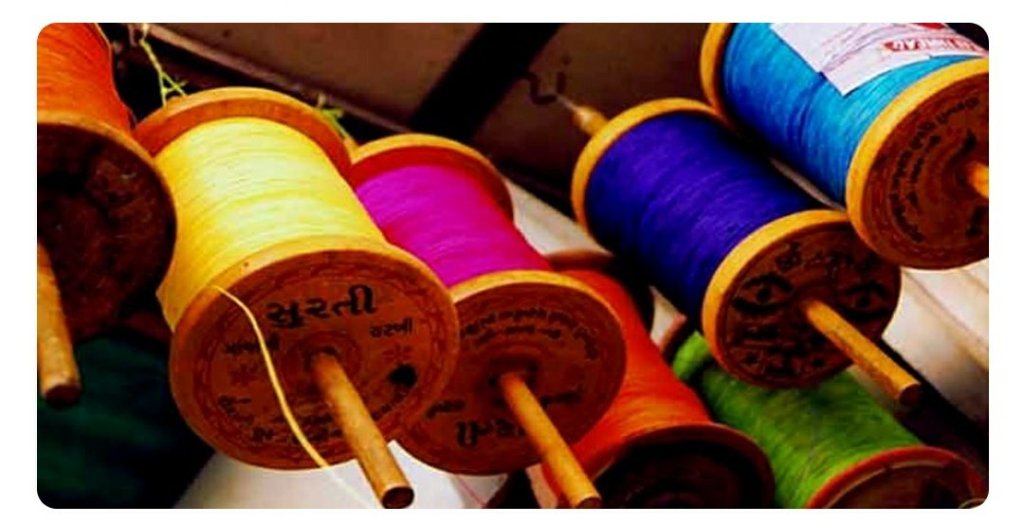
The cotton string of these kites were traditionally treated with a mixture of rice paste and tree gum as binders, mixed with powdered glass got from crushing tubelights or bulbs, dye and other secret exotic ingredients like the contents of a torch battery. To coat the string with the mixture it is strung between two convenient poles, a lump of the mixture was rubbed along the length of the thread allowing the thread to get coated. To avoid the applicator’s fingers getting cut he wears small tubes on each finger or taped his fingers. This sharp string is called ‘manja’.
All these preparations were for the traditional kite fights. The kites are maneuvered so that the threads of two kites would get entangled in an embrace and rub against each other or ‘pech ladaana’ as it’s known in local parlance. One of the kite’s string would get abraded due to the friction and the kite would float loose. In Nagpur this is followed by a shout in unison by the people flying the victorious kite, “O paar” or “O kaat” depending on which part of the city they’re from, which means the kite is cut. In Gujarat the shout is “kai po che”.
Then there are the kite runners, consisting of children and even adults, scanning the skies and waiting for a kite to go adrift. They chase the kite armed with long bamboo poles having a dry thorn bush tied to the end, to snag the kite thread and claim the kite as a prize. This is called ‘patang lootna’ or looting a kite. The kite itself has hardly any value but the looting was part of the fun and tradition. Then there are the Sharayati, people who place bets or sharayat on which kite will be victorious. Huge sums of money exchange hands.
Behind this seemingly innocuous sport there is a sinister undertone. In a quest to have stronger and sharper manjas, in last 10 years the traditional cotton string was substituted with nylon string, the so called ‘Chinese manja’. Despite it’s name the Chinese manja is not necessarily from China. It is a desi spun product but given that moniker because it was cheap. The fibres, maybe imported from China. This manja is coated with glass and metal filing and is extremely sharp and unbreakable. This manja is capable of slicing through flesh like a hot knife through butter. Unlike the cotton string it is not bio-degradable.
The kite strings get strewn around trees, between buildings, lamp and electric poles. If it crosses a road and an unsuspecting person on a two wheeler gets snared by it, it’s capable of inflicting deep wounds. Invariably it slides over the body but gets hooked at the neck and cuts through the neck. The traditional cotton manjas were sharp but had a low snapping point. They caused damage but not usually deep. The Chinese manja has a very high snapping point enabling it to cut deep and inflict damages.
The kite runners while chasing kites grab on to kite strings which may cross the road and injury an unsuspecting two wheeler rider. The kite runners are so intent on looting a kite that their are oblivious of the traffic and can get hit by a passing vehicle. They also position themselves on rooftops to have an advantage of height to grab onto the string. Fall from buildings are very common. I have treated a small boy who fell from the roof of a house and his thigh got impaled on the spikes of a gate.
Then there’s the betting by the Sharayatis. Betting is illegal but the authorities turn a blind or Nelsonian eye to it. Because winning involves not getting your kite string cut, the demand for the stronger Chinese manja shot up. Now no one can survive a kite fight without using the Chinese manja because cotton manja stands no chance against it.
The manja being non degradable poses an environmental hazard and to birds who also get entangled in it. The National Green Tribunal declared a ban on this manja. But despite the ban, it’s observed more in it’s breach. The Chinese manja can be easily brought in the black market or it is sold in the guise of industrial use.
There were a sequence of events which saved NS’s life. You can call it fate or an act of God or as the Hindi saying goes ‘jako rakhe saiya, mar sake na koi’ (A person blessed by God, cannot be harmed) .
The first was a friend of NS happened to be passing by the accident site and when he saw NS he immediately rushed to his aid. He hailed a passing e-rickshaw and took him to the nearest hospital, which was Janta Maternity Home and Hospital.
The second event was I normally have my consultation in Janta Hospital at 7 pm but that day I had to attend a meeting at 8 pm. I decided to go to Janta early and see my in-patients and miss my evening consultation. I parked my car near the hospital and walked to the gate. I saw an e-rickshaw coming at speed to the gate and attendants lifting a young man off the rickshaw and on to a waiting gurney. The clothes of the attendant were blood stained and the patient’s clothes were soaked with blood. I was told he is a victim of the infamous Chinese Manja. I immediately went along with the patient to the casualty and shifted him onto the examination table. On removing the handkerchief covering his neck, I was greeted by a gush of blood and a spray of blood mixed secretions from the transected trachea or wind pipe, as the patient coughed.
I thought for a moment, “this is way beyond my league!” and the thought of referring the patient to a higher centre briefly flitted through my mind. But then I saw a young man just beginning life, pale as paper, pulseless and a barely recordable blood pressure due to exsanguination . If I referred him in this condition then death was a foregone conclusion.
I recalled an incident during my surgical residency days, an ECG technician stabbed a Microbiology technician in the hospital campus due to personal disputes. The ECG technician knew the anatomy of the heart and stabbed him just below the left nipple, directly in the left ventricle of the heart. What saved him was he was immediately taken to the casualty and a cardio thoracic surgeon was available. The cardio thoracic surgeon took the bold decision of immediately opening his chest, between the ribs, at the site of the knife wound and controlling the bleeding with a stitch on the left ventricle. Once the bleeding was controlled he could be transferred to the operation theatre for a formal surgery. All done sans anaesthesia but the patient was knocking on heaven’s door and was oblivious of pain. This bold action saved a young life!
In Advanced trauma life support (ATLS) training in trauma medicine, there is the ‘Golden Hour’ concept, it is the period of time immediately after a traumatic injury during which there is the highest likelihood that prompt medical and surgical treatment will prevent death and reduce morbidity. I definitely didn’t have an hour to act so no time should be wasted. I went through the ABC of ATLS, which is airway, breathing and circulation. I asked the junior doctors and nurses to start an intravenous line and rush in fluids, administer oxygen and send a sample for immediate cross matching for blood.
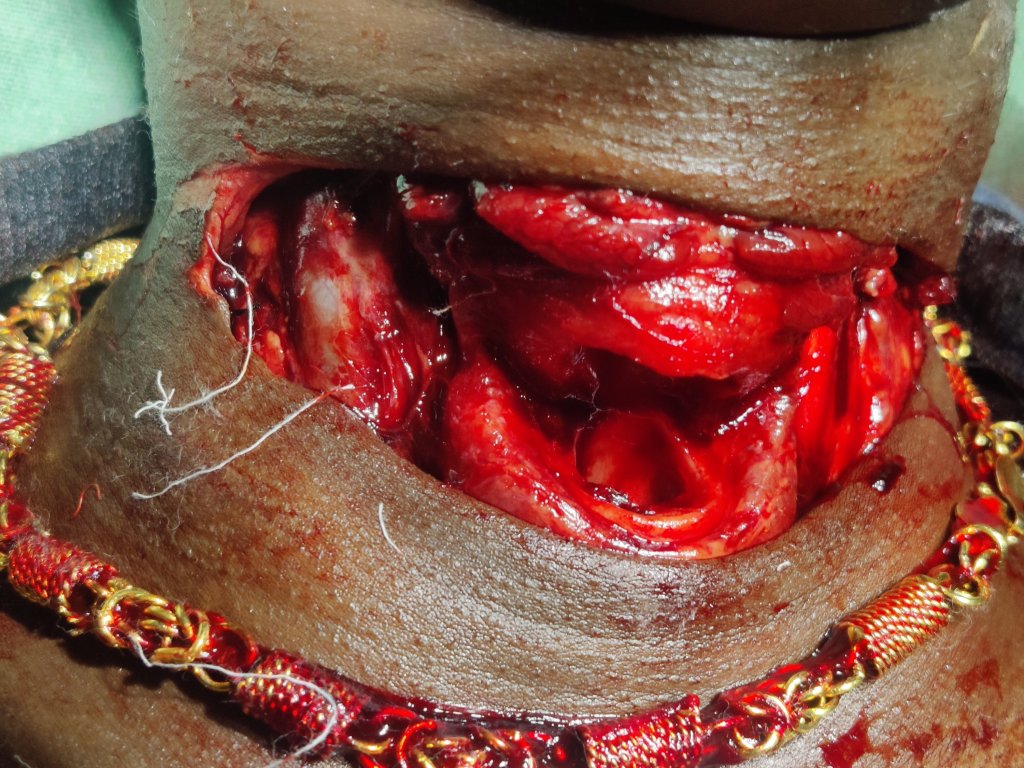
I explored the wound to find the source of bleeding, the external jugular vein which was severed on the left side and was pouring blood. I managed to clamp and tie it. There were other smaller bleeders which could be tied off, luckily other major vessels like the carotids or internal jugulars were intact. Now I had a relatively bloodless field and could assess the damage. The trachea had been almost completely transected and was acting like a tracheostomy through which the patient was breathing. I covered the wound lightly with sterile pads and shifted him to the operation theatre. An urgent call for the anaesthetist was sent. I went out and spoke to the relatives, I told them he has a fifty-fifty chance of survival and I will give it my best shot and the rest is in the hands of the Almighty.
In the operation theatre I injected local anaesthesia into the wound and began suturing without waiting for the anaesthetist. The trachea does not have any sensation, I first sucked out the clots and blood in the trachea with a suction, the patient coughed reflexively. Then I began suturing the trachea, with 3 stitches the transected ends came together. There was no air leak and the patient began speaking. Now he was able to inhale the oxygen which was being delivered to him via a face mask. The first thing he said was that no one came to his aid at the accident site. Next I began suturing close the strap muscles of the neck and followed by the platysma which is a muscle just below the skin and finally the skin. His vital parameters like blood pressure and oxygen saturation improved. We finally felt that he was out of the woods.
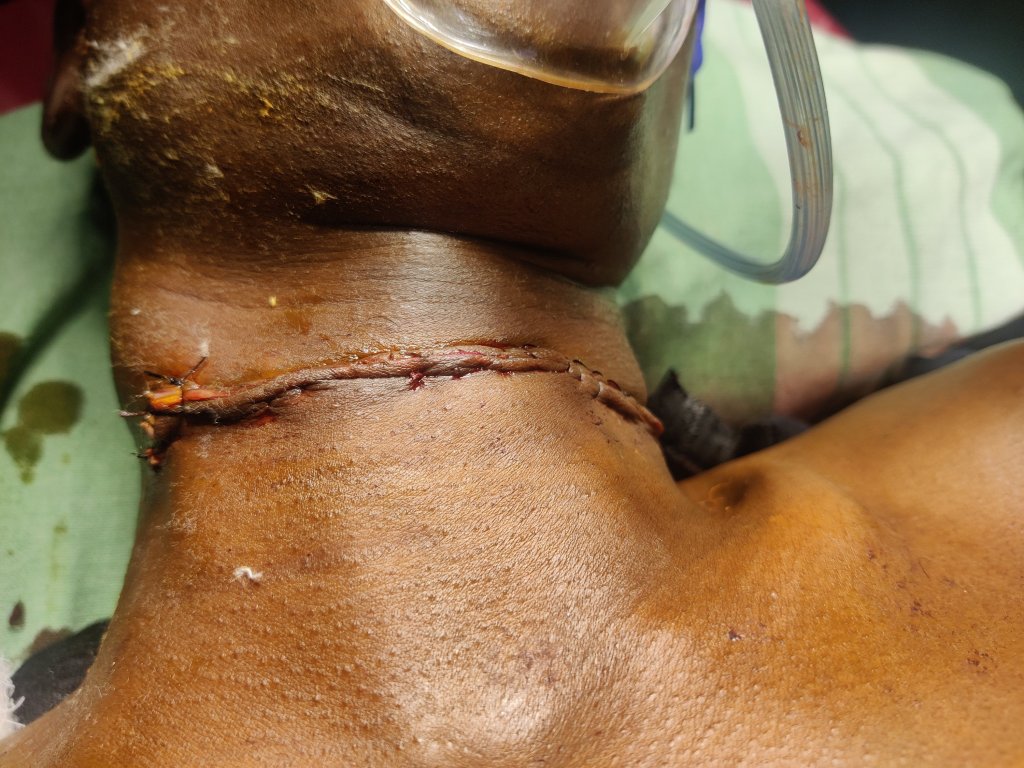
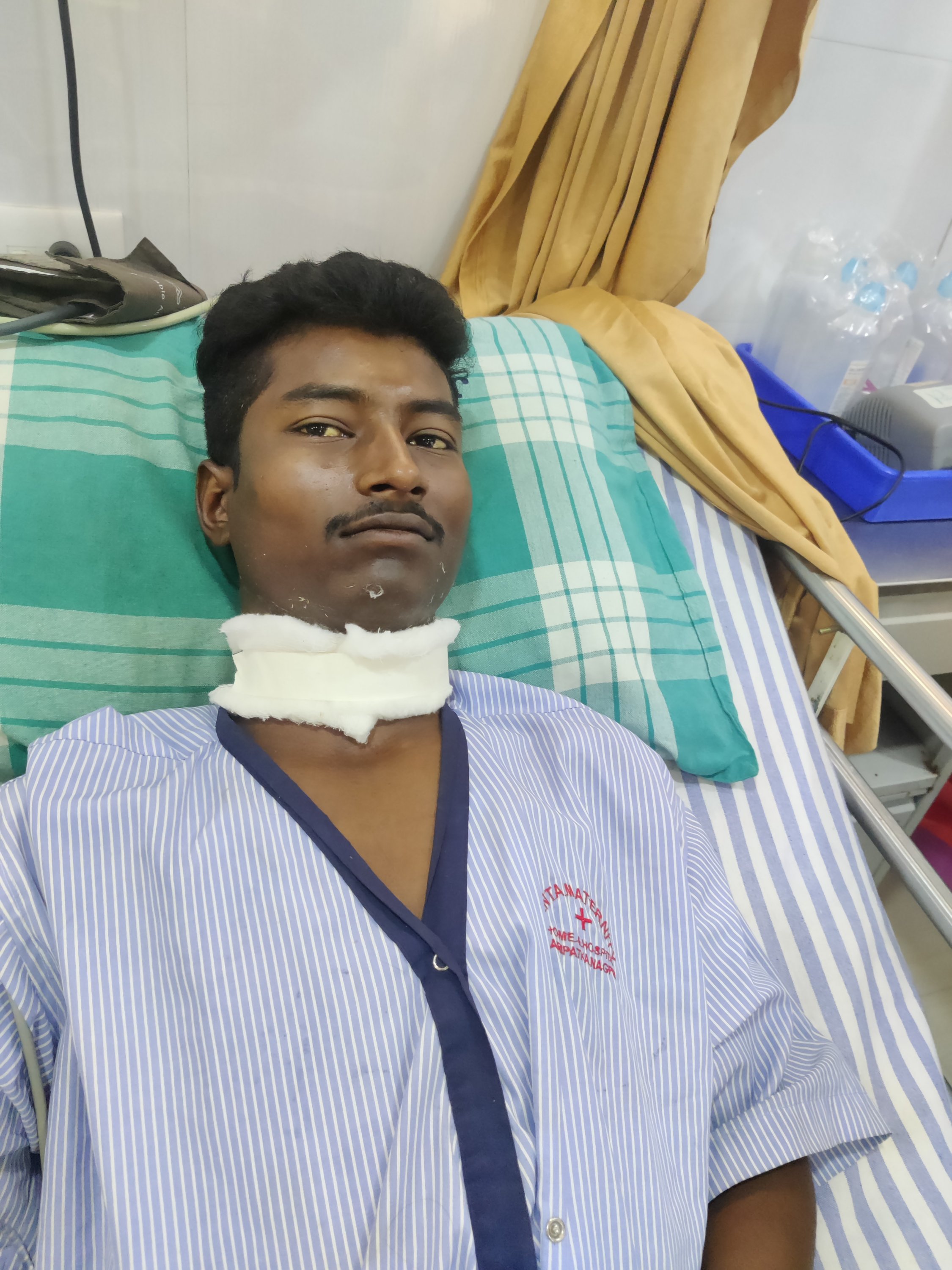
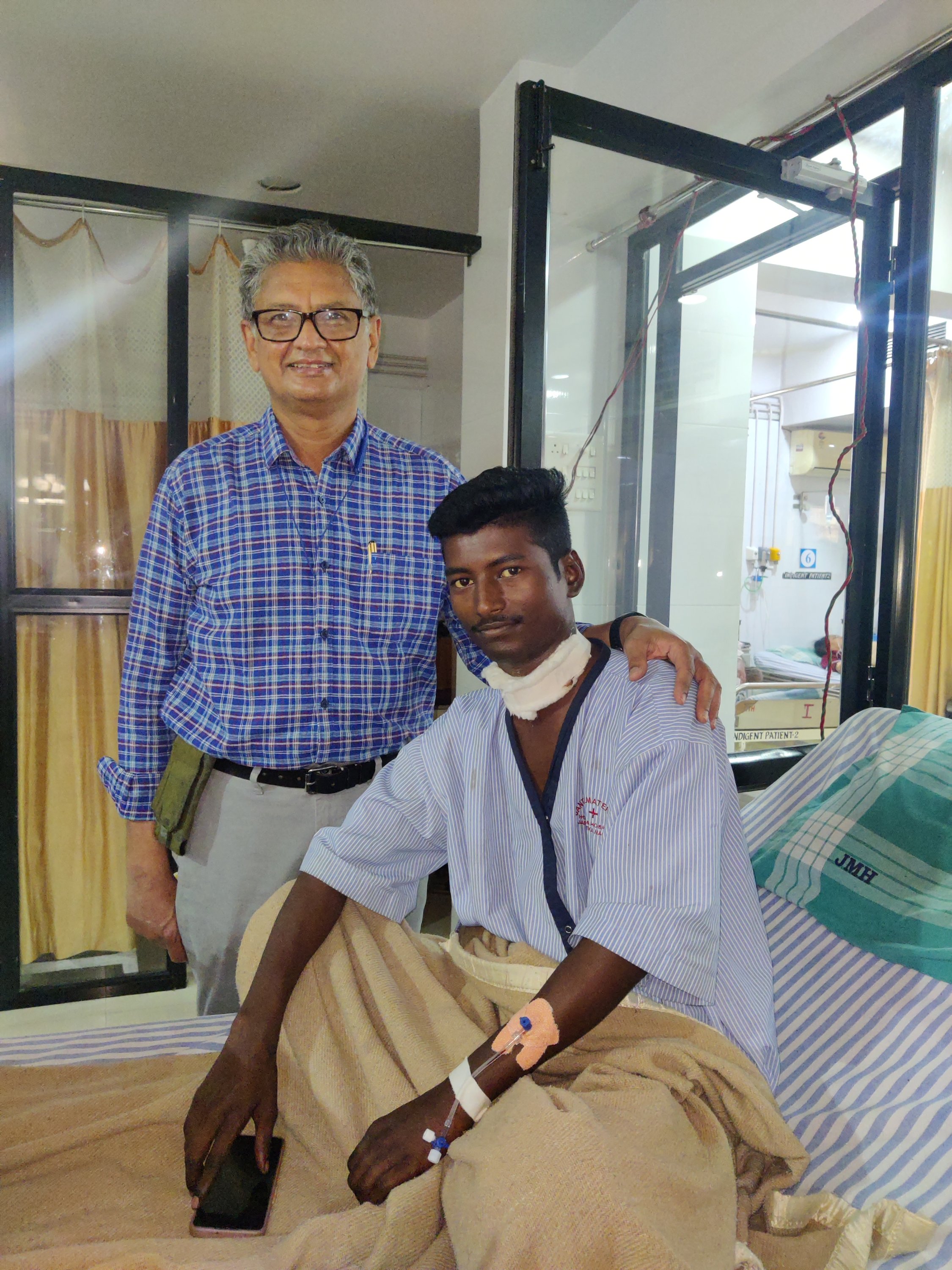
The patient made a miraculous recovery, he was up about and talking by the next day. He kept in intensive care unit (ICU) and monitored for possible complications like aspiration pneumonia from blood entering the trachea. But luckily his recovery was very smooth.
To quote Shakespeare “All’s Well That Ends Well”. I was lauded for my timely efforts which saved a life. But suppose things went bad? The same people would have criticized me for ‘biting more than I could chew’. The same relatives who touched my feet declaring me a God could have become violent. A patient living or dying is not in our hands, we can do our best but ‘there’s many a slip twixt the cup and the lip’. But ‘fortune favours the bold’ and I got a once in a lifetime chance to save a person’s life. As a doctor and a surgeon that’s what I was trained for. We should never shy away from being the good Samaritan.
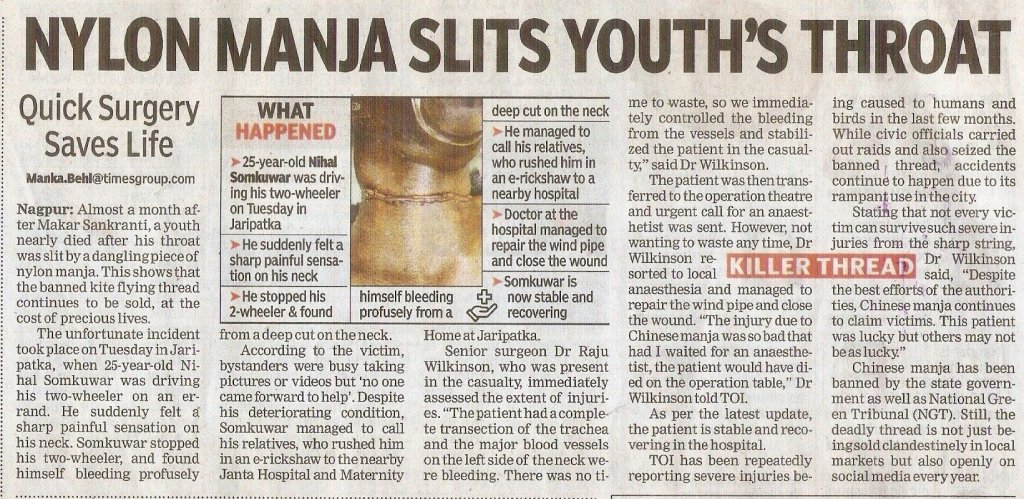
One of my classmates sent me this message, “Wow, impressive! Tell us more:
- How did you manage the airway to prevent aspiration without an ET tube? I see only an O2 mask
- Why under local? Was there no anaesthesia help available?
- If you had intubated through the mouth and got the end of the ET tube into the distal trachea and inflated the cuff, could it have prevented aspiration and served as a tracheal stent as well?
- Could he have been transferred to a higher centre where specialist anaesthesia help was available? Why the decision to repair immediately under LA?”
My reply was : “I work in a depressed area which has mainly a slum population. Luckily I was in the hospital when the patient was brought to the casualty. His external jugular were severed on the left side and he was in shock. Initially I planned only to resuscitate him. I caught the bleeders and started iv fluids. The trachea was lying open and already blood had gone in which I aspirated. The anaesthetist meanwhile had not yet arrived so I thought I’d close the trachea to avoid further aspiration. Once I had done that then I sutured the strap muscles and closed the wound. He was not in a condition to be immediately transferred and he would not have been able to afford a corporate hospital. The government medical colleges are in shambles, so I took the decision of managing him myself after taking the relatives in confidence.”

 Raju Wilkinson's Blog